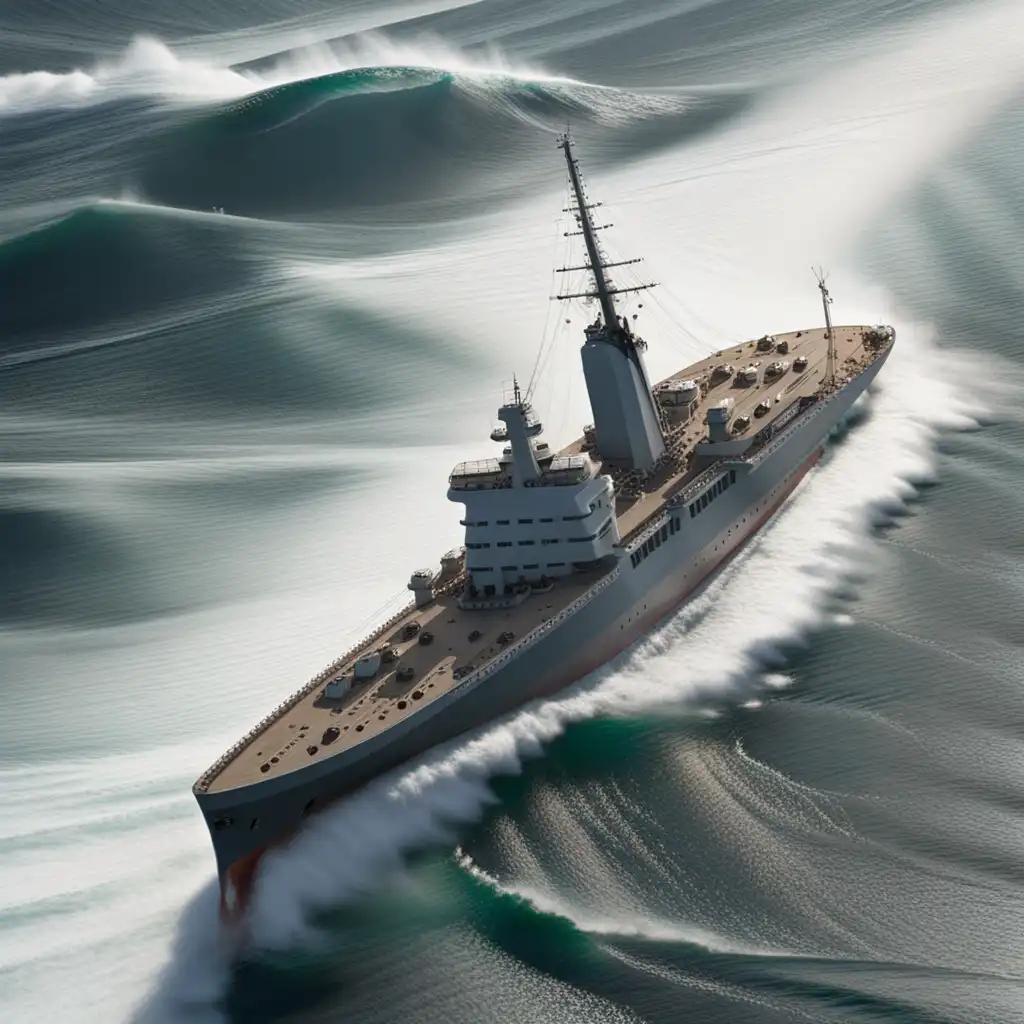
prow
noun prow
praʊ
The front part of a ship or boat
The ship's prow cut through the waves.
prow
praʊ
Chargement…
praʊ
The front part of a ship or boat
The ship's prow cut through the waves.
Impossible de charger l’audio. Réessayez plus tard.
The word 'prow' refers to the front part or the bow of a ship or boat. It is commonly used when talking about the shape or design of a vessel, especially when describing boats and ships. For example, "the ship's prow was adorned with intricate carvings" or "the boat's sleek prow sliced through the waves effortlessly."
A beak is a pointed, hard part of a bird's mouth used for digging, grooming feathers, and eating. The prow is the pointed front part of a ship or boat, which is designed to cut through the water.
A beak is applicable to birds, while a prow is applicable to ships or boats.
Ouvrir le mot: Beak →Bow refers to the front part of a ship, airplane or any other pointed object while the word prow specifically refers to the front part of a ship.
Bow can be used in a general sense whereas prow is more specific to ships. For example, one can say "the bow of the airplane" or "the prow of the ship".
Ouvrir le mot: Bow →A frontispiece is an illustration or graphic that appears at the beginning of a book. It usually includes the title, author's name, and publisher's information.
A frontispiece is found in books and is used for introductory purposes, while a prow is found on ships and boats and helps guide them through the water.
Ouvrir le mot: Frontispiece →Both head and prow refer to the front part of a boat or ship.
However, head is a more general term that can be used for any type of vessel, while prow specifically refers to the pointed front of a ship that cuts through the water.
Head is applicable in any context where the front of a boat is being referred to, while prow is more commonly used in the context of ships or larger vessels.
Ouvrir le mot: Head →The words nib and prow both refer to the front part of a boat, but they are used in different contexts.
Nib is a term used for the pointed tip of a writing tool like a pen, pencil or quill.
It can also refer to the front point of a shoe or a bird's beak. In relation to boats, nib can refer to the sharp point at the end of a kayak or canoe.
To summarize, nib is applicable to smaller, more individual objects like pens or shoes while prow applies to larger watercraft.
Ouvrir le mot: Nib →Ram can be used as a verb or a noun. As a verb, it means to strike or hit with force. As a noun, it refers to a device used for pushing or driving, such as the battering ram used in ancient warfare or a hydraulic ram used to lift heavy objects.
Prow refers specifically to the front part of a ship or boat, while ram can have various meanings related to forceful impact or driving power.
Ouvrir le mot: Ram →Both prow and snout refer to a pointed or projecting part at the front of an object, but they are used in different contexts.
Snout typically refers to the projecting nose and mouth of an animal, especially a mammal. It is applicable in zoological, biological, or animal-related contexts where the noses of animals are being discussed or described.
For example, "The pig's snout was covered in mud after rooting around in the pen."
Prow describes the front of a ship or boat, while snout describes the nose and mouth of an animal.
Ouvrir le mot: Snout →The stem is the very front part of the hull, which is the body of the ship or boat. It's the part of the boat that extends forward and downwards from the waterline.
The prow is the upper pointed part of the front of a ship, while the stem is the lower, more submerged part of the front of a ship.
Ouvrir le mot: Stem →Surely the wake left behind by mankind's forward march reveals its movement just as clearly as the spray thrown up elsewhere by the prow.