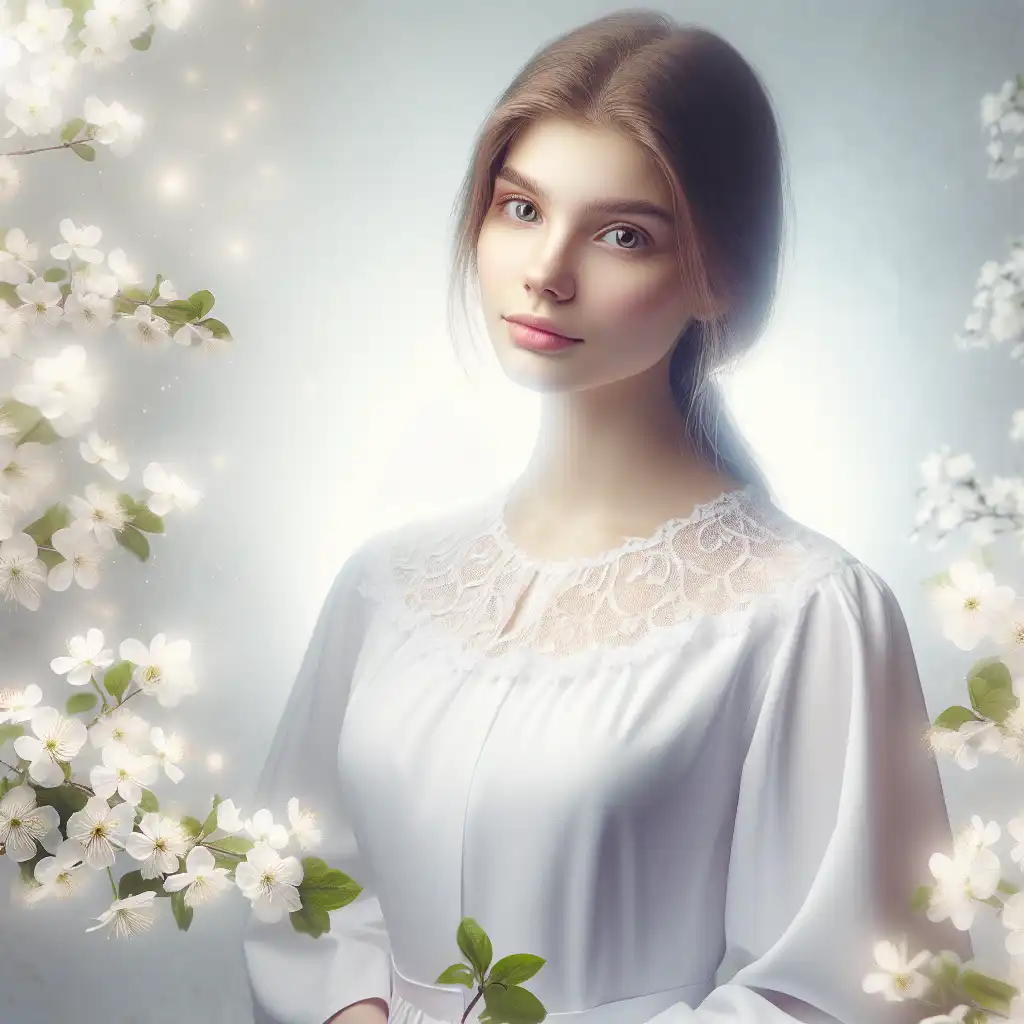
virginal
adjective virginal
ˈvɜːrdʒɪnl
related to or characteristic of a virgin or virginity
She had a sweet, virginal innocence that drew him to her.
virginal
ˈvɜːrdʒɪnl
Cargando…
ˈvɜːrdʒɪnl
related to or characteristic of a virgin or virginity
She had a sweet, virginal innocence that drew him to her.

ˈvɜːrdʒɪnl
a musical instrument like a small piano, played by pressing keys, from the Middle Ages period
He played a beautiful piece on the virginal.
No se pudo cargar el audio. Inténtalo de nuevo más tarde.
The word 'virginal' is used to describe something that is pure, untouched, or new. It is often used to describe a person who has never had sexual intercourse before. However, it can also be used to describe other things that are new and untouched, such as an untouched piece of land or an unused item. It is generally used in formal or literary contexts, and may not be commonly used in everyday conversation.
Blemish means a flaw or imperfection, often describing a mark or spot on something that detracts from its overall appearance.
It can be applied to physical objects or to a person's appearance. For example, a scratch on a car or a pimple on someone's face can be considered a blemish.
Blemish refers to an imperfection while virginal refers to something pure or untouched.
Abrir palabra: Blemish →Chaste refers to someone who abstains from sexual activity or has limited sexual experiences, regardless of whether or not they are a virgin.
Chaste refers to behavior and decisions relating to sexual activity, while virginal refers to a person's actual sexual experience.
Abrir palabra: Chaste →Immaculate refers to something that is perfectly clean and pure, without any flaws or imperfections.
Thus, while immaculate can refer to anything that is perfectly clean and pure, virginal is a more specific word that only applies to a person's sexual experience.
Abrir palabra: Immaculate →Innocent generally refers to someone or something that is pure, free from guilt or wrongdoing, and has not been corrupted by negative experiences or actions.
It can also describe something that is pure or untouched, but it is not as broad in meaning as "innocent."
Innocent refers to a state of purity and lack of wrongdoing, while virginal specifically relates to someone who has not had sex.
Abrir palabra: Innocent →Both pristine and virginal can refer to something that is untouched or unspoiled.
However, pristine often refers to something that is clean, pure, and fresh, while virginal refers to something that has never been used, touched, or experienced before.
For example, you might use pristine to describe a sparkling clean lake in a remote wilderness area that has not been touched by pollution or human activity.
Pristine tends to be used more often to describe physical objects, while virginal tends to be used more often to describe experiences, emotions, or relationships.
Abrir palabra: Pristine →Pure means clean and free from any negative or harmful elements. It is commonly used to describe something that is genuine, sincere, and innocent.
For example, a pure heart, pure intentions, or pure love.
So, while both words imply a state of purity, pure is a broader term and can describe anything that is entirely clean or genuine, while virginal refers only to sexual purity.
Abrir palabra: Pure →Unspoiled refers to something that has not been altered or damaged in any way. It could refer to a natural landscape that has not been developed or a person who has not been corrupted by negative experiences or influences.
So, while unspoiled is a broader term, virginal is more specific to the realm of sexual experience.
Unspoiled can be applied in a variety of contexts, while virginal is primarily used in conversations about someone's sexual history.
Abrir palabra: Unspoiled →Untouched generally means something that has not been touched or changed in any way. For example, an untouched forest would mean a forest that has not been cut down, cleared, or altered by humans or natural disasters.
Untouched can refer to any object or environment that has not been altered or modified in any way.
Abrir palabra: Untouched →Taryn Simon photographs...
Ver en YouTube ↗I don't relate to people that look like me. I find it deeply unsatisfying to play a version of myself. It was something I had to figure out really early on, when I was at RADA, because I was being cast, over and over again, as the young, virginal thing. When I left RADA, I was on an absolute mission to never wear make-up.
On my wedding day. I didn't want a natural, blushing-bride look - I had a full-on hairdo and red lips. I thought it would be disingenuous to do the whole virginal look, so even though I had the white dress, I had pink net underneath.
I've always been so uninterested in playing any kind of archetype of some pure, innocent, virginal woman. I just don't believe it.
So often, in films, there are two ways a female can be portrayed: either innocent and virginal or the complete opposite.
If you saw me in 'The King and I,' I had that angelic, virginal face.
When I first started writing comics, in the way-back days, Typhoid Mary was my explosive response to women characters in comics - I made her an innocent virginal type, a clever, dark, liberated woman, and as Bloody Mary, a feminist bent of punishing men - all in one character. She was an instinctual rather than a calculated creation.
There was a kind of madness in the country. Eamon De Valera, the prime minister, had this vision of an Ireland where we'd all be in some kind of native costume - which doesn't exist - and we'd be dancing at the crossroads, babbling away in Gaelic, going to Mass, everyone virginal and pure.
When I was young, there weren't any teenage girls I could relate to in film. They were all put in boxes: the virginal good girl, the really sarcastic asexual one. I wanted to do something that represented how I felt then.