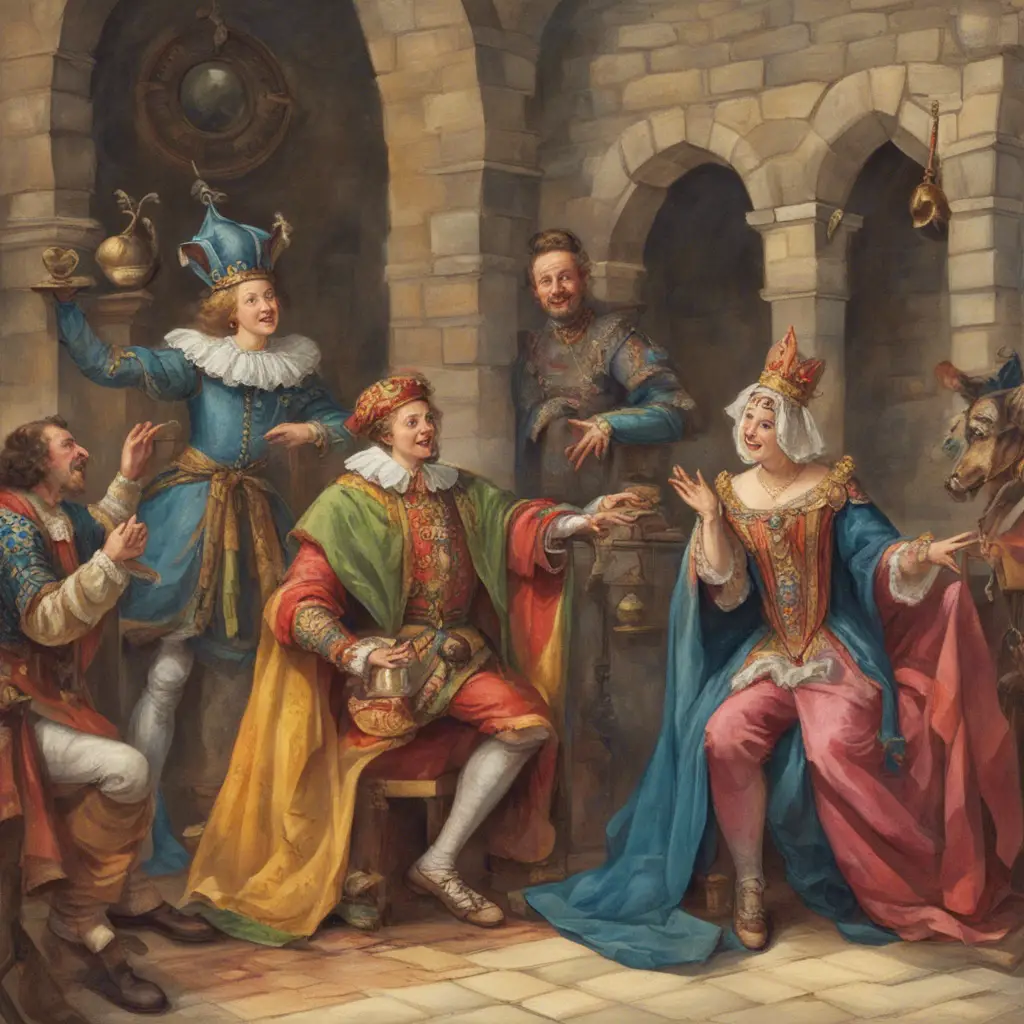
jester
noun jester
ˈdʒestər
A person in the past who was employed by a king or queen to entertain by telling jokes and performing tricks.
The court jester used to wear a multicolored outfit with a cap and bells.
jester
ˈdʒestər
読み込み中…
ˈdʒestər
A person in the past who was employed by a king or queen to entertain by telling jokes and performing tricks.
The court jester used to wear a multicolored outfit with a cap and bells.

ˈdʒestər
A person who often makes attempts to be funny or to make people laugh.
John is always the jester of the group, always ready with a joke or funny comment.
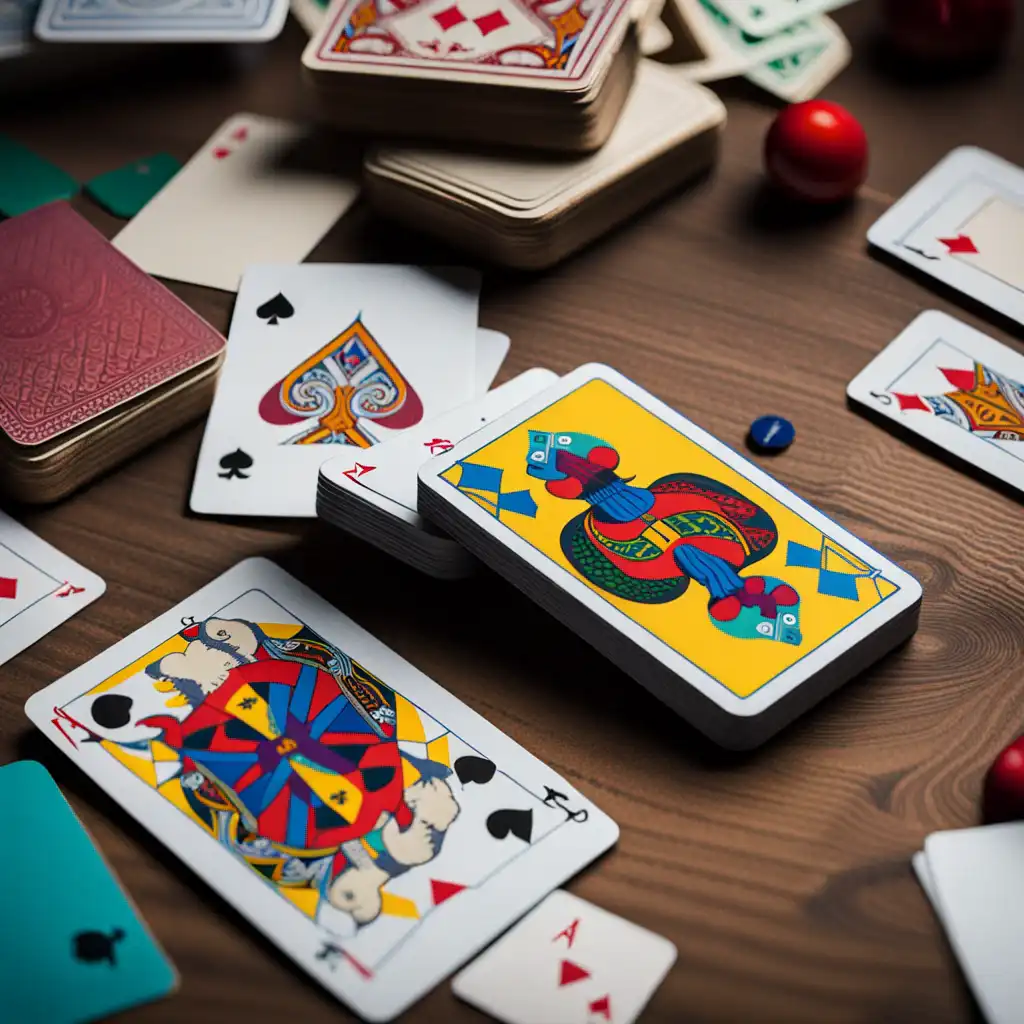
ˈdʒestər
A specific card in a deck of playing cards, often used as a wild card.
In some card games, the jester can substitute for any other card.
音声を読み込めませんでした。しばらくしてからもう一度お試しください。
A jester is a person in medieval times who entertained the royal court with jokes, tricks, and dances. Nowadays, the term can refer to anyone who performs comedy or jests to entertain others. You might hear someone being called a jester if they make funny jokes and silly actions to make people laugh.
A buffoon is someone who is considered foolish and often makes people laugh unintentionally due to their silly behavior, while a jester is a professional entertainer who makes people laugh deliberately.
Buffoon is applicable when describing someone's natural behavior or demeanor, while jester is applicable when someone professionally entertains the public through humor and tricks.
Essentially, a buffoon is a fool, while a jester is someone who gets paid to be funny.
単語を開く: Buffoon →The main difference between the words clown and jester is that a jester is usually associated with the medieval courts of kings and queens, while a clown is a professional performer who usually wears makeup and performs at circuses or children's parties.
Clowns are performers who wear exaggerated makeup and costumes to create a unique character. They are often associated with circuses and perform a variety of acts, including juggling, magic, and physical comedy.
A jester is a historical figure who provided entertainment for royalty, while a clown is a modern-day performer who entertains audiences at circuses and other events.
単語を開く: Clown →A comedian is a person who makes people laugh through jokes, stories, and other forms of humorous entertainment. They are usually professional performers that are hired to provide entertainment.
Comedians can be found in various forms of media such as stand-up, television, and movies.
単語を開く: Comedian →Entertain means to provide enjoyment or amusement to people, often through singing, dancing, telling jokes, or other performances.
A jester is a specific type of entertainer who is known for their humorous and witty remarks. In medieval times, jesters were often employed by royalty to provide them with entertainment and to poke fun at their guests.
So while both words are related to providing amusement, entertain is a broader term that could refer to many different types of performances, while a jester specifically refers to someone who tells jokes and is known for their humor.
単語を開く: Entertain →A fool is someone who lacks wisdom or common sense and acts foolishly or makes foolish decisions.
While both words are associated with humor and jesting, a fool is generally seen as a negative trait or person, while a jester is seen as a positive and entertaining figure.
Additionally, while a fool's actions or decisions may unintentionally result in humor, a jester's performance is intentionally comedic and skilled.
A fool is someone who lacks wisdom, while a jester is an entertainer who brings joy and humor to their audience.
単語を開く: Fool →Harlequin and jester are both historically associated with entertainment and clowning but they have different meanings.
Harlequin is a character from Italian theater known for his multicolored outfit and acrobatic performances. Harlequin has since been used to describe things that are brightly colored or checkered.
Harlequin is associated with colorful clothing and acrobatic performances, while a jester is known for making jokes and entertaining royalty.
単語を開く: Harlequin →A mummer is a performer who participates in a traditional folk play usually around Christmastime. Mummers wear masks or costumes and go from house to house performing comedic skits.
A jester is a professional entertainer while a mummer is a performer who participates in a specific traditional folk play.
単語を開く: Mummer →A prankster is someone who enjoys playing tricks on other people. Pranksters often plan and execute elaborate practical jokes, sometimes at other people's expense.
A jester is someone who makes people laugh with jokes and performances, while a prankster is someone who enjoys tricking others with practical jokes.
単語を開く: Prankster →A trickster is a person or spirit who plays tricks or practical jokes on people, often with a more malicious intention.
Tricksters are found in many cultures as figures of folklore, mythology, and literature.
A jester is an entertainer while a trickster is a prankster.
A jester would be applicable in a more formal setting, entertaining a royal court, while a trickster would be applicable in a more informal setting, pulling pranks on friends or enemies.
単語を開く: Trickster →He's relatable. Notice the height of the fall. Once a king but now homeless and blind. It's more tragic after all if a king falls from a tall throne than if a jester falls off his step stool.
YouTube で見る ↗Oftentimes, actors are looked at as court jesters. They are not looked at as deep-thinking, smart people who do many other things or have gifts in other areas.
apart from them the ticks are these guys here this is Aristotle and jester or the tehsil 3 or nuts waving around a bit castle 3 or and it's called that because of these little seeds that they have they they have three little ons on them
YouTube で見る ↗An unemployed court jester is nobody's fool.
fear depression and loneliness is at an all-time high. We must course-correct. An African shaman said, "Your society worships the jester while the king stands
YouTube で見る ↗I learned from my dad that when you walk in front of an audience, they are the kings and queens, and you're but the jester.
I consider myself a court jester - motivator.
We're the court jesters of rock.
Jesters do often prove prophets.
ESPN takes itself very seriously, but for some reason, I'm allowed to be the court jester.
It's really not my thing to go after what comedians are doing. Because I always feel like we're jesters at the end of the day.
My parents wanted me to have an honorable profession and not to be a jester.
I like to be the jester - he is the only one the king doesn't question.