hilarity
noun hilarity
hɪˈlærəti
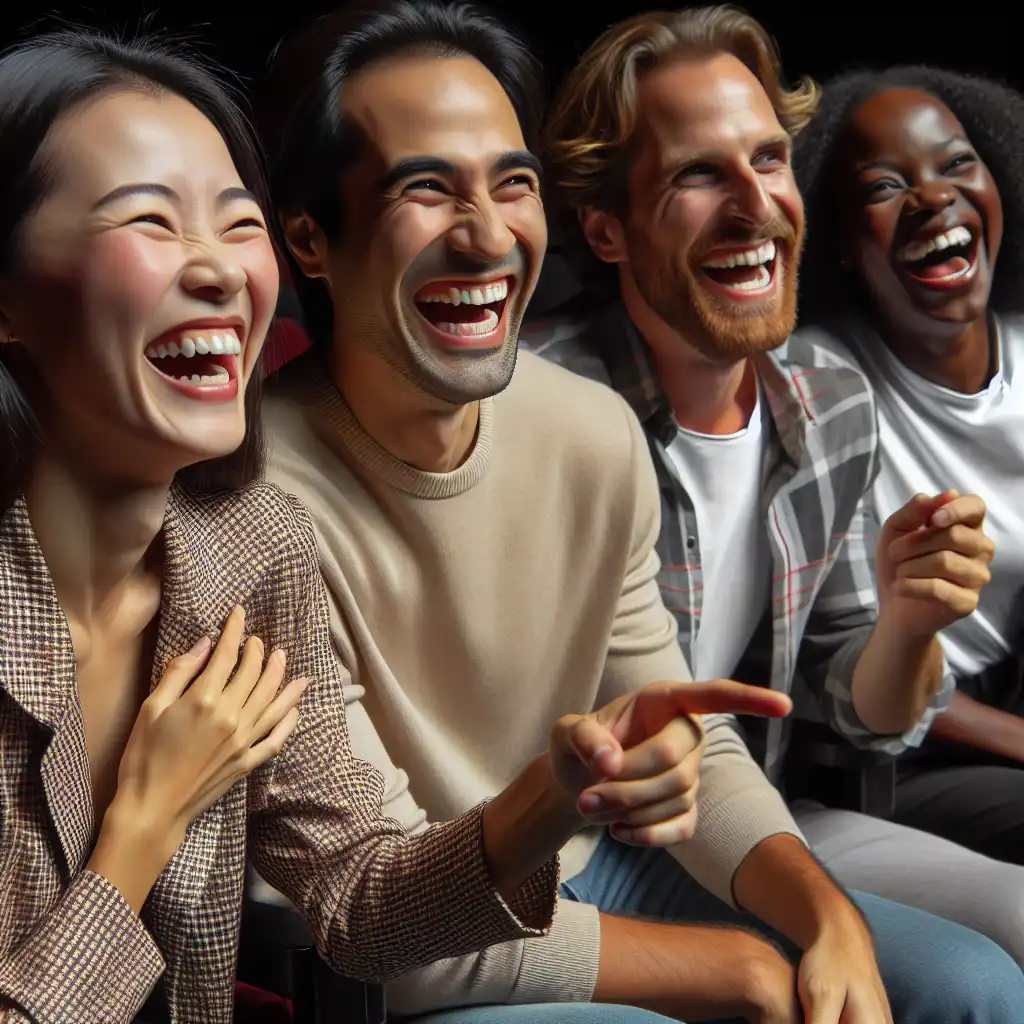
A state or feeling of great amusement and laughter
The ridiculous scene caused hilarity among the audience.
hilarity
hɪˈlærəti
読み込み中…
hɪˈlærəti
A state or feeling of great amusement and laughter
The ridiculous scene caused hilarity among the audience.
音声を読み込めませんでした。しばらくしてからもう一度お試しください。
The word 'hilarity' means extreme joyfulness or laughter. You can use this word in situations where something is really funny, and it makes you and others around you laugh out loud. For example, if you watch a funny movie with friends and everyone is laughing hysterically, you can say "There was a lot of hilarity during the movie."
Amusement and hilarity are both synonyms for the state of being amused or finding something funny, but there is a slight difference in their intensity.
Amusement is a milder form of enjoyment that may result from something funny or entertaining, but it doesn't necessarily make you laugh out loud or lose control.
For example, watching a comedy movie might bring you amusement.
Hilarity is a more intense and uncontrollable form of amusement that typically results in laughter, giddiness or even tears.
Amusement is a more general term for finding something funny, while hilarity is a specific type of amusement that involves greater intensity and is often associated with uncontrollable laughter.
単語を開く: Amusement →Entertainment refers to the overall act of amusing or engaging an audience, whether through movies, music, or other forms of media.
Entertainment can encompass a wide range of emotions and reactions, while hilarity is specifically focused on creating a sense of light-hearted joy and amusement.
Both terms can be applicable in a variety of contexts, from watching a comedy movie (hilarity) to attending a music festival (entertainment).
単語を開く: Entertainment →Fun refers to a pleasant and enjoyable experience or activity, usually accompanied by light-hearted amusement or entertainment.
It's used to describe something that is enjoyable, but not necessarily extremely funny or comical.
It's more intense than fun and generally involves a high level of amusement and laughter.
So, while both words refer to enjoyment and amusement, fun is a more general term, while hilarity is a more specific and intense form of fun.
You might use fun to describe a day at the beach or playing games with friends, whereas hilarity would be more appropriate to describe a really funny comedy show or a joke that had everyone laughing uncontrollably.
単語を開く: Fun →Glee and hilarity are both words used to describe happiness or joy, but there is a subtle difference between them.
Glee is a feeling of great delight or pleasure, often accompanied by laughter or dancing. It is a more specific term that describes a particular type of happiness, usually related to success or achieving something.
For example, if you win a game or receive a gift you've been hoping for, you might feel glee.
Glee is a more focused and specific type of happiness, while hilarity is a broader and more general sense of joy and laughter.
単語を開く: Glee →Jollity refers to a state of cheerfulness or merrymaking.
Hilarity is applicable when referring to a particularly funny event or joke that results in uncontrollable laughter, while jollity is applicable when referring to a general sense of happiness or cheerfulness among a group of people.
単語を開く: Jollity →Hilarity refers to a feeling of great merriment and amusement, while laughter refers to the physical act of making sounds associated with amusement or joy.
laughter is a physical manifestation of that emotional state; the actual sounds that people make when they're feeling amused or exhilarated.
Hilarity is a more abstract term that refers to the emotional aspects of joy and laughter, whereas laughter is the physical sound that comes with it.
単語を開く: Laughter →Hilarity and merriment are both words that describe a state of joy or happiness, but there is a subtle difference between the two.
Merriment is a more general term used to describe a state of happiness or enjoyment among a group of people, usually in a social setting like a party or celebration.
Hilarity is more intense and focused on humor, while merriment is a broader term referring to a general atmosphere of joy and happiness.
単語を開く: Merriment →Hilarity and mirth both refer to a feeling of happiness or amusement, but they differ slightly in their connotations and usage.
Mirth is a more gentle and subdued type of amusement that is often expressed through smiling or quiet chuckling.
It carries a connotation of lightheartedness and cheerfulness, rather than being wild or raucous. A funny and charming story or situation might evoke a sense of mirth in those who witness it.
Hilarity describes a more intense and boisterous form of laughter and enjoyment, while mirth is a gentler and more subdued type of amusement that is expressed through light and cheerful enjoyment.
単語を開く: Mirth →Inside a cartoonist's...
YouTube で見る ↗Fan the sinking flame of hilarity with the wing of friendship; and pass the rosy wine.
How one tweet can ruin...
YouTube で見る ↗I am interested in shows that are not out-and-out gag fests: you see the truth of a broken heart behind them. That is what life is like: it's really funny, you see funny things as soon as you step out of the room, but underneath that is a whole bag of broken hearts. It's that real pain and that real hilarity that makes life so intriguing.
Making People Laugh %\PIPE%...
YouTube で見る ↗My cancer continues to make for all kind of hilarity.
As goofy as it sounds, I try to sing in the morning. It's hard both to sing and to maintain a grouchy mood, and it sets a happy tone for everyone - particularly in my case, because I'm tone deaf, and my audience finds my singing a source of great hilarity.
The hilarity or brilliance of a forwarded link is inversely proportional to the number of people it's sent to.
George Lopez is always on the verge of hilarity. If he could ever think of something funny to say, if he had a funny thought in his mind, he's ready to go.
The hardest I've ever laughed in a cinema was at 'Silent Movie' by Mel Brooks. I was 12-ish and I actually fell out of my seat. I saw it 10 years later hoping for the same hilarity but it didn't happen. I'm not sure if that's because of me or the film.