
sheaf
noun sheaf
ʃiːf
A quantity of the same things tied together
I gathered a sheaf of papers from the desk.
sheaf
ʃiːf
Loading…
ʃiːf
A quantity of the same things tied together
I gathered a sheaf of papers from the desk.
ʃiːf
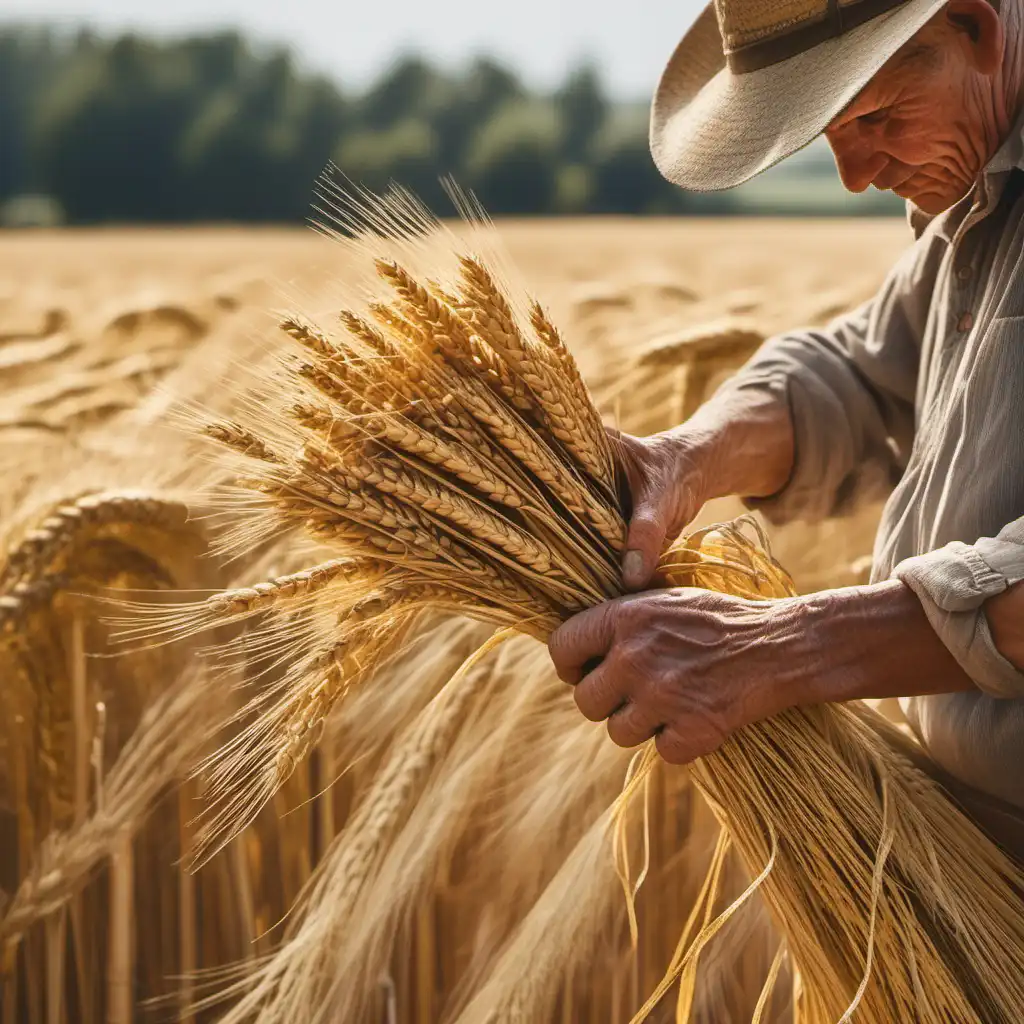
A bundle of grain stalks tied together after reaping
The farmer collected sheaves of wheat from the field.
Audio could not be loaded. Please try again later.
The word 'sheaf' is used to describe a bunch or a bundle of objects or materials that have been collected and grouped together. It is often used to refer to bundles of things like wheat or other plants that have been collected and tied together after they have been harvested. The word can also be used more generally to describe any bunch or bundle of items that have been collected together for a purpose. You might use the word 'sheaf' when talking about a pile of papers or documents that have been stacked together, or a group of sticks that have been gathered for a fire. In general, the word is used when you want to describe a group of items that are tied together or bound in some way.
A batch refers to a group of items that are processed or produced together. For example, a batch of cookies made in a single baking session.
Batch refers to processing or production of multiple items simultaneously, while sheaf refers to the tying together of a bundle of cut stalks.
Open word: Batch →Bunch is generally used to refer to a group or cluster of things that are not necessarily uniform, such as a bunch of grapes, a bunch of flowers, or a bunch of keys.
Bunch refers to a group of things that are not ordered, and sheaf refers to a group of things that are arranged.
Open word: Bunch →A bundle and a sheaf are both words used to describe a group or collection of something, usually of items like sticks, papers, or hay.
A bundle usually refers to something that has been tied together as a unit or package. For example, a bundle of sticks tied together with a rope.
Bundles are often neat and orderly, as if they have been prepared for transportation or storage.
If you are talking about something that has been tied up and organized, like sticks or papers, you would use the word bundle.
Open word: Bundle →Cluster refers to a group of items or objects that are close together or connected, while sheaf refers to a bundle of items, usually grain or something similar.
Clusters can refer to any objects, while sheafs usually refer to crops or plants. For example, grapes can be clustered together, and wheat can be bound together in a sheaf.
Open word: Cluster →A collection refers to a group of similar or related objects that are gathered together. For example, a collection of stamps or books.
A collection is more general and can refer to a wide variety of objects, while a sheaf specifically refers to things that are bundled together tightly.
Open word: Collection →A heap and a sheaf are both words that can describe a pile of things, but they are often used in different contexts.
A heap usually refers to a disorganized, messy pile of things. For example, you might say that there is a heap of dirty laundry on your bedroom floor.
Heaps can describe things like rocks, dirt, or trash. They are often used in a negative context, to describe a cluttered or messy situation.
To summarize, a heap is a messy pile of things, while a sheaf is an organized pile of things. The word you use will depend on the context and the connotation you want to convey.
Open word: Heap →A pile is a group of things that are randomly placed on top of each other. For example, a pile of clothes on the floor or a pile of books on a desk.
A pile is applicable when things are stacked together without any order or organization, while a sheaf is applicable when things are bundled together in a neat and orderly way.
Open word: Pile →A stack is a pile of things that are placed one on top of the other in a neat and organized manner.
It can be applicable in various contexts, such as a stack of books or a stack of cards.
In mathematics, sheaf and stack have different meanings.
A sheaf is a mathematical construct used to study shapes and spaces, while a stack is a more complex object that describes how certain geometric structures can be pulled apart and re-glued in a way that preserves their properties.
Open word: Stack →John McWhorter: Txtng is...
Watch on YouTube ↗On the subject of literary genres, I've always felt that my response to poetry is inadequate. I'd love to be the kind of person that drifts off into the garden with a slim volume of Elizabethan verse or a sheaf of haikus, but my passion is story.
Txtng is killing...
Watch on YouTube ↗For life is tendency, and the essence of a tendency is to develop in the form of a sheaf, creating, by its very growth, divergent directions among which its impetus is divided.
All June I bound the rose in sheaves, Now, rose by rose, I strip the leaves.
The Hebrew Bible contains multiple provisions to ensure that no one would go hungry. The corners of the field, forgotten sheaves of grain, gleanings that drop from the hands of the gleaner, and small clusters of grapes left on the vine were to be given to the poor.