caste
noun caste
kæst
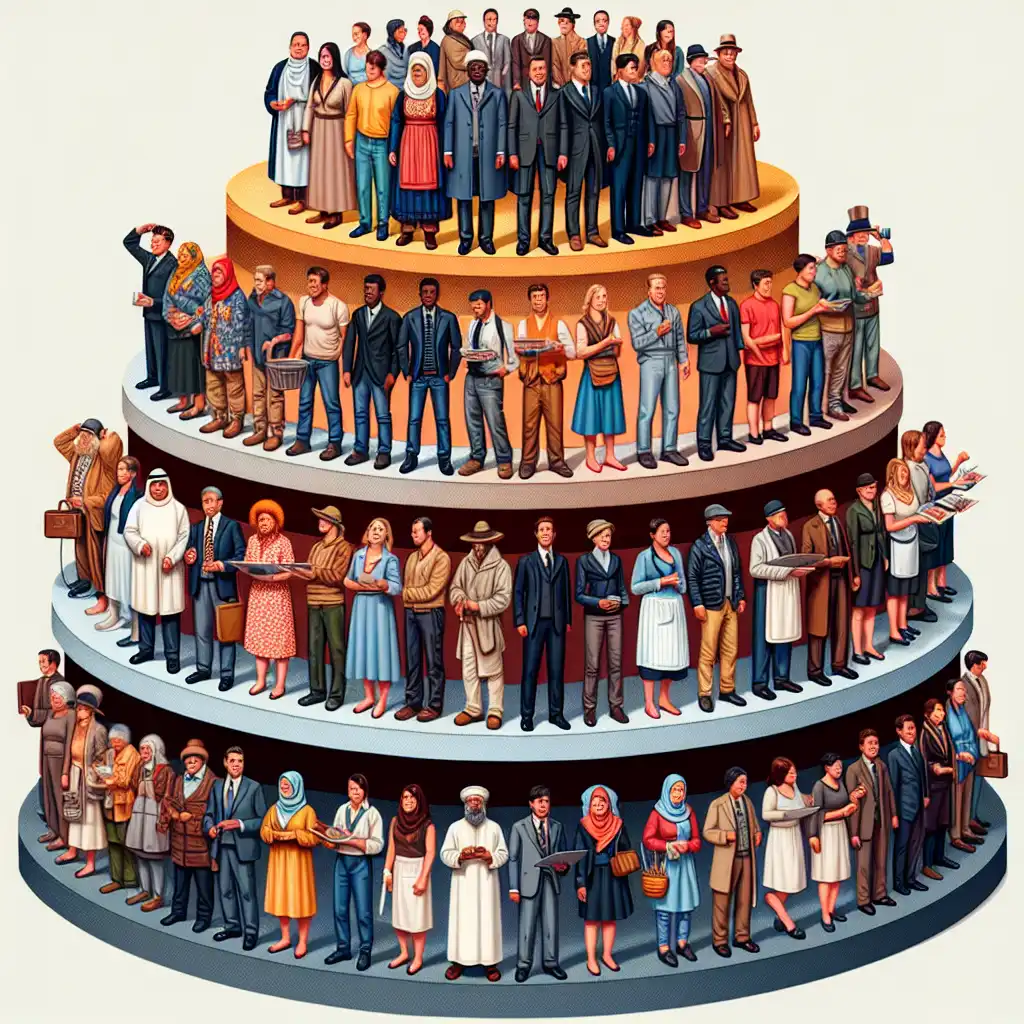
A social class or level in society that a person is born into and cannot change
In some cultures, a person's caste can determine their job, who they can marry, and their social status.
caste
kæst
लोड हो रहा है…
kæst
A social class or level in society that a person is born into and cannot change
In some cultures, a person's caste can determine their job, who they can marry, and their social status.
kæst
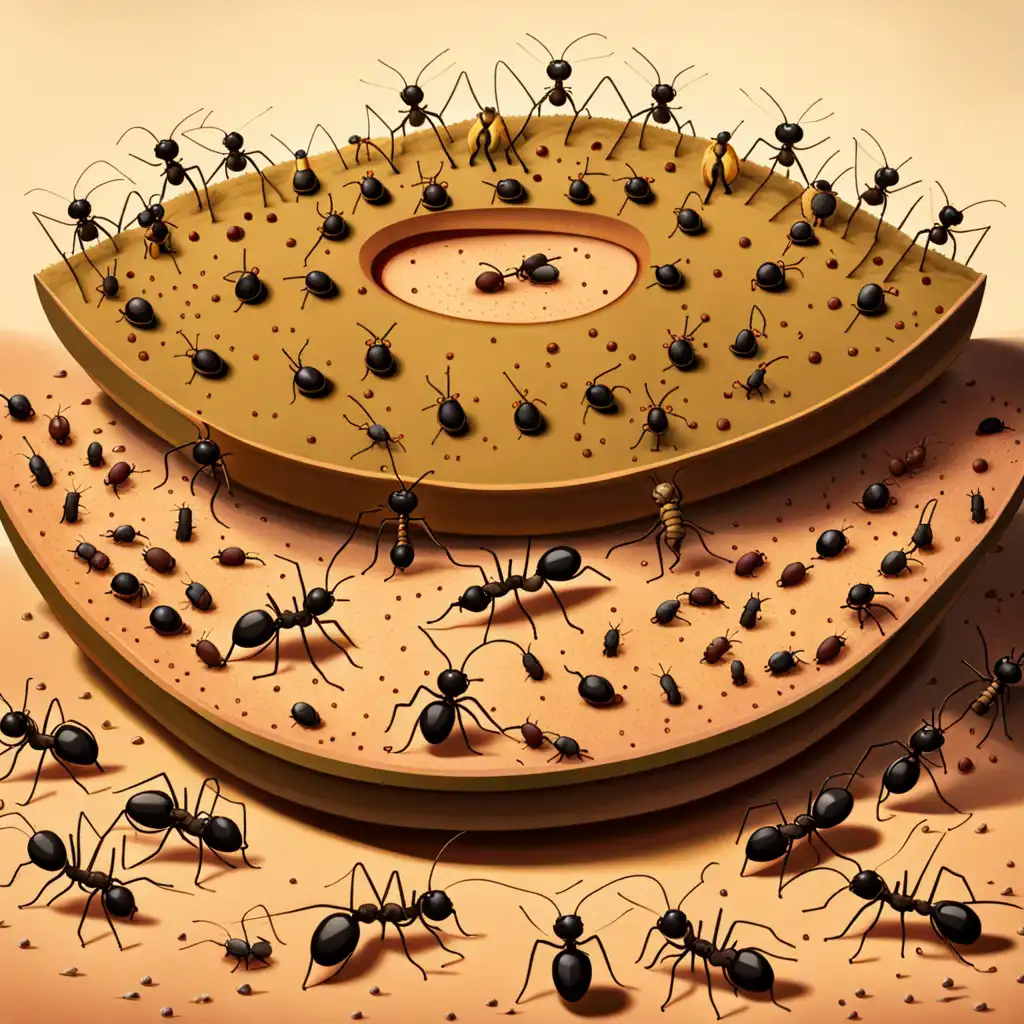
A group of types of insects or animals that have a specific role in their society
In a colony of ants, different castes include workers, soldiers, and the queen.

kæst
A form or mould into which liquid is poured to make a certain shape when it hardens
The artist created a bronze statue from a caste.
ऑडियो लोड नहीं हो सका। कृपया बाद में फिर कोशिश करें।
Caste is a social system that exists in some countries, particularly in South Asia, where people are divided into different groups based on their family background, occupation, and sometimes religion. Caste determines a person's social status, and they are expected to only interact with people in their own caste. In India, for example, there are four main castes: Brahmins (priests and scholars), Kshatriyas (warriors and rulers), Vaishyas (merchants and traders), and Shudras (laborers and servants). The caste system can also determine a person's opportunities and restrictions in life, such as education, marriage, and job opportunities. It is important to note that the caste system is controversial and has been criticized for promoting inequality and discrimination.
A division refers to a separation or splitting of something into different parts or groups, which can be based on various factors like race, ethnicity, religion, or other characteristics.
The term caste is more specific to the Indian context, while division can be applied in a broader sense. Caste is applicable when we talk about the traditional social structure of India, while division is generally used when we talk about the separation of people based on various factors in different societies around the world.
शब्द खोलें: Division →Estate refers to a system where people are grouped based on their ownership of property, such as land or property, and the power and privileges that come with that.
In this system, people with large estates hold more power and influence than those with smaller ones. This system was prevalent in feudal societies in medieval Europe.
Caste is a system of social stratification based on birth, while estate is a system of social stratification based on property ownership.
शब्द खोलें: Estate →It is determined by birth and includes factors such as occupation, education, and marriage within the same caste. Group is a broader term which can refer to any type of social grouping, such as clubs, organizations, or teams.
Group is more applicable in situations where people come together based on shared interests or goals, while caste is limited to a person's birth status.
शब्द खोलें: Group →Caste and hierarchy are two different concepts that are applicable in different contexts.
Hierarchy refers to a system of ranking individuals or groups based on a particular criteria. In a hierarchical system, people or groups are ranked from the highest to the lowest based on factors such as authority, power or social status.
Hierarchy is applicable in various contexts, such as in organizations, political systems, and social groups.
Caste refers to a social system based on birth, while hierarchy refers to a system of ranking based on different criteria, and is applicable in various contexts.
शब्द खोलें: Hierarchy →Order refers to a group of people who share a common purpose or occupation, but their membership is not based on birth or religion.
Orders are open for all individuals who possess certain skills and qualifications.
The term order applies in societies where people are not classified based on birth or religion but on their skills, education, and expertise, such as the legal, medical, or religious orders.
In simple words, caste is a predetermined social system that segregates people based on birth or religion, while order is a group formed based on skills, education, or expertise.
शब्द खोलें: Order →Caste and rank are two different ways to classify people in a society.
This system is prevalent in Hinduism and is often associated with India. In caste system, people are ranked based on their birth, and there is a certain way that they are expected to behave and interact with people from other castes.
Rank refers to a person's position or status in a specific group or society. This position can be determined by factors such as education, wealth, or achievement, and it is not necessarily fixed for life.
For example, in the military, a soldier's rank determines their level of authority and responsibility.
Caste is based on one's birth while rank is determined by factors such as education, wealth, or achievement.
शब्द खोलें: Rank →This system is based on inherited social status and is prevalent in countries like India. It determines one's occupation and social standing, with limited opportunity for social mobility.
Status refers to the position or rank of an individual within a society or group. This can be achieved through education, wealth, profession, or other factors, and can change throughout an individual's life.
Status is more reflective of an individual's achievements and abilities rather than their birth.
In simpler terms, caste is based on birth while status is based on an individual's actions and achievements. Caste is applicable in societies that follow the caste system, while status is applicable in most societies around the world.
शब्द खोलें: Status →Caste and stratum are two different ways of grouping or categorizing people in a society.
Stratum refers to a socioeconomic classification or layering of society based on factors such as income, education, and occupation.
In a stratum system, people can move up or down in society based on changes in their income, education, or job status. A stratified society is often associated with modern Western societies, where a person's social status is determined more by their achievements and abilities.
Caste is determined by birth and is associated with traditional societies, while stratum is determined by achievements and social mobility and is associated with modern societies.
शब्द खोलें: Stratum →to die and to be reborn into a higher caste for now the fires will continue to burn and in the city of death life goes
YouTube पर देखें ↗I want for every child - regardless of their background, gender, caste, etc. - to be able to access schools that are safe and supportive so that they can learn and thrive.
One of these and it's paradoxical, because it's linked to something that's rather nice, is the hope we all have for our careers. Never before have expectations been so high about what human beings can achieve with their lifespan. We're told from many sources that anyone can achieve anything. We've done away with the caste system,
YouTube पर देखें ↗A tradition I remember from my childhood was that when there was a wedding in any one family, the entire village shared the responsibility and contributed. Regardless of the caste or community, the bride became the daughter of not just a single family but of the entire village.
only to small worm bins, it's an emerging entrepreneurial enterprise. Large-scale facilities convert bulk organic waste and even manure into rich black castings called black gold. Its value as a soil additive is unparalleled, and it can help plants resist harmful pathogens.
YouTube पर देखें ↗As the poet has expected, the alarms now are sounded, for - and it must be said again - the birth of a poet is always a threat to the existing cultural order, because he attempts to break through the circle of literary castes to reach the center.
caste Hindus killing landless peasants and we have a lot of personal scores being settled now the overarching body the one that permissioned all of these killings was the right wing of the military and that was led by the US
YouTube पर देखें ↗If education does not create a need for the best in life, then we are stuck in an undemocratic, rigid caste society.
having a big cutout at the entrance of the village. When I went to her house, I was even more amazed because upper caste leaders -- men -- were sitting in the house in her house, and having chai and water, which is very rare in India.
YouTube पर देखें ↗I am from a very vague caste. I don't belong to any of the four. I am kayastha. They are well read, largely clerks so they get treated respectfully.
we are extending the life of these pits so that we don't have to resort to quick solutions that don't really make sense. I believe that access to adequate sanitation is a basic human right. We need to stop the practice of lower castes and lower-status people
YouTube पर देखें ↗I had done some commercial work in junior high and stuff - my mother would bring me into the city, and we'd go on these crazy castings. Acting was something I always dreamed of doing... it was my passion when I was young.
of the world it's not just within cities it's between countries still and so if we don't have a just economy um the social fabric will tear apart as well whether that's based on racial prejudice and racism that's historic whether it's based on economic discrimination and caste systems whether it's looking at the way that the economy
YouTube पर देखें ↗My parents wanted to be actors. They tried for years but didn't get anywhere. Then Mum got pregnant with me and they decided to make actors out of their children. You need your parents' support if you're going to do it. Otherwise who's going to ferry you to castings?
I was barred from entering into my own kitchen and my own dining room, my utensils were separated. But the night when I was angry they wanted to outcaste me. But I decided to outcaste the entire caste system.
YouTube पर देखें ↗Many immigrants do not talk about what they endured back home. They were fleeing that world, and when they left they didn't want to talk about it because there had been pain and heartbreak under the caste system of the South. They didn't want to burden their children with what they had endured.
In the novel she interrogates the culture of her native India, including its social mores and colonial history. One of her focuses is the caste system, a way of classifying people by hereditary social class that is thousands of years old.
YouTube पर देखें ↗It is not only in Meerut but entire U.P. where caste equation has phenomenal influence on politics.
of the process? Again it's not a prophecy; it's seeing all kinds of possibilities before us. One possibility is this creation of a new massive class of useless people. Another possibility is the division of humankind into different biological castes,
YouTube पर देखें ↗New Orleans invented the brown paper bag party - usually at a gathering in a home - where anyone darker than the bag attached to the door was denied entrance. The brown bag criterion survives as a metaphor for how the black cultural elite quite literally establishes caste along color lines within black life.