catkin
noun catkin
ˈkætkɪn
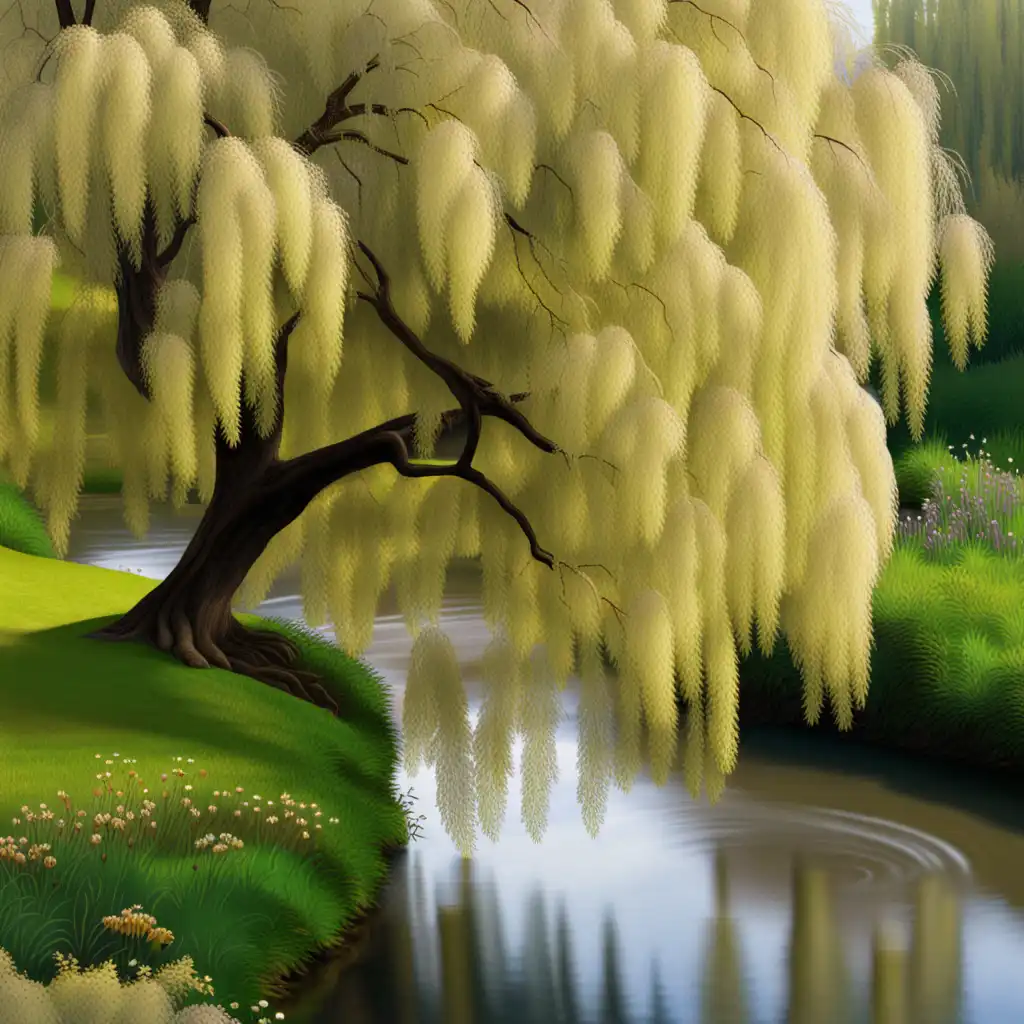
A slim, cylinder-like flower cluster, usually drooping, as seen on some trees and shrubs.
The willow tree by the stream is covered with catkins.
catkin
ˈkætkɪn
Cargando…
ˈkætkɪn
A slim, cylinder-like flower cluster, usually drooping, as seen on some trees and shrubs.
The willow tree by the stream is covered with catkins.
No se pudo cargar el audio. Inténtalo de nuevo más tarde.
A catkin is a type of flower cluster that grows on certain trees and bushes, such as willows and birches. The catkin is usually long and narrow, and it droops down from the stem. The flowers in the catkin are small and often have no petals, but they have lots of pollen. The word "catkin" comes from an old Dutch word that means "kitten," because the flower clusters look a bit like a kitten's tail.
A spike is a type of inflorescence, which is a group of flowers arranged on a stem. Unlike a catkin, a spike is a straight and rigid structure that rises up from the stem.
Examples of plants that have spike inflorescence are wheat and barley. In summary, catkins are long and drooping, while spikes are straight and rigid.
Abrir palabra: Spike →A tassel is a cluster of long, thin, and hanging strands found on the top of some plants, such as corn.
Catkins are typically small and inconspicuous, while tassels can be quite large and showy. Catkins are used to produce seeds, while tassels are used for pollination.
In summary, catkins and tassels are both flower clusters found on plants, but catkins are slim and cylindrical and grow downward, while tassels are long and thin and grow upward.
Catkins are found on trees, while tassels are found on plants such as corn.
Abrir palabra: Tassel →Life seeks life and loves life. The opening of a catkin of a willow, in the flight of the butterfly, in the chirping of a tree-toad or the sweep of an eagle - my life loves to see how others live, exults in their joy, and so far is partner in their great concern.