
leach
verb leach
liːtʃ
To let water pass through to remove soluble material.
The rainwater may leach out minerals from the soil making it less fertile.
leach
liːtʃ
Chargement…
liːtʃ
To let water pass through to remove soluble material.
The rainwater may leach out minerals from the soil making it less fertile.

liːtʃ
A substance which is being separated from a material by leaching.
The leach from the soil was collected for analysis.

liːtʃ
To gradually decrease something.
His energy seemed to leach away as the disease progressed.
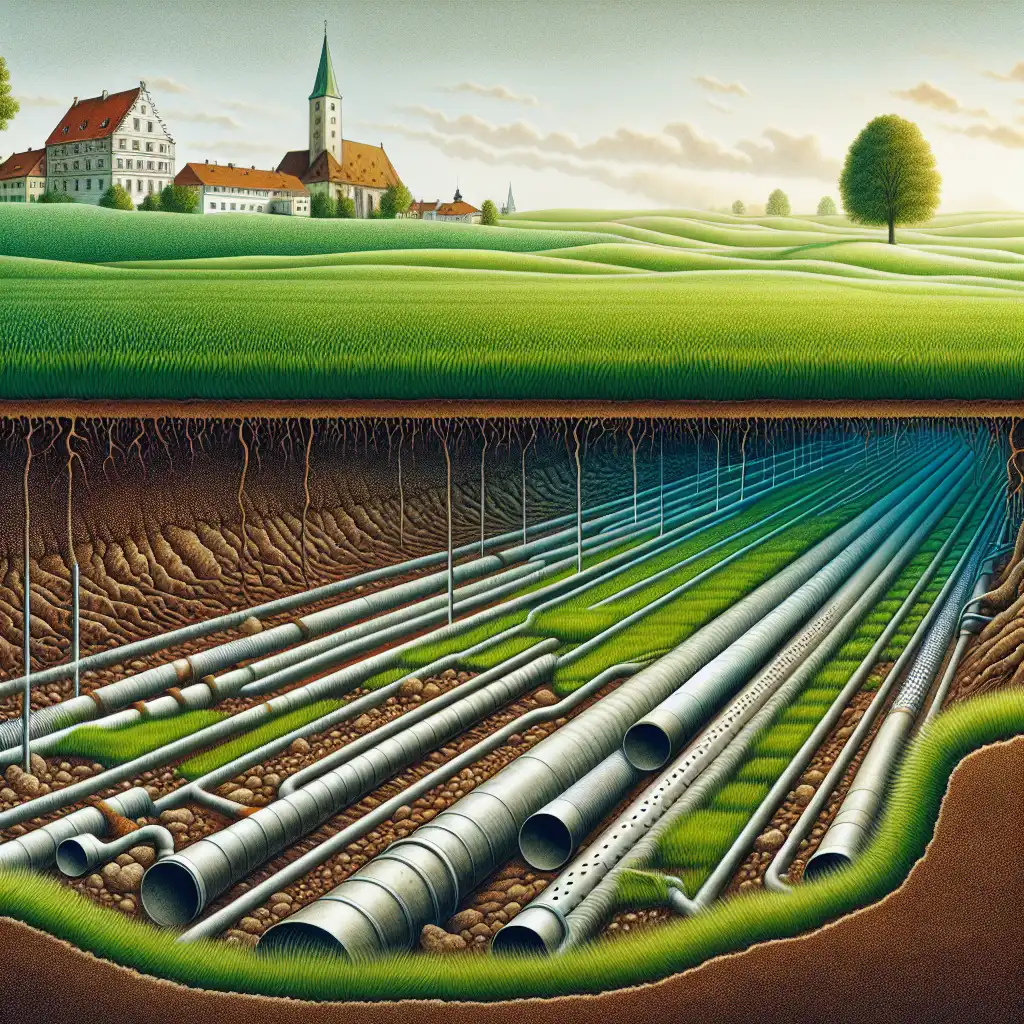
liːtʃ
A system used for drainage.
The leach field is designed to distribute wastewater evenly into the ground.
Impossible de charger l’audio. Réessayez plus tard.
The word 'leach' means to drain or flow out slowly from a substance. For example, if you have a wet paper towel, the water will leach out of it and make the table wet. We can also use the word 'leach' when talking about chemicals or nutrients in soil moving slowly away from where they are needed, like when rainwater causes fertilizer to leach out of a farmer's field. It is important to understand how to use this word correctly in order to communicate effectively.
Deplete means to exhaust or use up completely.
It is used to refer to the gradual reduction in the amount or quantity of something over time. For example, if a farmer has overused his land and the soil has become nutrient-poor, we can say that the land has been depleted of nutrients.
Deplete is used when we talk about the decline in quantity over time, whereas leach is used when we talk about the removal of essential components or substances.
Ouvrir le mot: Deplete →Drain refers to the process of removing liquid from something that is filled with it, such as a sink filled with water or a bathtub filled with water.
Usually, when we talk about draining something, we are trying to get rid of the liquid as quickly as possible.
To summarize, drain is used to remove liquid quickly from something, while leach refers to the slow removal of substances from something over time.
Ouvrir le mot: Drain →Extract means to remove or obtain a substance from a mixture or material by physical or chemical means. For example, you could extract oil from olives by pressing them.
Extract is done intentionally to obtain a substance, while leach happens unintentionally as a result of liquid passing through a material.
Extracting is a pro-active approach, while leaching is more of a by-product of a process.
Ouvrir le mot: Extract →A filter is a device or material used to separate or block unwanted substances, such as dirt or chemicals, from a liquid or gas.
It is used to purify or refine a substance. Filters are commonly used in water treatment plants to remove impurities from drinking water.
In simpler terms, a filter separates unwanted things from a liquid or gas, while leaching is a way of extracting something from a solid using a liquid.
Filters are used for purification, while leaching is used for extraction.
Ouvrir le mot: Filter →Penetrate means to pass through and enter into something.
It is used when referring to something that is entering or becoming part of another substance or object, such as when water penetrates the soil or when a needle penetrates the skin.
In simpler terms, leach is when something is washed away from a substance and penetrate is when something enters into it.
Ouvrir le mot: Penetrate →The words leach and percolate both refer to the movement of fluids through porous materials, but they have slightly different meanings.
Percolation refers to the movement of water through a porous material such as soil, rock, or coffee grounds. This process can be caused by gravity, pressure, or other forces, and can be used to filter or purify water.
So, in summary, leaching involves the movement and dissolution of substances, while percolation involves the movement of fluids through porous materials.
Each term is applicable in different contexts, with leaching being more commonly used in geology, agriculture, and environmental science, while percolation is often used in engineering and brewing.
Ouvrir le mot: Percolate →Purifying refers to the process of removing impurities from a substance without dissolving it. This is commonly used in water treatment plants to remove contaminants from water.
In simpler terms, leaching uses liquid to remove impurities, while purifying uses various methods to remove impurities without dissolving the substance.
Ouvrir le mot: Purify →The words leach and seep both refer to liquid moving through a porous material, such as soil or rock, but they have different meanings.
This is often the result of rainwater seeping through soil and picking up various compounds as it travels downward. Leaching can be beneficial, such as in the case of plants absorbing nutrients from the soil, or detrimental, such as when chemicals from a landfill seep into groundwater.
Seeping is when a liquid moves slowly through porous material, without necessarily dissolving anything. This can be seen, for example, when water seeps through the cracks in a rock or the holes in a sponge.
Seeping can also be beneficial or detrimental, depending on the circumstances. For instance, seeping groundwater can replenish aquifers and keep wetlands healthy, but excessive seepage can weaken the structural integrity of buildings or cause soil erosion.
Overall, leaching involves the dissolution and removal of substances, while seeping is simply the movement of liquid through material.
Ouvrir le mot: Seep →A Spoon You Can Eat Is a...
Voir sur YouTube ↗Patents are like fertilizer. Applied wisely and sparingly, they can increase growth. But if you apply too many chemicals, or make patents too strong, then you can leach the land, making growth more difficult.
Why do your jeans wear...
Voir sur YouTube ↗God doesn't just miraculously and physically intervene in the whole process, so if I just go and drop a bunch of chemicals and herbicides that leach into the groundwater, I can pray all day to keep my child healthy, but if the herbicides gone into the groundwater come up my well, my child's going to drink that water.
Dianna Cohen: Tough...
Voir sur YouTube ↗I found my Saatva mattress when I was searching for a biodegradable and organic mattress that wouldn't leach chemicals because, believe it or not, I don't like that!
Leeches Cure %\PIPE% National...
Voir sur YouTube ↗I used to smoke cigarettes, ten a day, but gave up when I was 28. Now my vice is several cups of coffee a day, which isn't great if you're prone to weak bones as I am, as caffeine can leach calcium.
What causes heartburn? -...
Voir sur YouTube ↗When we drink a cup of coffee or spoon heated chicken noodle soup or chili out of a Styrofoam cup, we are also taking in small doses of chemicals that leach from the container. Heat activates this transfer, as does oil, acids and alcohol.
Ultra-Pure Water %\PIPE%...
Voir sur YouTube ↗The usual way of growing cotton is highly petrochemical-intensive, requiring 110 pounds of nitrogen fertilizer per acre. Some of the fertilizer is broken down by soil bacteria into nitrate, a toxic and highly soluble chemical that can leach into groundwater or get washed into lakes, creating oxygenless dead zones.
Why Four Cowboys Rode...
Voir sur YouTube ↗Environmentalists should like fracking for its relative cleanliness. But they don't. They have made a bugaboo out of the chemicals in fracking fluids, which supposedly can leach into groundwater sources. I'm convinced they're dead wrong. Ultimately, good technology with a cost advantage will win out over paranoia.
The Global Spermageddon...
Voir sur YouTube ↗MARS %\PIPE% Exclusive Sneak...
Voir sur YouTube ↗Viper the Courageous %\PIPE%...
Voir sur YouTube ↗