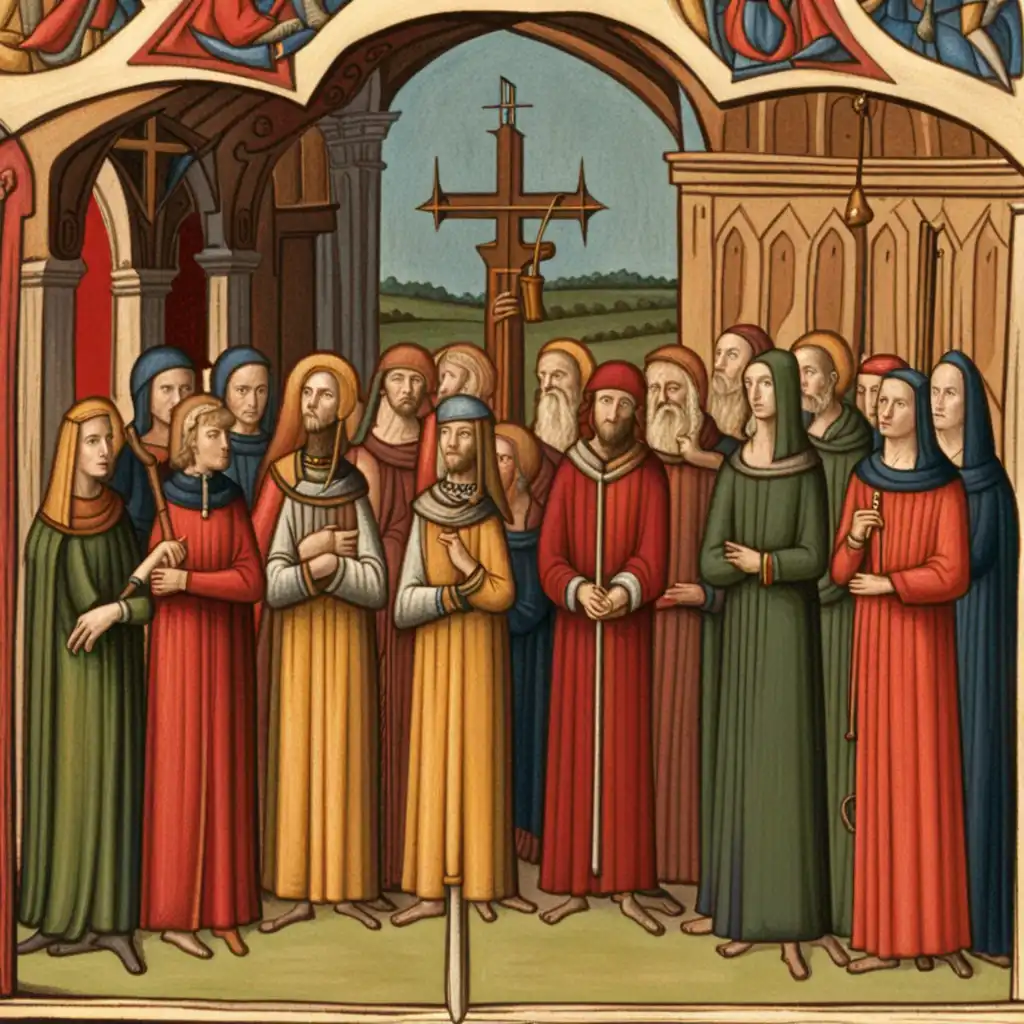
A person who doesn't believe or denies the teachings of a particular religion, mainly used in context of someone not believing in the predominant religion of a society.
In the Middle Ages, Christians often referred to non-Christians as infidels.
No se pudo cargar el audio. Inténtalo de nuevo más tarde.
Cómo se usa
The word "infidel" is typically used in a negative way to describe someone who does not believe in a certain religious faith, particularly in reference to Islam. However, it is not a commonly used word in everyday conversation and can be considered offensive to some people. It is best to avoid using this word and instead refer to someone's lack of belief or faith more respectfully.
Agnostic refers to someone who is unsure or uncertain about the existence of a higher power or God. They may acknowledge that it is possible for a God to exist, but they do not claim to know for sure.
Agnostics are often curious and seeking answers about the possibility of a higher power, but they do not fully commit to any particular belief system.
So, while agnostic refers to uncertainly about the existence of a higher power, infidel refers to the rejection of religious beliefs altogether.
An atheist is someone who does not believe in the existence of gods or a god. An infidel is a term typically used to describe someone who does not believe in a particular religion, or who opposes the beliefs of a given religion.
An infidel can be an atheist, but not all atheists are infidels. Infidel is a more general term, while atheist is more specific.
Atheist is applicable when discussing someone's belief regarding the existence of god, while infidel is typically used when referring to someone's relationship with a particular religion.
Believer refers to someone who has faith or trust in a particular religion or belief system. Infidel describes someone who does not believe in a particular religion or belief system.
The term believer is applicable when referring to people who have faith in any religion, including Christianity, Islam, Buddhism, or Hinduism.
Believer is a neutral term that describes someone who has faith/trust in a particular religion or belief system, while infidel is a negative term used to describe someone who doesn't believe in a particular religion or belief system.
A dissenter is someone who disagrees with a commonly accepted belief or opinion, especially in a religious or political context.
A dissenter is someone who disagrees with a particular belief or institution while still acknowledging its existence, whereas an infidel is someone who rejects a particular religion or belief entirely.
Heathen is typically used to describe someone who does not follow a specific religion or faith.
Heathen is a broader term that can refer to anyone who doesn't adhere to a specific religion or faith, while infidel is a more specific term used to describe someone who opposes the dominant religion.
Heretic refers to someone who holds beliefs that go against the established beliefs of a particular religion or group.
The term heretic is primarily used within a religious context to describe someone who deviates from established beliefs within that faith, while infidel is a more general term used to describe anyone who does not believe in a particular religion or set of beliefs.
Nonconformist describes someone who chooses to do things differently from the norm, or from what is generally accepted in society.
Infidel describes someone who does not believe in a certain religion, while nonconformist describes someone who chooses to do things differently from what is generally accepted.
Orthodox refers to someone who follows traditional or established beliefs and practices of a religion.
Infidel is a negative term used to describe people who do not believe in a specific religion, whereas orthodox is a positive term that refers to people who adhere to a traditional belief system.
Pagan refers to a person who follows a religion that is not one of the three Abrahamic religions (Judaism, Christianity, or Islam).
Infidel typically refers to someone who does not follow the speaker's specific religion, while pagan refers to someone who follows a religion that is not one of the three Abrahamic religions.
Skeptic refers to someone who questions or doubts things, often in a scientific or logical way.
Infidel is a term used to refer to someone's religious beliefs, while skeptic is a term used to describe a questioning or doubtful attitude towards any topic.
The truth of our faith becomes a matter of ridicule among the infidels if any Catholic, not gifted with the necessary scientific learning, presents as dogma what scientific scrutiny shows to be false.
God says he will never be satisfied with the infidels. In terms of worldly affairs, America is very strong. Even if it were twice as strong or twice that, it could not be strong enough to defeat us. We are confident that no one can harm us if God is with us.
Bin Laden always wanted to get rid of Mubarek and Ben Ali and Gaddafi and so on, claiming that they were all infidels working for America, and in fact, it was millions of ordinary people who peacefully, more or less - certainly in the case of Tunisia and Egypt - got rid of them.
The parents have a right to say that no teacher paid by their money shall rob their children of faith in God and send them back to their homes skeptical, or infidels, or agnostics, or atheists.