
interjection
noun interjection
ˌɪntərˈdʒekʃn
A word or phrase that people use to express emotion, reaction or surprise
"Wow!" he exclaimed after seeing the magnificent sight.
interjection
ˌɪntərˈdʒekʃn
Đang tải…
ˌɪntərˈdʒekʃn
A word or phrase that people use to express emotion, reaction or surprise
"Wow!" he exclaimed after seeing the magnificent sight.
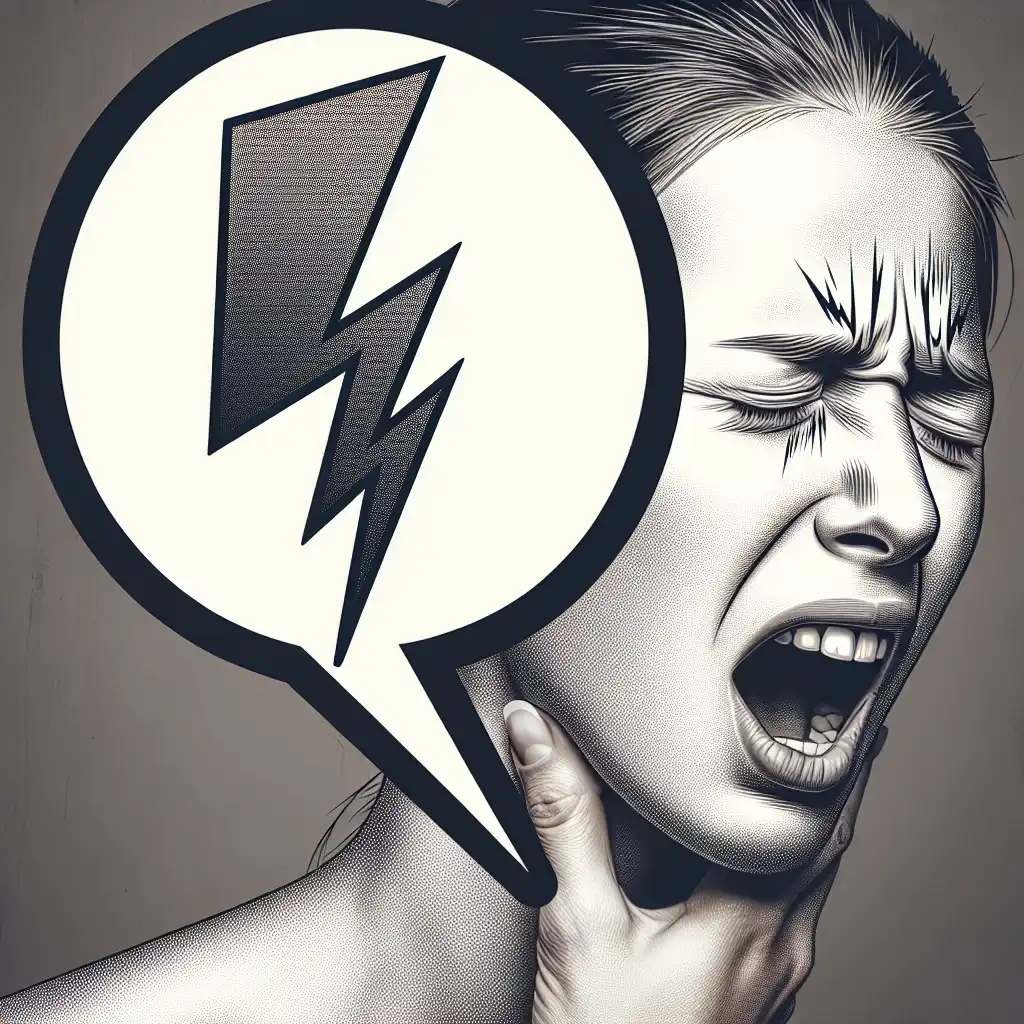
ˌɪntərˈdʒekʃn
In grammar, it is a part of speech whose members are used mostly to express emotions
'Ouch' is an interjection expressing pain.
Không tải được âm thanh. Vui lòng thử lại sau.
An interjection is a word or phrase that is used to express a sudden emotion or feeling, such as joy, surprise or pain, and is usually followed by an exclamation point. Interjections are commonly used in conversation, particularly in informal settings, and can add emphasis or emotion to a sentence or statement. Examples of interjections include "wow", "ouch", "yay", "oops", and "oh no".
An assertion is a statement or declaration that is made with confidence and without doubt.
It is often used to express an opinion or belief, or to make a claim about something that is assumed to be true. For example, "I believe that chocolate is the best flavor of ice cream," is an assertion because the speaker is expressing their opinion with confidence.
Both assertions and interjections are applicable in different situations. Assertions are often used in debates, discussions, or when expressing opinions, while interjections are used more in everyday conversation when expressing emotions or reactions.
Mở từ: Assertion →A declaration is a statement or announcement of something, such as declaring one's intentions or beliefs.
A declaration is a formal statement while an interjection is an informal exclamation.
Mở từ: Declaration →An exclamation is a word or phrase that is used to express strong feelings, such as joy, anger, or surprise. For example, "Wow!" or "Oh my gosh!" are exclamations.
Both exclamation and interjection are applicable in sentences to add emphasis or to express emotion. Exclamations, however, are usually longer than interjections and can stand alone as a sentence.
Mở từ: Exclamation →An injection refers to the act of injecting something into the body, such as a medication or vaccine.
An injection is a medical term for administering a substance into the body, while an interjection is a linguistic term for a word or phrase used to express emotion in a sentence.
Mở từ: Injection →Insertion means adding something into a pre-existing thing or system. It is frequently used in the context of inserting an object or information.
To sum up, insertion is the act of adding something to a pre-existing system or object, while interjection is a word or phrase used to express sudden emotion or emphasis in speech or dialogue.
Mở từ: Insertion →An interruption is an act of stopping or temporarily halting an ongoing activity or conversation, often without permission or prior agreement.
It disrupts the flow of the conversation or activity and can sometimes cause frustration or annoyance. For example, if someone is speaking and another person interrupts them, saying "Excuse me, can I ask a question?", it would be considered an interruption.
In summary, interjections are used to add emotion or emphasis to a sentence, while interruptions are when someone stops an ongoing activity or conversation.
Mở từ: Interruption →An outburst is a sudden and loud display of emotion, such as anger or excitement. It interrupts the flow of conversation and can last for a longer period of time.
For example, "He had an outburst of anger when he found out he didn't get the job." An outburst is more forceful than an interjection and is often seen as inappropriate or disruptive.
Mở từ: Outburst →Utterance refers to any spoken or written expression that is composed of a complete sentence or group of sentences.
It is a complete thought or message that can convey information, opinion or emotions. Utterance is a broader term that encompasses all types of spoken or written communication, from simple statements to longer speeches or essays.
Interjection is a small exclamation word that expresses feelings or emotions, while utterance refers to a complete thought, message or communication.
Interjection is used to add emotion or emphasis to a sentence, while utterance can either be emotional or informative.
Mở từ: Utterance →