societal
adjective societal
səˈsaɪətl
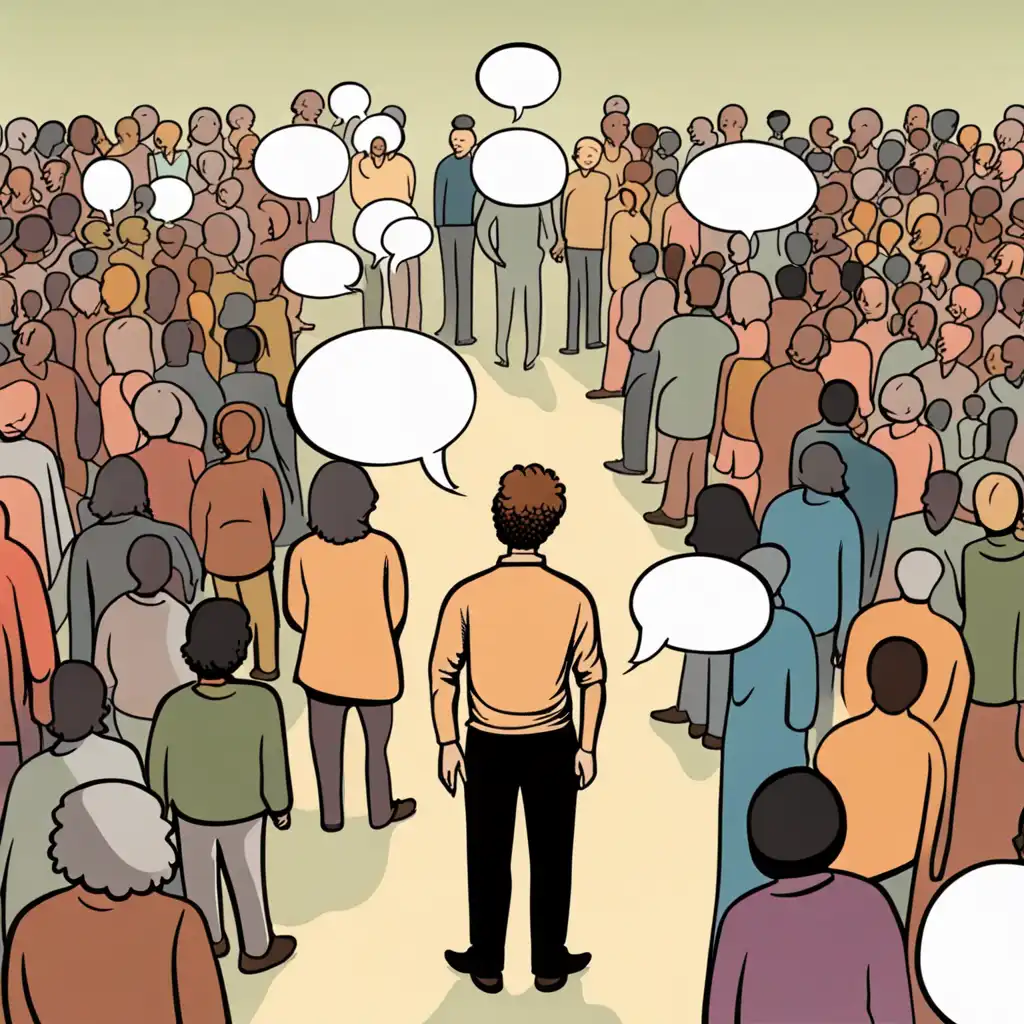
relating to society or social relationships
Societal norms greatly influence individual behavior.
societal
səˈsaɪətl
読み込み中…
səˈsaɪətl
relating to society or social relationships
Societal norms greatly influence individual behavior.

səˈsaɪətl
relating to the structure, organization, and functioning of society
Societal structures tend to reflect the values of the people.
音声を読み込めませんでした。しばらくしてからもう一度お試しください。
The word 'societal' is used to describe things that relate to society as a whole. For example, if we talk about societal norms, we are talking about the expectations and values that are held by a particular society. If we talk about societal changes, we are talking about changes that affect society at large. Overall, the word 'societal' is used to talk about things that impact a group of people or society as a whole.
Collective means something that is shared or done by a group of people. For example, a group of people might have a collective responsibility to clean up a park.
Collective is more focused on the actions or attributes of a specific group, while the word societal is more concerned with the broader impact of things on society as a whole.
単語を開く: Collective →Communal refers to something that is related to a group of people who share a common ownership or interest in something.
For example, a communal dinner is a meal where everyone in a community contributes something to share.
Communal refers to smaller communities or groups, while societal relates to broader society as a whole. Both words are applicable in different contexts depending on the size and scope of the situation being described.
単語を開く: Communal →Interdependent means that two or more things rely on each other in order to function properly. For example, a flower relies on bees to pollinate it, and the bees rely on the flower for nectar.
This relationship is interdependent.
Interdependent is more applicable when talking about relationships between things, while societal is more applicable when talking about larger systems and structures within a society.
単語を開く: Interdependent →Participatory refers to the act of actively taking part in something, usually in the context of decision-making or problem-solving.
Participatory is often used in the context of development work, community projects, and democratic processes where everyone is encouraged to participate and contribute.
単語を開く: Participatory →Public refers to things that are available or accessible to all members of the general public, such as public parks or public transportation.
Public refers to accessibility, while societal refers to broader social structures and interactions. Both terms are applicable in different contexts, depending on what you're discussing.
単語を開く: Public →Share refers to giving part of something to someone else, like sharing a piece of cake with a friend. It typically refers to dividing something that was originally whole or singular.
Share is applicable when dividing something between individuals, while societal is applicable when discussing larger societal issues or patterns.
単語を開く: Share →Social refers to the interactions and relationships between people in a society, while societal refers to the overall characteristics and customs of a society as a whole.
For example, 'social media' refers to the various platforms and tools that allow people to interact and connect with each other online, while 'societal issues' refer to larger problems or concerns that impact the entire community or nation, such as poverty, inequality, and crime.
Social focuses on individuals and their relationships and actions, while societal looks at the bigger picture and the overall structure and norms of a society.
単語を開く: Social →How to build a fictional...
YouTube で見る ↗I have seen my father defying societal norms and investing his time and energy on us. He was ridiculed and criticised by the community for asking girls to seek a career in wrestling. But he had vision and was least worried when elders warned him his daughters would not find grooms. I had to wrestle for him and that motivated me tremendously.
Sleep is your superpower...
YouTube で見る ↗What has always made IBM a fascinating and compelling place for me is the passion of the company, and its people, to apply technology and scientific thinking to major societal issues.
Stopping Pandemics An...
YouTube で見る ↗We have to recognize that the freedom of the individual has to be protected not only from the power of the state, but even more so from economic and societal power.
An algorithm for happily...
YouTube で見る ↗My favorite topical tweets are the ones that put a tweet in context so it illuminates a deeper truth or societal trend.
The past present and...
YouTube で見る ↗I think that when you're exploring themes of humanity and what defines a hero and what makes us our best self and what makes us our worst self, you're going to stumble into territories of societal issues and that kind of thing. Sometimes you have accidents where you're not trying, but then the opportunity just presents itself. and you lean into it.
The psychology of evil %\PIPE%...
YouTube で見る ↗My focus is not on solving nature's deeper mysteries. It is on using nature's deeper mysteries to solve important societal problems.
The greatest TED Talk...
YouTube で見る ↗Duryodhan was a prince fighting for his throne. He was powered by ambition and aspiration. Parshuram is godly. His fight is against injustice at a larger societal level. I've enjoyed playing both the characters.
What will future jobs...
YouTube で見る ↗Clothing shouldn't be a societal shackle. It should be art and truth and a way for us to show the world what we want out of it. It's environmental armor.
The philosophy of...
YouTube で見る ↗I'm drawn to projects where I play these really complicated characters, but also where I can have some type of influence on affecting what we see as societal norms.
The problem with the...
YouTube で見る ↗Everything good and bad about technology would be magnified by implanting it deep in brains. Is the risk of brain-hacking outweighed by the societal benefits of faster, deeper communication, and the ability to augment our own intelligence?