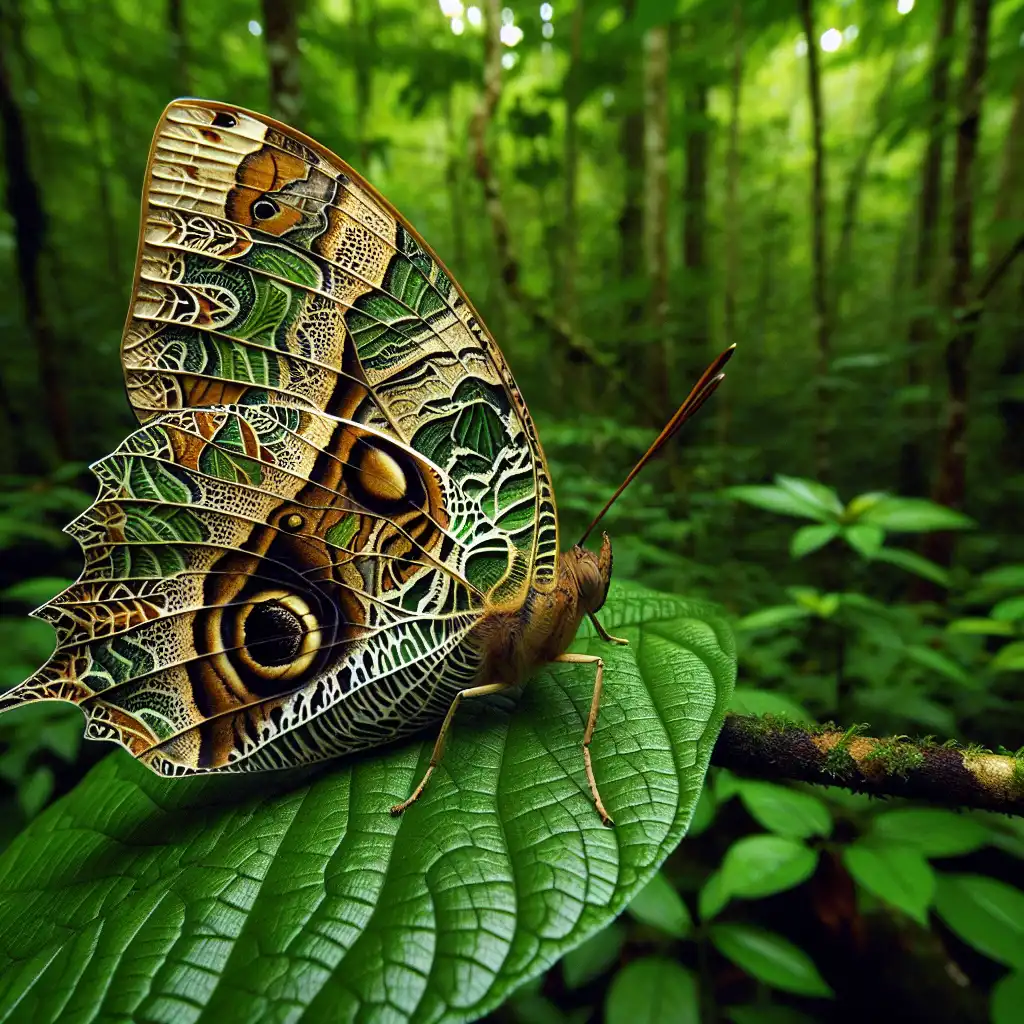
mimetic
adjective mimetic
mɪˈmetɪk
Copying or imitating something, often another animal's characteristics or behaviours.
The mimetic behaviour of the butterfly allows it to fool predators and survive.
mimetic
mɪˈmetɪk
불러오는 중…
mɪˈmetɪk
Copying or imitating something, often another animal's characteristics or behaviours.
The mimetic behaviour of the butterfly allows it to fool predators and survive.

mɪˈmetɪk
In arts, representing or interpreting reality in a detailed and accurate way.
His painting style is mimetic, trying to copy nature as faithfully as possible.

mɪˈmetɪk
In biology and medicine, having a physical similarity or correspondence to a certain feature or function.
They are working on mimetic drugs that can mimic the effects of the body's natural substances.
오디오를 불러오지 못했어요. 잠시 후 다시 시도해 주세요.
The word 'mimetic' is used to describe something that imitates or copies the behaviour, actions or appearance of something else. It is often used in fields such as art, literature, and philosophy. For example, a painting may be described as mimetic if it accurately portrays a real-life object or scene. In philosophy, the concept of mimetic desire refers to the idea that our desires are often influenced by the desires of others around us. Overall, 'mimetic' is a term that describes imitation or replication of something else.
Compare means to examine two or more things to see how they are similar or different. For example, you can compare two books to see which one you like more.
Compare is used when you want to see how things are similar or different, while mimetic is used when you want to create something by imitating or copying another thing.
단어 열기: Compare →Copy means to make an exact or similar reproduction of something. It is applicable when someone wants to replicate something that already exists or has been created by someone else.
For example, if a student makes a copy of a painting by hand, they are replicating it as closely as possible.
The word mimetic refers to imitation or resemblance that goes beyond mere copying. It involves emulating the essence, feeling, or deeper significance of something.
This term is applicable when someone wants to create something that captures the essence of the original, rather than just copying it.
단어 열기: Copy →Both words emulate and mimetic means copying or imitating something, but there is a slight difference in their usage.
Emulate is used when someone tries to match or surpass the achievements or qualities of someone else. For example, if someone is trying to emulate their favorite athlete, they are trying to achieve the same level of success, skill, or performance.
Emulate is used in the context of personal growth and aspirations, while mimetic is used in the context of art and design.
단어 열기: Emulate →Imitative means copying or reproducing something, usually in an artistic or creative sense. For example, an artist might create an imitative painting of a famous work.
So, while both words involve imitation, imitative is typically used when talking about artistic or creative works, and mimetic is used when talking about comedy or imitation that involves exaggeration and humor.
단어 열기: Imitative →Mimetic means imitating or copying something natural, while mimic means imitating or copying something in general. Mimetic is more specific and refers to imitating something specific to nature, such as a plant or animal, while mimic is more general and can refer to imitating anything, such as a voice or behavior.
For example, a bird's feathers can be mimetic because they blend in with their surroundings, while an impressionist comedian can be a mimic because they imitate different characters and voices.
단어 열기: Mimic →Parallel refers to something that runs alongside or is similar to another thing.
It can be used in situations where two things run in a similar direction, such as two roads that run parallel to each other, or when two things have similar characteristics, such as two people who have similar personalities.
Mimetic usually refers to a deliberate imitation, while parallel refers to a similarity or comparison.
단어 열기: Parallel →Reflective, on the other hand, refers to something that is thoughtful, introspective, or considering deeply. It has to do with self-reflection or introspection.
For example, a reflective person may take the time to think deeply about their actions or motivations. This term is applicable in the context of introspection or deep thought.
단어 열기: Reflective →Mimetic refers to something that imitates or mimics the characteristics of another thing or person, whereas replicate refers to making an exact copy of something.
A 3D printer can replicate objects by making an exact copy of them through precise measurements and calculations.
Whereas replicate is used when an exact copy of something needs to be made, like a document or a physical object.
단어 열기: Replicate →Learning that we have a scapegoat is to lose it forever and to expose ourselves to mimetic conflicts with no possible resolution.
Slipstream fiction is usually defined as fiction with a contemporary setting in which story elements are mimetic (that is, seem real) - except for one or two eerie strangenesses. Unlike outright fantasy, these are not explained or integrated into an alternate-reality setting.
A mimetic crisis is when people become undifferentiated. There are no more social classes, there are no more social differences, and so forth.
What I call a mimetic crisis is a situation of conflict so intense that on both sides people act the same way and talk the same way even though, or because, they are more and more hostile to each other.
The myth-making machine is the mimetic contagion that disappears behind the myth it generates.
Society's preservation against the unlimited violence of scandals lies in the mimetic coalition against the single victim and its ensuing limited violence. The violent death of Jesus is, humanly speaking, an example of this strange process.