
sniffle
noun sniffle
ˈsnɪfl
A small or slight cold which causes you to breathe in with a short sound because your nose is not clear.
She has a little sniffle, but she'll be okay.
sniffle
ˈsnɪfl
Loading…
ˈsnɪfl
A small or slight cold which causes you to breathe in with a short sound because your nose is not clear.
She has a little sniffle, but she'll be okay.
ˈsnɪfl
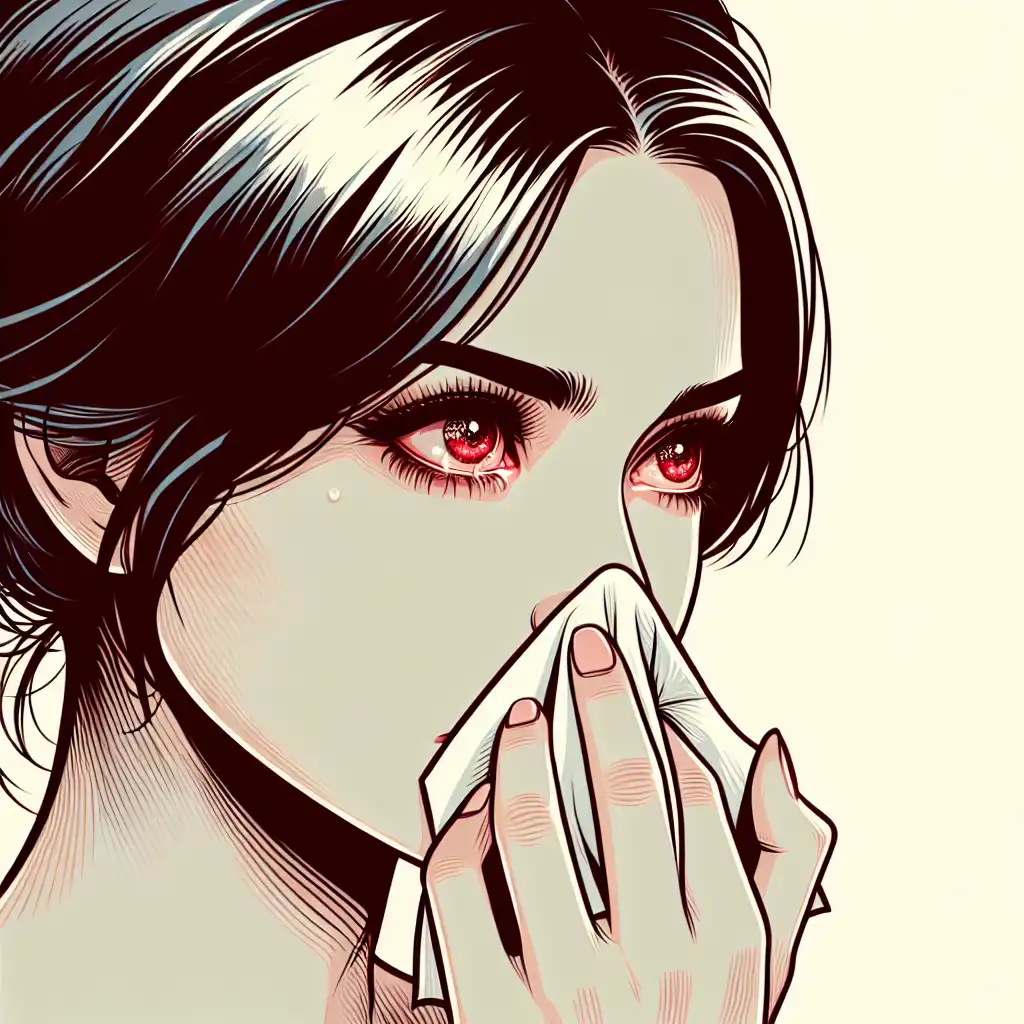
To breathe in quickly and with a short sound because your nose is not clear, especially because you are crying or have a cold.
She was sniffling and her eyes were red from crying.
Audio could not be loaded. Please try again later.
The word "sniffle" means to breathe in quickly and audibly through the nose when you need to clear it due to a cold or allergies. You can use this word to describe the sound someone makes when they are sick or have a blocked nose. For example, "She sounded like she had a cold as she sniffled throughout the meeting." This word is commonly used in informal conversations and is a way to describe a common symptom of being sick.
Blubber describes loud, uncontrollable crying. It usually involves making loud, deep sobs and gasps, and is often accompanied by tears and mucus.
Blubbering is typically associated with intense emotions like sadness, grief or frustration.
Blubber is for loud, deep, and uncontrollable crying while sniffle is for soft, shallow crying.
Open word: Blubber →Lament means to express deep sadness or sorrow, usually through crying or mourning, while sniffle means to emit small, repeated sounds through the nose due to a cold or crying.
Lament is applicable when someone is grieving or mourning a loss, such as the death of a loved one or the end of a relationship.
Lament is a more expressive word for deep sadness, while sniffle is a word to describe small sounds that accompany crying or a cold.
Open word: Lament →Mourn means to feel deep sadness or sorrow, often in response to a significant loss or tragedy.
It is usually accompanied by crying, sobbing, or other expressions of grief. Mourn is applicable in situations such as the death of a loved one, a national tragedy, or a devastating event.
Mourn is about feeling deep sadness while sniffle is about the physical symptom of breathing audibly through the nose due to congestion.
Open word: Mourn →Both sniffle and snuffle refer to a sound made by someone when they are congested due to a cold or allergies.
However, sniffle describes the action of inhaling sharply through the nose, while snuffle can be both a verb and a noun that describes a muffled or continuous sound made by someone who is congested.
So when someone is wiping their nose with a tissue, they may be sniffing, but when someone is making a constant nasal noise, they may be snuffling.
Both words are commonly used interchangeably, but snuffle can also be used to refer to the sound made by animals when they snort or breathe through their noses.
Open word: Snuffle →Sob refers to a deep, loud cry that someone makes when they are in great emotional distress. You might use the word sob to describe someone who is crying hard and loudly, perhaps because they are experiencing a great loss or are overwhelmed by emotion.
So, in short, sniffle tends to refer to a small or relatively quiet action, usually related to a physical condition, while sob refers to a loud and emotional reaction to an event.
Open word: Sob →A sniffle suggests a mild crying sound, usually associated with a runny nose, while a wail refers to a loud, high-pitched sound indicative of great sorrow or pain.
A sniffle is usually applicable when someone is just crying softly, like when they have a cold or are feeling sad, while a wail is applicable when someone is expressing intense grief or physical pain.
To summarize, a sniffle is a light cry with tears and nasal discharge, while a wail is a loud cry expressing deep sadness or pain.
Open word: Wail →Weep means to cry deeply or sob.
Sniffle describes a person who is sniffling due to crying or a cold, while weep describes someone who is crying deeply or sobbing due to emotional pain or sadness.
Open word: Weep →Whimper refers to a quiet or low cry, usually related to pain or fear. It often sounds like a soft, trembling cry that tends to be more emotional than the sniffle.
So, basically, sniffle is more tied to respiratory sounds, while whimper is more tied to emotional or painful responses.
Open word: Whimper →Otters Have a Favourite...
Watch on YouTube ↗Life is made up of sobs, sniffles, and smiles, with sniffles predominating.
David Anderson: Your...
Watch on YouTube ↗Hospitals are great places, and you can learn from them, but you don't necessarily need to go in anytime you get the sniffles. And maybe you shouldn't treat pregnancy as a disease.
Your brain is more than...
Watch on YouTube ↗I can have my day carefully planned, but if someone wakes up with a cough or a sniffle, then everything changes. Thinking quickly and adapting without grumbling are essential skills to learn, in my opinion.
If you take a reasonable amount of vitamin C regularly, the incidence of the common cold goes down. If you get a cold and start immediately, as soon as you start sneezing and sniffling, the cold just doesn't get going.
When I became a mother of two, I decided to work with brands that remind me of family because they're my No. 1 priority. Now I'm partnering with Puffs to encourage people to get out and not hibernate inside. People should enjoy the holiday season, and if you do have a runny nose or the sniffles, Puffs is there to take care of your symptoms.
If you take your kid in for the sniffles, you pay $20, but the full cost is $200. And so we need to get back to the price system where you see the full cost of health care, and then people will make smarter decisions. That will reduce health care costs, and it's a huge part of our economy.