eon
noun eon
ˈiːən,ˈiːɑːn
A very long period of time, often used to talk about geology or the history of the earth.
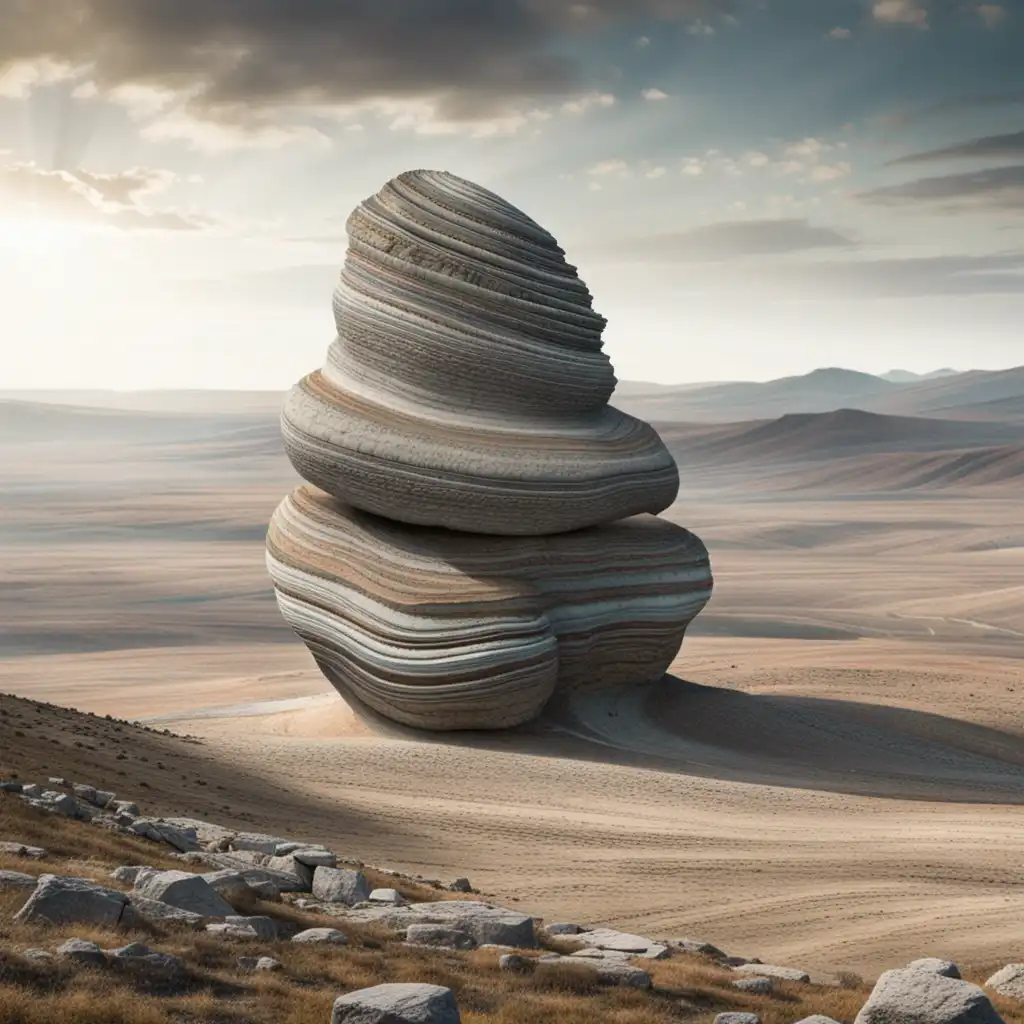
The rocks formed over eons, slowly changing into the shape we see today.
eon
ˈiːən,ˈiːɑːn
Cargando…
ˈiːən,ˈiːɑːn
A very long period of time, often used to talk about geology or the history of the earth.
The rocks formed over eons, slowly changing into the shape we see today.
ˈiːən,ˈiːɑːn
In some New Age and spiritual writings, an eon is a specific unit of time in the framework of the universe's timeline.
In the grand scheme of the universe, humans have only existed for less than an eon.
No se pudo cargar el audio. Inténtalo de nuevo más tarde.
'Eon' is a word that is used to refer to a very long period of time, usually billions of years. It can be used in both scientific and non-scientific contexts. For example, in science, we use the word eon to talk about the different eras in the Earth's history (such as the Precambrian eon, the Paleozoic eon, or the Cenozoic eon), which were each characterized by different types of plants, animals, or geological events. In everyday language, we might use the word eon to describe how long it feels like we've been waiting for something (e.g. "It's been an eon since we last saw each other!") or to emphasize how long a particular event or situation has been going on (e.g. "It feels like we've been in this pandemic for eons!").
Age refers to a period of history or a person's lifespan. For example, the Bronze Age or the Stone Age, or someone's age being 15 or 25.
It is often used to describe cosmic timescales or geological eras, such as the Precambrian Eon or the Archean Eon. It is a much larger and more abstract measure of time than age.
Age is a specific measure of time, while eon is a much larger and abstract measure of time that refers to an indefinite and long period.
Abrir palabra: Age →A century refers to a period of 100 years, while an eon refers to a very long or indefinite period of time. An eon is a much larger span of time than a century.
You might use the word century to talk about the past one hundred years, such as the 20th century or the current 21st century.
Overall, centuries are used to refer to shorter periods of time within human history, while eons are used to describe longer, geological or cosmic time frames.
Abrir palabra: Century →Cycle refers to a repeated pattern or sequence that occurs over time. It is applicable in daily life activities such as the cycle of seasons, the cycle of day and night, the cycle of the moon's phases, and the cycle of a woman's menstrual period.
In simpler words, cycle is a pattern that repeats itself over time and eon refers to a very long period of time that is difficult to imagine.
Abrir palabra: Cycle →Duration refers to a length of time or the amount of time something takes to happen.
It can be any amount of time, from seconds to many years. For example, the duration of a movie is typically between 90 minutes and 3 hours, depending on the genre.
Duration describes any amount of time, while eon is used specifically to describe geological time periods that are incredibly long and difficult to comprehend.
Abrir palabra: Duration →Epoch refers to a distinct period of time with identifiable characteristics, such as a memorable event or significant cultural or historical changes.
So, while eon describes long periods of time in the history of Earth or the universe, epoch describes shorter, notable periods in human history or cultural development.
Abrir palabra: Epoch →An eon is a very long, indefinite period of time, while an era is a shorter and more specific time period in history. Eons are typically used in a geological or cosmological context, referring to billions of years, while eras are used in a historical context, referring to a few hundred years or a particular cultural period.
For example, the Mesozoic Era refers to the time when dinosaurs lived, while the Phanerozoic Eon encompasses the entire history of life on Earth.
Abrir palabra: Era →A generation refers to a group of individuals born and living at around the same time and usually categorized by common characteristics or experiences, such as cultural events or social phenomena, as well as age.
Eon refers to a long, indefinite amount of time, while generation refers to a group of people born and living at around the same time, usually sharing a certain set of cultural and social experiences.
Abrir palabra: Generation →Both words refer to a long period of time, but they are used in different contexts.
An eon is an extremely long period of time that can range from millions to billions of years. Eons are typically used in geology and astronomy to describe the age of the Earth, the formation of rocks and minerals, and the evolution of the universe.
A period is a shorter length of time that can range from a few years to several hundred years. Periods are often used in history and literature to describe a particular era or time period, such as the Renaissance, the Industrial Revolution, or the Victorian era.
In summary, eons are used to describe vast stretches of time in scientific fields, while periods are used to describe specific time periods in historical and cultural contexts.
Abrir palabra: Period →Now, humans have become a dominant force of planetary change and, thus, we may have entered an eon of post-biological evolution in which cognitive systems have gained a powerful influence on the planet.
In the case of 'Blood Stone,' the producers, EON, Michael Wilson, Barbara Broccoli, David Wilson and Gregg Wilson, had an idea for a story and had a lot of it done. And I came in, worked with them, fleshed it out.