
linchpin
noun linchpin
ˈlɪntʃpɪn
A person or thing that is crucial to the success or function of something.
She's the linchpin of our team.
linchpin
ˈlɪntʃpɪn
Đang tải…
ˈlɪntʃpɪn
A person or thing that is crucial to the success or function of something.
She's the linchpin of our team.
ˈlɪntʃpɪn
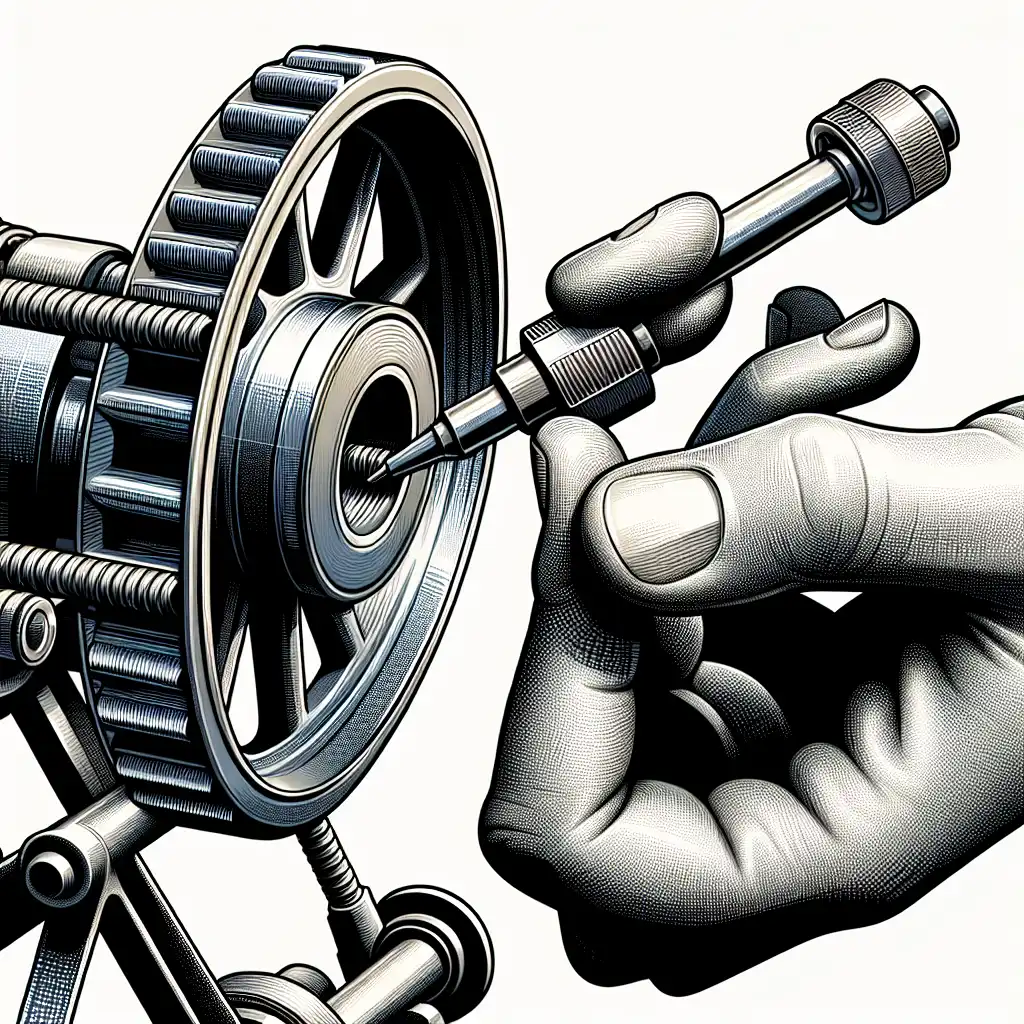
A fastener used to prevent a wheel or other part from sliding off the axle it is riding on.
He forgot to put the linchpin back on after changing the tire.
Không tải được âm thanh. Vui lòng thử lại sau.
The word 'linchpin' is used to describe something or someone that is very important to a certain situation or system. It is like a small piece that holds everything together. For example, in a company, the CEO might be the linchpin who keeps everything running smoothly. In a machine, the linchpin might be the small piece that keeps all the other parts in place. It is an important part, without which everything else might fall apart or not work properly.
Anchorman and linchpin are two words that are used in different contexts but both refer to someone who is important or central to a specific situation.
Anchorman is typically used in the context of news broadcasts, where it refers to the main presenter or host of a news program.
In this context, the anchorman is seen as a reliable and trusted source of information.
This term is used in broader contexts than anchorman and could refer, for example, to the key employee in a company who makes everything run smoothly, or to a specific piece of equipment that is essential to a manufacturing process.
Anchorman is a term used in the context of news broadcasts, while linchpin refers to a person or thing that is essential to a larger system or organization.
Mở từ: Anchorman →Backbone refers to the main support or strength of something. It is applicable in situations where there is a need to describe a key building block or primary support that holds something together.
For example, in the context of a team or organization structure, a backbone refers to cohesiveness or unity that is critical to achieving goals.
The difference between backbone and linchpin is that the former refers to the primary support or strength of something, while the latter describes a crucial component that connects all other parts.
Mở từ: Backbone →The words cornerstone and linchpin are both used to describe something essential or crucial, but they differ in their context.
A cornerstone is used to refer to a fundamental or basic element upon which something is built or constructed.
To sum it up, a cornerstone describes a foundational element of a building, while a linchpin is used to refer to an essential component of a complex system.
Mở từ: Cornerstone →Foundation refers to a basic or fundamental part of something that provides stability or supports the structure of it. Think of a building's foundation - it's what everything else is built upon and without it, the building would fall apart.
So, while both foundation and linchpin play important roles in supporting and maintaining something, foundation is more about establishing a strong base, while linchpin is about ensuring that specific parts stay in place and the overall structure remains intact.
Mở từ: Foundation →Keystone and linchpin are similar in meaning because they both refer to something that is essential to a system or structure.
However, keystone typically refers to the top or central stone in an arch that holds all other stones in place, while linchpin refers to a pin that holds a wheel or other mechanical device in place.
A keystone is essential to the structure of a building, while a linchpin is essential to the function of a machine.
A keystone is used in construction, while a linchpin is used in machinery.
Mở từ: Keystone →Both linchpin and mainstay are used to describe something that plays an essential or central role in a situation or system.
Mainstay, on the other hand, comes from nautical terminology and refers to a strong and sturdy part of a ship that provides support and stability.
In a figurative sense, a mainstay is something that provides essential support or stability to a situation or system. For example, a loyal and dedicated group of volunteers might be described as the mainstay of a community organization.
Linchpin emphasizes the importance of holding things together, while mainstay emphasizes the stability and support provided by a strong foundation.
Mở từ: Mainstay →Herring Hazards %\PIPE%...
Xem trên YouTube ↗Marriage is a linchpin in many women's lives, but many other things can create a satisfying life. I adore my career. It stretches every physical, emotional, and intellectual muscle I have.
How design can help make...
Xem trên YouTube ↗If you create a system that makes the small donors the linchpin of the system in terms of how members of Congress directly raise the funds for their campaigns, then it gives everyday citizens much more of a role - a leveraging role - in the funding of those campaigns.
Romania can be a linchpin in delivering gas to its neighbors and even become an energy exporter for its neighbors across Central and Eastern Europe.
Energy is a linchpin of economic prosperity, with energy security, reliability, and affordability key preconditions for sustainable growth.
Meetings are the linchpin of everything. If someone says you have an hour to investigate a company, I wouldn't look at the balance sheet. I'd watch their executive team in a meeting for an hour. If they are clear and focused and have the board on the edge of their seats, I'd say this is a good company worth investing in.
As a chef, I could not wash my hands - nor clean pots, pans, utensils, meats or produce, nor make soups and sauces - if I did not have clean water. Were this to happen, of course, these would be the least of my concerns. Because water is the linchpin of survival: without it, not much else matters.
The Russian people and Russian culture are the linchpin, the glue that binds together this unique civilization.
When Christians start thinking about Jesus, things start breaking down, they lose their faith. It's perfectly possible to go to church every Sunday and not ask any questions, just because you like it as a way of life. They fear that if they ask questions they'll lose their Christ, the very linchpin of their religion.