moorland
noun moorland
ˈmʊrlənd
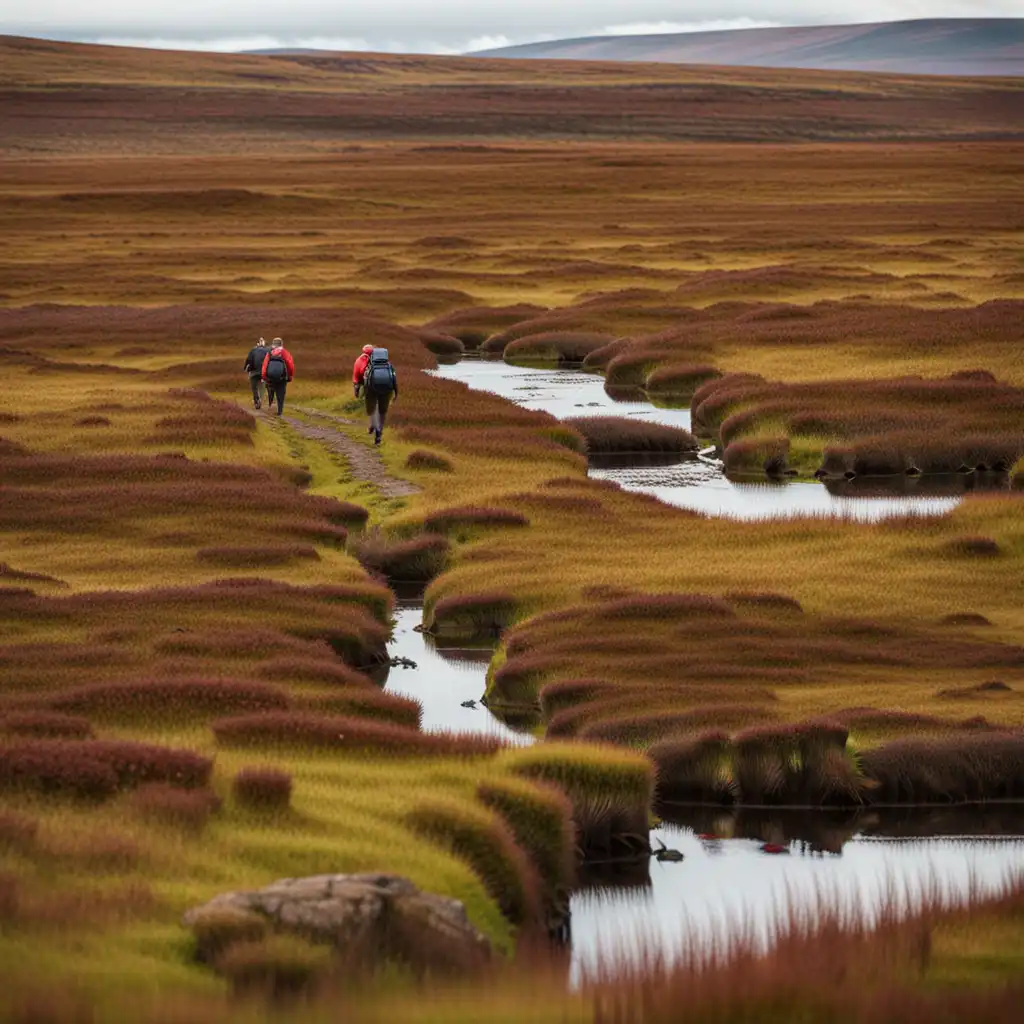
An area of open land without trees, with coarse grass, small shrubs, or peat bogs, usually remote from towns or cities.
We spent our summer hiking across the vast moorland.
moorland
ˈmʊrlənd
Đang tải…
ˈmʊrlənd
An area of open land without trees, with coarse grass, small shrubs, or peat bogs, usually remote from towns or cities.
We spent our summer hiking across the vast moorland.
Không tải được âm thanh. Vui lòng thử lại sau.
Moorland is a word used to describe a type of open, empty countryside found in some parts of England. It has heather and grasses growing on it and often has rocky areas too. Moorland is usually used to describe areas in the North of England and Scotland, but can also be found in other places. It is often used to describe places where there are hills or mountains, and where sheep or other animals graze. People often go walking or hiking in moorland areas to enjoy the scenery and get some fresh air.
Common refers to an area of land that is shared by several people or communities for grazing, farming, or other purposes.
Common is applicable when talking about land ownership, as it refers to land that is owned by several individuals or communities.
It can also be used in phrases such as "common knowledge" to refer to information that is widely known or accepted.
Mở từ: Common →Heath and moorland are both types of open habitats found in nature, but they differ in a few key ways.
Heath: A heath is a type of habitat characterized by low-growing, woody vegetation such as heather, gorse, and shrubs.
It is typically found on dry, sandy soils and is often associated with acidic conditions. Heathlands are common in regions with mild climates, such as western Europe and southeastern Australia.
Moorland: Moorland is a type of habitat dominated by grasses, heaths, and low-growing shrubs such as bilberry and crowberry.
Overall, both heaths and moorlands are important habitats that support a wide range of plant and animal species.
Mở từ: Heath →A meadow is a piece of land where grass or similar plants grow, especially for grazing animals like cows, horses, and sheep.
Meadows usually have a gentle slope, with a mixture of different types of grass and flowers.
A meadow is a grassy field, while moorland is a wild and open landscape with low-growing shrubs. The term meadow is often used to describe agricultural land, while moorland is more typical of natural, untamed environments.
Mở từ: Meadow →Prairie refers to a type of land that has tall grasses and is found in warm, dry regions like parts of the United States and Canada.
Moorland is found in cooler, humid regions and has low-growing vegetation, while prairie is found in warm, dry regions and has tall grasses.
Mở từ: Prairie →Moorland and savannah are both types of landscapes that exist in different parts of the world. Moorland is a type of upland habitat that is characterized by open, often bleak landscapes with low-growing vegetation such as heather, grasses, and shrubs.
Savannah is a type of grassland characterized by tall grasses and scattered trees. It is found in tropical and subtropical regions of the world, such as Africa, South America, and Australia.
The main difference between the two is the type of vegetation and climate they support. Moorlands are generally cooler and wetter, while savannahs are warmer and drier.
Moorlands are more suitable for grazing and farming of sheep, while savannahs are home to large numbers of grazing animals such as wildebeest, giraffes, and zebras.
Moorland and savannah are two different types of landscapes, characterized by distinct vegetation and climate patterns, and are found in different parts of the world.
Mở từ: Savannah →Steppe refers to a vast grassy plain, typically found in drier regions, such as Central Asia or Eastern Europe.
Moorland is an area of uncultivated land with poor soil that is typically found in cooler, wetter regions, while steppe is a vast grassy plain found in drier regions.
Mở từ: Steppe →Tundra is a type of habitat found in areas with long cold winters and short summers. It is characterized by low-growing vegetation and permafrost.
The main difference between moorland and tundra is their climate and vegetation. Moorland is found in temperate areas and has heather, grasses, and sporadic trees, while tundra is found in colder regions and has low-growing vegetation and permafrost.
Mở từ: Tundra →It is often used to describe areas in the United Kingdom and Northern Europe. Wilderness refers to a wild and untamed area that is largely untouched by humans, typically characterized by dense forests, rugged mountains, and uninhabited expanses.
Wilderness can be found in various parts of the world, including national parks and reserves.
Moorland is a specific type of landscape found in certain regions, while wilderness refers to any area that is largely untouched and uninhabited.
Mở từ: Wilderness →Sleepy Harbour Seals and...
Xem trên YouTube ↗A hunk of beef raised on Scottish moorland has a very different ecological footprint from one created in an intensive feedlot using concentrated cereal feed, and a wild venison or rabbit casserole is arguably greener than a vegetable curry.
My favourite British line is the West Highland line. It was built across moorland where no one had succeeded in building a road. So everything in that area is there because of the railway line.