
staccato
adjective staccato
stəˈkɑːtəʊ
Sounds or notes that are short, separate and clipped.
The staccato notes of the piano echoed throughout the concert hall.
staccato
stəˈkɑːtəʊ
Đang tải…
stəˈkɑːtəʊ
Sounds or notes that are short, separate and clipped.
The staccato notes of the piano echoed throughout the concert hall.

stəˈkɑːtəʊ
A direction in musical notation indicating that notes should be performed in a short, detached and distinct manner.
The music should be played staccato.
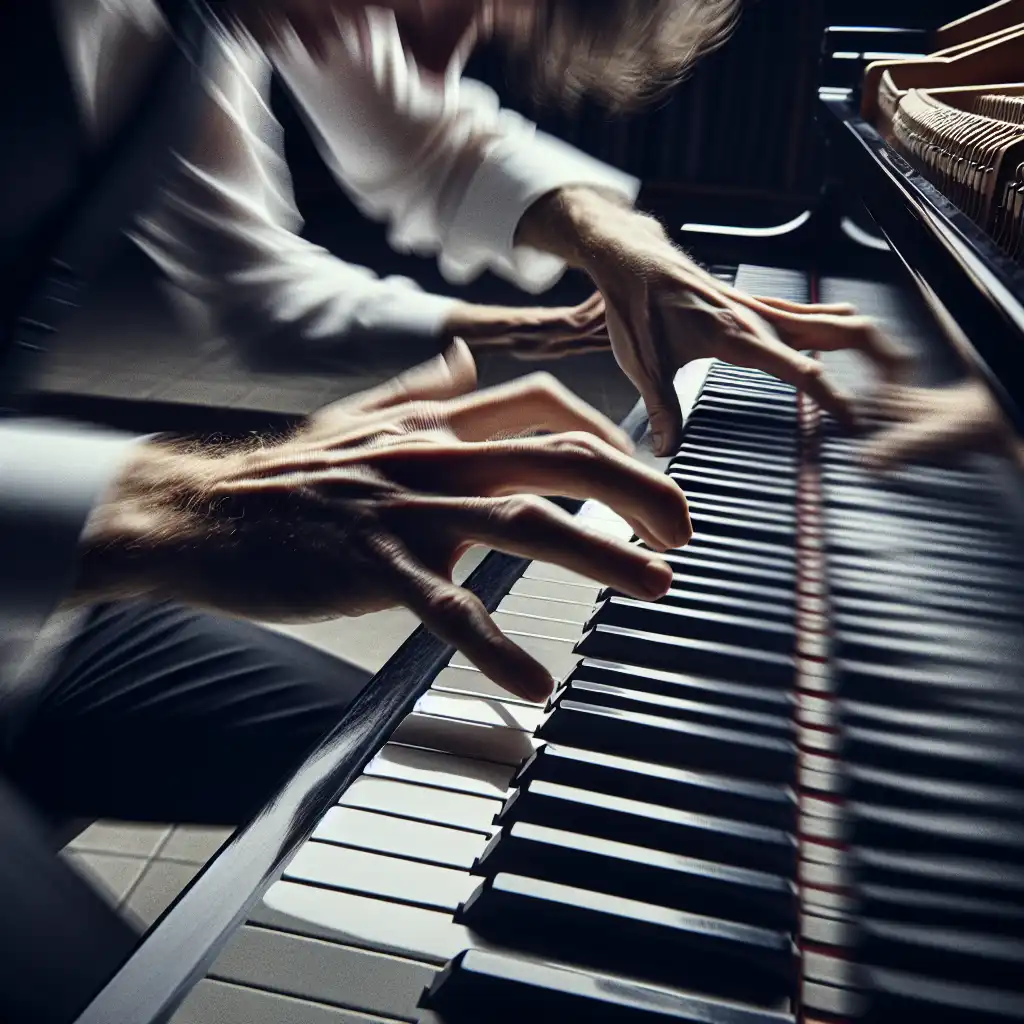
stəˈkɑːtəʊ
A staccato way of playing or singing music indicates that the notes are short and separate, making the music sound sharp.
His play style is very staccato.
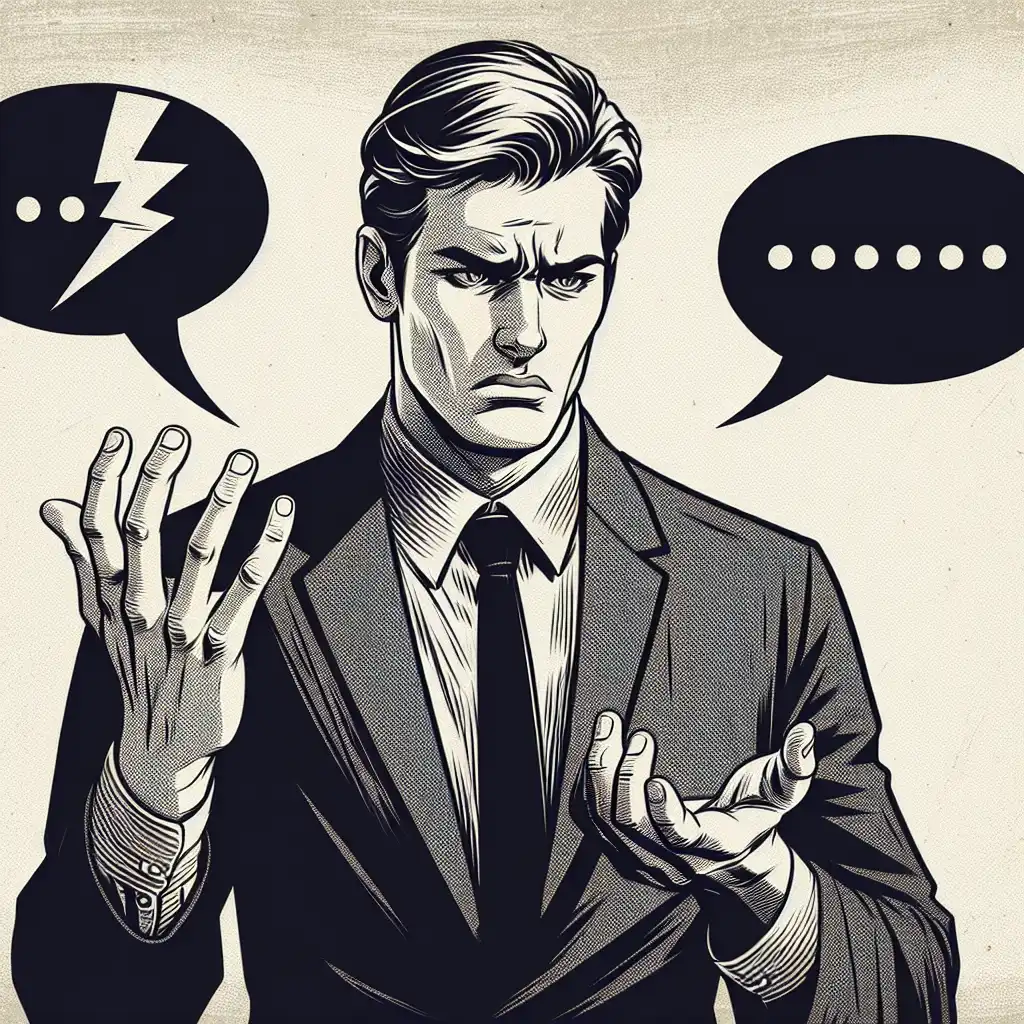
stəˈkɑːtəʊ
Short, abrupt or disjointed (of actions, speech or writing)
His staccato reply made it clear he was upset.
Không tải được âm thanh. Vui lòng thử lại sau.
Staccato is a musical term that refers to a short, sharp sound or note that is played or sung quickly and distinctly. It is often used in classical music to describe the way a piece of music should be played, indicating that the notes should be played with short, sharp accents instead of being held for a long time. Staccato can also be used to describe the way someone speaks or writes, meaning that they are speaking or writing with short, abrupt sentences or phrases.
Abrupt means sudden and unexpected while the word staccato means short and sharp.
Abrupt is generally used to describe something that happens or changes abruptly or suddenly, without any warning or smooth transition.
For example, an abrupt end to a conversation or an abrupt change in weather.
Staccato describes a type of music where the notes are played sharply and abruptly.
Mở từ: Abrupt →Brief means short and to the point.
It is generally used to describe something that is concise and doesn't take up too much time. For example, a brief conversation or a brief summary of a book.
Brief describes something short and to the point, while staccato describes something that is sharp, abrupt, and has pauses between each part.
Mở từ: Brief →Both choppy and staccato are used to describe a short and abrupt style of movement or sound.
However, choppy can refer to any irregular or rough movement or sound, while staccato specifically describes a musical style where notes are played in a short and detached manner.
For example, a dance that is performed in a jerky, unsmooth manner could be described as choppy, while a piece of music played with precise, separated notes would be described as "staccato."
Choppy is more commonly used to describe movement, while staccato is more commonly used in musical contexts.
Mở từ: Choppy →Clip refers to a short and sharp sound produced by cutting or chopping or striking, such as the sound of a pair of scissors snipping or the sound of a horse's hoof hitting the pavement.
Clip is a term used to describe a sound or action that is quick and abrupt, while staccato is a musical term used to describe a short, sharp and detached style of playing.
Mở từ: Clip →Crisp means sharp and clear, while the word staccato refers to short and abrupt notes or movements.
Crisp can be applied to different things like food, clothes, or even speech. For example, an apple can be described as crisp when it is fresh and firm, a shirt can be crisp when it has a neat and clean appearance, and someone's speech can be crisp when they articulate their words clearly and distinctly.
Crisp is a more versatile word that can be used in different contexts, while staccato is mainly used in the realm of music and physical movements.
Mở từ: Crisp →Detach means to separate or disconnect something from its origin or surroundings. For example, you can detach a piece of paper from a notebook.
In music, detach refers to playing each note separately and distinctly.
Detach refers to separating something, while staccato refers to playing each note separately and distinctly with a short, sharp sound.
Detach is applicable in general usage, while staccato is more applicable in music.
Mở từ: Detach →Disconnect means to separate or break the connection between two things. It is applicable in situations where something is physically or emotionally separated from its previous state.
For example, if you unplug a computer cable, it disconnects the computer from the internet.
Mở từ: Disconnect →Short refers to a musical note that is played quickly, but still has a sustained sound.
It is often used to describe notes that are played briefly, but not abruptly. For example, when playing a piano, a short note would be like a light tap on the keys.
Short refers to a note that is played quickly but sustained, while staccato refers to a note that is played abruptly and with a quick attack.
Mở từ: Short →Zainab Salbi: Women,...
Xem trên YouTube ↗The rhythm of my career has always been very static, staccato and then silent, and then a lot of work, and then none.
If you listen to people talk, when people actually talk, they talk in melodies. If they get angry, their voice rises, and it's more of a staccato thing. When they ask for something, they're real sweet. It's all music.
Andy wasn't capable of any complicated thoughts or ideas. Ideas need a verb and a noun, a subject. Andy spoke in a kind of stumbling staccato. You had to finish sentences for him. So Andy operated through people who could do things for him. He wished things into happening, things he himself couldn't do.
The traditional tango is really staccato, but with the Argentine tango, you have to be really sexy and saucy.
That's what I love about Chicago... It is the staccato aspect of the skyscrapers. But the ground is very loose, very relaxed. It makes Chicago far more pleasant than other cities.
I thought of Gene Krupa's drumming, his staccato drumming. I went and put 'Misirlou' to that rhythm.
When I worked on a magazine, I learned that there are many, many writers writing that can't write at all; and they keep on writing all the cliches and bromides and 1890 plots, and poems about Spring and poems about Love, and poems they think are modern because they are done in slang or staccato style, or written with all the 'i's' small.