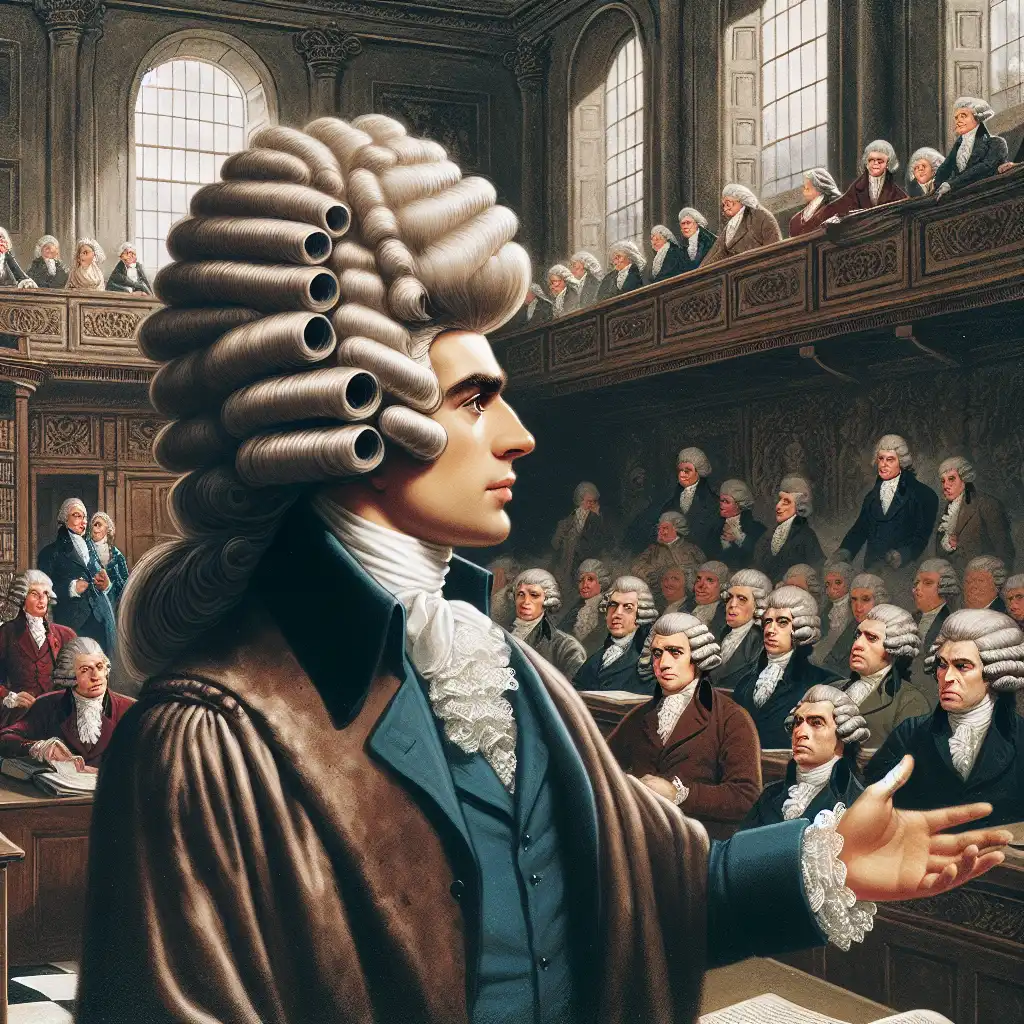
The word 'Whig' refers to a political party in England that was active in the 18th and 19th centuries. They were known for their support of constitutional government, religious toleration, and trade. Nowadays, the use of the word 'Whig' is mostly historical and not commonly used in everyday language. However, you may encounter the term in literature, history textbooks, or political discussions related to that time period.
Absolutist refers to a person or government who believes in absolute power and control. They believe that the ruler or government has the final say in all decisions and that individuals should have limited rights and freedoms.
Each term is applicable in different historical and political contexts. Absolutist was commonly used to describe monarchies or dictatorships where the ruler had complete control over the country.
An absolutist believes in complete power and control, while a Whig believes in protecting individual rights and limiting government power.
Conservative refers to a political ideology that emphasizes preserving traditional values and institutions while resisting change and pushing for gradual reform.
While conservative principles can be applied in modern-day politics, the Whig Party is no longer active, and the term whig is mostly used to describe historical events and figures.
Hierarchical refers to a system or structure where there are levels or rankings of authority, with the top level having the most power and control.
Hierarchical refers to a structure or system with levels of authority, while whig refers to a historical political party with specific beliefs about government and reform.
Monarch refers to a king or queen who is the head of a governmental system. This term is applicable to any monarchy, meaning a system of government ruled by a monarch, which can be found in various countries around the world.
Whig originated in British politics and refers to a member of a political party that supported reform and opposed absolute monarchy in the 17th and 18th centuries.
Both reactionary and Whig are terms used to describe political beliefs and ideologies.
A reactionary is someone who wants to maintain or restore traditional political, social, and economic systems and values.
They often oppose progressive or liberal reforms, and may even advocate for a return to a previous era or regime. Reactionaries are often seen as dismissive of new ideas and resistant to change.
So, in brief, a reactionary is someone who opposes progressive or liberal reforms, while a Whig values individual freedom, limited government, and the rule of law.
Tory and Whig were the names of two major political parties in Britain in the 17th and 18th centuries. The Tories were generally more conservative and supported the monarchy and the Church of England, while the Whigs were more liberal and supported political reform and religious tolerance.
Today, the terms Tory and Whig are still used in British politics, with the Tories being the Conservative Party and the Whigs being defunct.
Traditional refers to beliefs, customs, or practices that have been passed down through generations and are considered to be established and respected.
Traditional is applicable to things like cultural practices or religious beliefs, while whig is applicable to political ideology or social movements that seek progress and change.
Essentially, traditional implies sticking to established norms, while whig suggests pushing for change and progress.