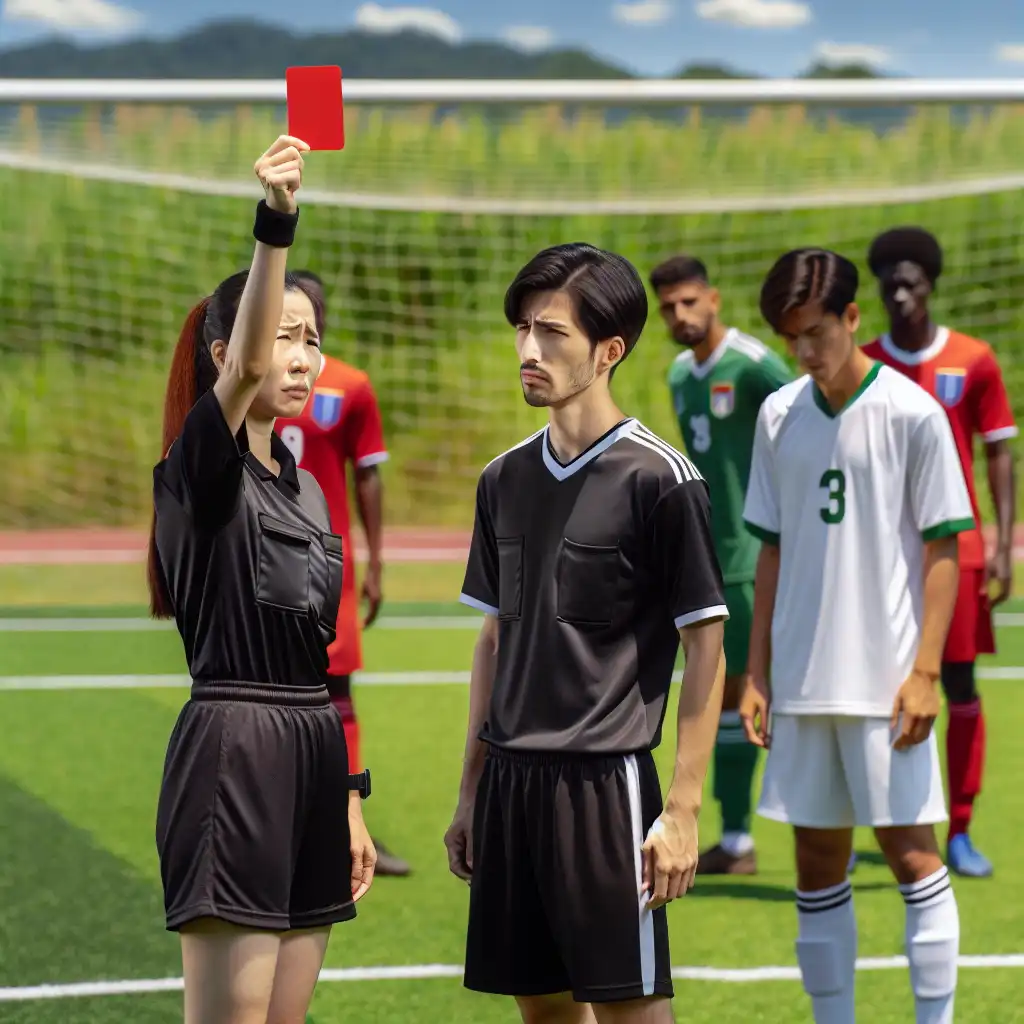
To disqualify means to officially declare someone or something to be ineligible or unsuitable to participate in or receive something. For example, if someone cheats during an exam, the teacher may disqualify that person from taking the test. Similarly, if a team breaks the rules in a sports competition, they may be disqualified from continuing to play. Disqualify can also be used in legal settings, such as when a judge declares evidence or a witness to be inadmissible in court.
Bar means to prevent someone from entering or participating in something. For example, a bouncer at a bar might bar someone from entering if they are too drunk.
In a competition, a contestant might be barred from participating if they do not meet the requirements.
Bar refers to preventing entry or access while disqualify refers to removing eligibility or rights to participate due to a violation of rules.
Deprive means to take away something from someone. For example, if a person is deprived of food, they are not given any to eat.
It can also mean to prevent someone from having or enjoying something they are entitled to. For instance, if someone is deprived of their liberty, they are prevented from living their life freely.
Deprive is used when something is taken away from someone, while disqualify is used when someone is declared ineligible for something because they do not satisfy the required criteria.
Dismiss means to reject or remove someone or something from a position, job or duty. It is applicable in situations such as firing an employee from a job, removing a student from a class or rejecting a legal case.
Dismiss connotes a sense of judgment and can be used in a variety of contexts.
Disqualify means to declare someone or something ineligible or unsuitable for a particular purpose, such as a job or competition, because of certain disqualifying factors.
Eligible means that someone or something meets the necessary requirements or qualifications, making them suitable or able to be chosen or considered for a particular purpose.
For example, a person might be eligible for a scholarship if they meet certain academic or financial criteria.
Disqualify means to make someone ineligible, while eligible means that someone is qualified and eligible for consideration.
Disqualify means to eliminate the eligibility or the ability of someone to participate in something. It implies that the person is being excluded from a contest or competition because they have failed to meet certain requirements or rules.
Eliminate means to remove or get rid of something completely. It is applicable in situations where the goal is to get rid of something entirely or make it disappear.
For example, if someone is trying to get rid of a virus, they may try different methods to eliminate it completely.
Disqualify is used when someone is being excluded due to not meeting requirements, while eliminate describes the process of getting rid of something completely.
Exclude means to keep somebody or something out of a particular group or activity. For instance, a club may have rules that exclude certain individuals based on their age, gender, or other factors.
Disqualify is more commonly used in situations where a person has failed to meet certain requirements or criteria, while exclude is used in situations where someone is not allowed to take part in something or be a part of a particular group for various reasons.
Invalidate is used when something is declared invalid or considered null and void. It means that the action or decision lacks legal force, authority or validity, and is considered as if it never existed.
If a legal contract is signed under duress, it may be invalidated, meaning that the contract is no longer legally valid and cannot be enforced.
Prohibit means to forbid or prevent something from happening. For example, smoking is prohibited in many public places because it poses a health risk to others.
Both words involve some sort of restriction, but disqualify is used when referring to an individual's eligibility, while prohibit is used when referring to an action or behavior that is not allowed.
It's sobering to realize that there's a huge chunk of the U.S. voting population that doesn't think of sexual assault as something horrendous enough to disqualify a presidential candidate.
If a candidate for president said he believed that space aliens dwell among us, would that affect your willingness to vote for him? Personally, I might not disqualify him out of hand; one out of three Americans believe we have had Visitors and, hey, who knows? But I would certainly want to ask a few questions.
White supremacist? Let's see: if you have a guy who was married for 13 years to an Asian woman and who has two lovely Asian daughters, wouldn't that disqualify him from membership in the white supremacist club?
The fact that I'm a Tory who hasn't worked at a university - at least, not since I taught at Cambridge in 1990 - doesn't disqualify me from serving on the board of the OfS.
Mothers have always held such symbolic weight in determining a person's worth. Your mother tongue, your motherland, your mother's values - these things can qualify or disqualify you from attaining myriad American dreams: love, fluency, citizenship, legitimacy, acceptance, success, freedom.