liquidate
verb liquidate
ˈlɪkwɪdeɪt
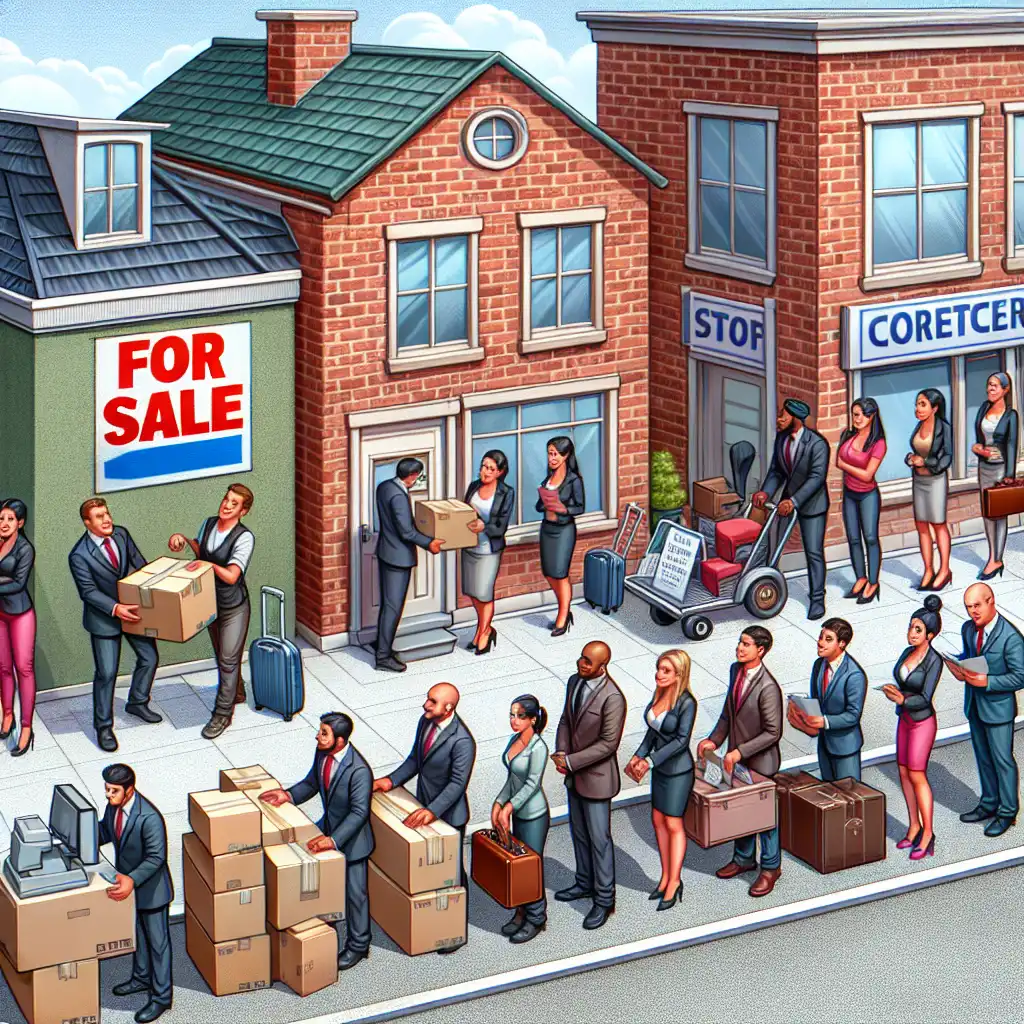
To sell off a business or its assets to pay off debts.
The company was forced to liquidate its assets to pay its creditors.
liquidate
ˈlɪkwɪdeɪt
加载中…
ˈlɪkwɪdeɪt
To sell off a business or its assets to pay off debts.
The company was forced to liquidate its assets to pay its creditors.

ˈlɪkwɪdeɪt
To convert assets into cash or cash equivalents.
The man decided to liquidate his stock portfolio because he needed cash.

ˈlɪkwɪdeɪt
To eliminate or kill, especially in large numbers.
The dictatorship liquidated thousands of political dissidents.
音频无法加载,请稍后再试。
The word "liquidate" means to sell off all of a company or individual's assets, usually because they cannot pay their debts or are closing down. It can also mean to get rid of something completely. For example, if you have a lot of old furniture and you want to get rid of it, you might say "I'm going to liquidate my furniture."
The phrase clear out means to remove or get rid of something, typically by selling or giving it away. This is often used when you want to clean up a space or make room for something new.
For example, you might have a closet full of clothes that you don't wear anymore, so you could clear them out by donating them to charity.
For example, if a store is going out of business, they might have a liquidation sale to sell off all their remaining merchandise.
To sum up: clear out means to get rid of something, while liquidate means to sell off assets or inventory. Clear out is used more casually and can be used in a variety of contexts, while liquidate is typically used in a business context when there are financial difficulties.
打开单词: Clear out →To dispose of something means to get rid of it, usually by throwing it away, giving it away, or selling it.
It can refer to any kind of object or asset.
In short, disposing of something means you're getting rid of it, while liquidating something means you're selling it for cash.
打开单词: Dispose of →Eliminate means to completely remove or get rid of something.
It can be used to refer to objects or living beings. For instance, you can use the word eliminate when talking about getting rid of unwanted things such as junk, clutter or pests.
The difference between the two words is that eliminate refers to getting rid of something entirely, while liquidate refers to selling off assets, usually as a means of paying off debt or closing down a business.
打开单词: Eliminate →Liquidize means to turn something into a liquid, usually by blending or grinding it.
For example: "I'm going to liquidize these vegetables to make a soup."
Liquidate is applicable when someone is closing a business or paying off debts, and liquidize is applicable when someone is changing a substance into a liquid form.
打开单词: Liquidize →Liquidate means to sell off assets or goods to pay off debts or expenses. For example, if a company is facing bankruptcy, it may have to liquidate its assets to pay off its creditors.
Pay off means to settle a debt in full. For example, if you take out a loan, you will need to make regular payments to pay off the debt.
Liquidate is applicable when a person or organization needs to sell off assets to pay debts, and pay off is applicable when a person or organization settles a debt in full.
打开单词: Pay off →Liquidate means to sell off all assets or goods, usually to pay debts or to dissolve a business. This term is applicable when a company is shutting down or going out of business.
Sell off means to dispose of goods or assets, typically gradually or in batches. This term is applicable when a company wants to get rid of excess inventory or assets that are no longer needed.
In simpler terms, liquidate means to sell everything and shut down the entire business, while sell off means to sell only some of the assets or goods.
打开单词: Sell off →Settle means to resolve a financial obligation or dispute.
In short, liquidating is selling off assets to pay off debts, while settling is resolving a financial obligation in a more general sense.
Liquidating is usually used in the context of bankruptcy or closing a business, while settling can be used in many different situations where a financial obligation needs to be resolved.
打开单词: Settle →I made a choice, I resigned as chairman of the board and I agreed to serve as a first-time CEO of this broken company. But I agreed to do it just for six months. I just wanted to avert a nasty liquidation. And then I wanted to come home and get on with my life.
在 YouTube 上观看 ↗In the age of the individual's liquidation, the question of individuality must be raised anew.
stores still remained i call it the world's slowest liquidation sale because it's taken 20 plus years to liquidate what went wrong here i think you already know sears was turning itself into a company of super chickens
在 YouTube 上观看 ↗There's an 'Everything must go!' emotional liquidation feel to the end of your twenties, isn't there? What will happen if we turn thirty and we're not 'ready?' You don't feel entirely settled in any aspect of your life, even if you are on paper.
that's been the motivation it's been the justification it's been the business plan of American agriculture we should call it what it is a business in liquidation a business that's quickly eroding ecological capital that makes
在 YouTube 上观看 ↗For us to support the liquidation of a simple life in a large part of the world is not a particularly attractive prospect.
We should all be obliged to appear before a board every five years and justify our existence... on pain of liquidation.
To pay the bills, I've liquidated my children's college fund.
It is a violation which has obsessed the tyrants of the twentieth century. They do not want simply to kill their opponents, but to liquidate them, to deny that they have ever existed.
No bank should be too big or too complex to fail, but almost any bank is too big to liquidate quickly, particularly in the midst of a crisis.
The liquidation of colonialism is a trend of the times which no force can hold back.
The death tax causes one-third of all family-owned small businesses to liquidate after the death of the owner. It is also an unfair tax because the assets have already been taxed once at their income level.
Any investment bought via credit always runs the risk of margin calls and, eventually, liquidation.