
typist
noun typist
ˈtaɪpɪst
A person whose job is to type documents, letters, etc.
She worked as a typist in a law firm.
typist
ˈtaɪpɪst
Loading…
ˈtaɪpɪst
A person whose job is to type documents, letters, etc.
She worked as a typist in a law firm.
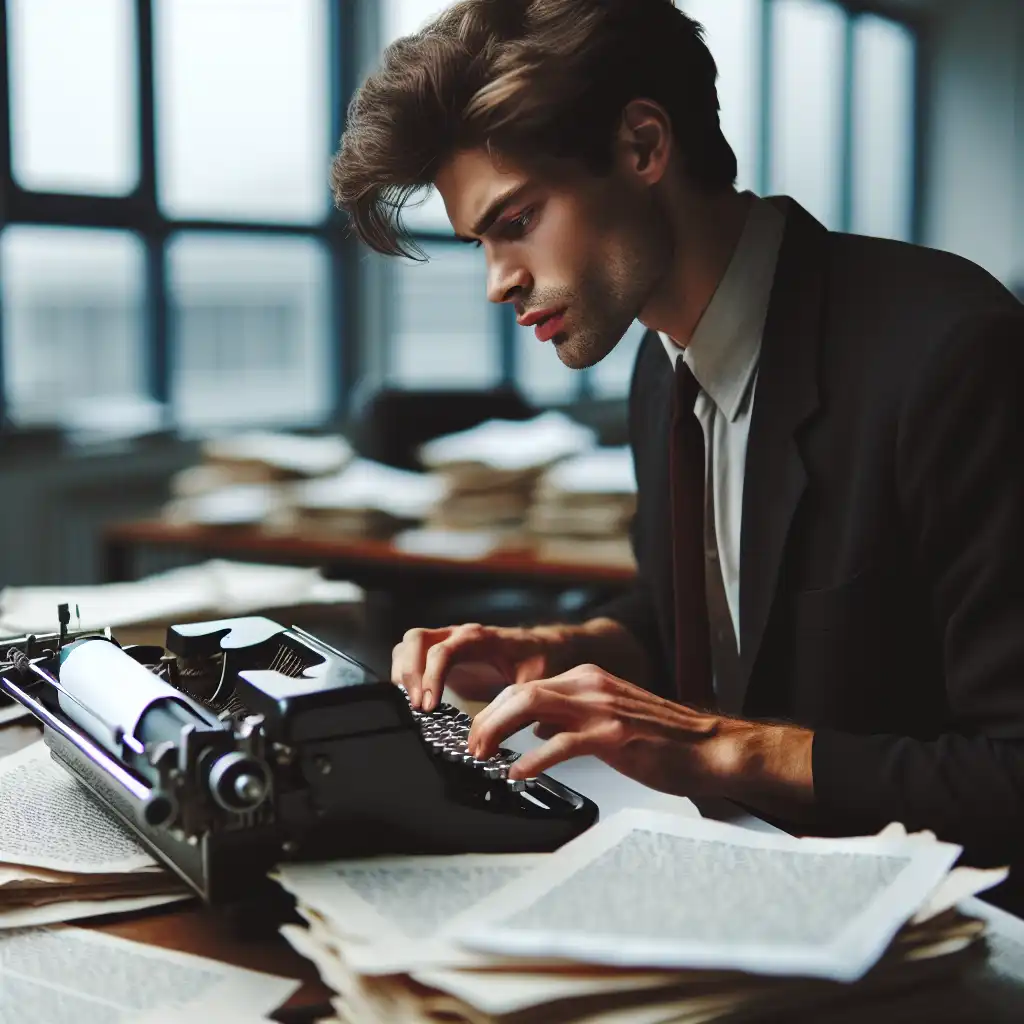
ˈtaɪpɪst
A person who types on a typewriter or computer keyboard, especially as a job or skill.
John used to be a typist before he became a programmer.
Audio could not be loaded. Please try again later.
A typist is someone who types, which means they use a keyboard to make words and sentences appear on a screen or piece of paper. This word is typically used to describe someone who types for a job, such as a secretary or administrative assistant. So if you need to talk about someone who types for work, you can use the word "typist".
A copyist is someone who creates exact duplicates of documents or artwork by hand, whereas a typist uses a machine like a typewriter or a computer keyboard to produce written words.
A copyist is typically used in situations where precise replication is necessary, such as in the creation of historical manuscripts or artwork.
Open word: Copyist →A scribe is a person who writes down or records information by hand. They may have been used in ancient times to document important events.
A scribe is applicable in situations where writing needs to be done by hand, while a typist is applicable when writing needs to be done quickly and efficiently using a machine.
Open word: Scribe →A stenographer is a person who specializes in taking quick and accurate notes of what is being said in a meeting or court proceeding using a special machine called a stenotype, which has fewer keys than a traditional keyboard.
Stenographers are typically used in legal settings or wherever a high level of accuracy is required.
A stenographer takes shorthand notes using a special machine, while a typist types documents using a traditional keyboard.
Stenographers are typically used in legal or highly technical settings, while typists are used in general office settings.
Open word: Stenographer →Why some of us don't...
Watch on YouTube ↗My mother was a great typist. She said she loved to type because it gave her time to think. She was a secretary for an insurance company. She was a poor girl; she'd grown up in an orphanage, and she went to a business college - and then worked to put her brothers through school.
I'm an expert typist. I learned in high school. I would close my eyes and just type without worrying about mistakes. I tried to penetrate my heart, and as I let my thoughts drift, things bubbled up to the surface.
I have always prided myself on if, hypothetically, the entertainment industry just dissolved, just went away today, I feel that I have enough marketable skills that I could still contribute to society and make a difference. I'm a very good typist.
On the traditional computer keyboard, I'm a super-fast touch typist. I mastered touch typing in high school.
I've had the same, full-time assistant and typist for eight or nine years now. She's read everything I've written, she types everything and does a good job, translates it and makes comments.
I was the fastest typist in my school, and I had an obsession with spelling and memorizing.
I am a terrible, terrible typist. I could not have been a writer in the age of typewriters.
Recently a study proved that working from a larger, less cluttered computer screen increases concentration. I could have told them that. And yes, I write first drafts with a mechanical pencil and a yellow legal pad. There's good reason for this primitive behavior: I am a crackerjack typist. My hand moves far more quickly than my brain.
I can act... I do a little writing as well. And I'm good at typing. I'm a creative typist, actually.
I guess I was just meant to be a secretary who doesn't take shorthand. I'm a lousy typist, too - 33 words a minute.