iniquitous
adjective iniquitous
ɪˈnɪkwɪtəs
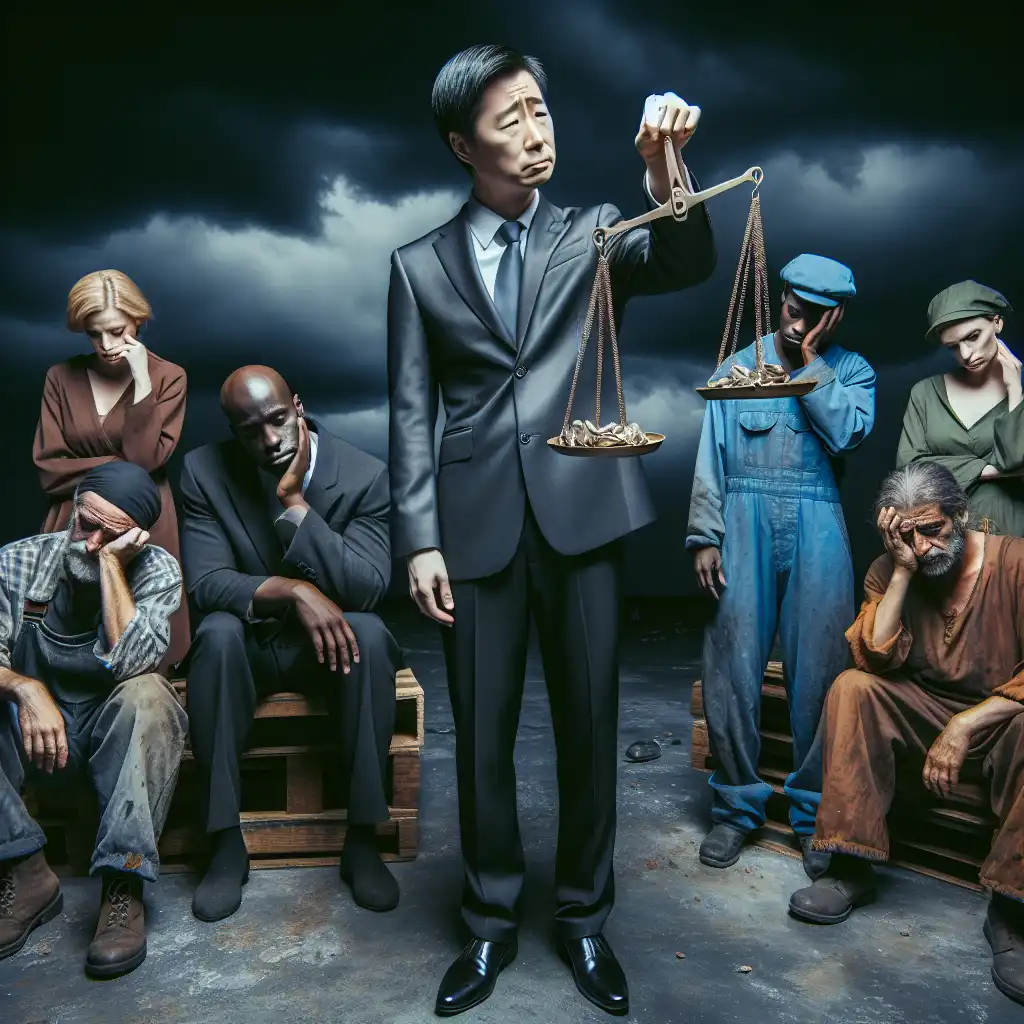
Extremely unfair and morally wrong
His iniquitous behavior towards his employees was widely criticized.
iniquitous
ɪˈnɪkwɪtəs
Chargement…
ɪˈnɪkwɪtəs
Extremely unfair and morally wrong
His iniquitous behavior towards his employees was widely criticized.
Impossible de charger l’audio. Réessayez plus tard.
The word 'iniquitous' is used to describe something that is very unfair or immoral. It is typically used when talking about behavior or actions that are unjust or wicked. For example, you might use the word 'iniquitous' to describe a government policy that is discriminatory or a company that engages in corrupt practices. It is a strong word, and should be used sparingly.
Corrupt refers to something that is dishonest or fraudulent, often involving money or power.
A corrupt person or system cheats or takes advantage of others for their own gain.
For example, a corrupt politician might accept bribes or use their position to gain money or power.
Corrupt is typically used to describe individuals or systems that are dishonest and self-serving, while iniquitous is a stronger term used to describe actions or situations that are particularly heinous or immoral.
Ouvrir le mot: Corrupt →Deprave means to corrupt or ruin someone's morals or behavior.
To simply differentiate both words, deprave is applicable to individuals who exhibit corrupt and immoral behavior while iniquitous is applicable to social contexts or systems that are characterized by injustice or unfairness.
Ouvrir le mot: Deprave →Both words refer to actions, attitudes, and intentions that are morally and ethically wrong. Evil sometimes implies a natural inclination toward cruelty or wrongdoing, while iniquitous implies deliberate and intentional wrongdoing or immoral behavior.
Evil is commonly used to describe a person, act, or thing that is harmful or destructive, while iniquitous is often used to describe deliberate offenses against divine or moral law.
Essentially, evil suggests a more general sense of wrongdoing, while iniquitous implies a more specific, intentional wrongdoing.
Ouvrir le mot: Evil →Immoral refers to something that goes against accepted moral principles or standards. For example, cheating on a test or lying to someone would be considered immoral behaviors.
Iniquitous refers to something that is extremely unfair or unjust. It often implies something that is not just immoral, but also harmful to others.
Overall, both words describe wrong or bad behavior, but immoral refers more generally to a violation of moral standards while iniquitous pertains to something that is particularly unjust or harmful.
Ouvrir le mot: Immoral →Iniquitous typically describes something that is unfair, unjust, and morally wrong.
It is often used to describe actions, laws, or behavior that violates basic principles of fairness and justice. For example, an iniquitous law might discriminate against a particular group of people or deny them basic human rights.
Just typically means fair or right in a given situation.
For example, a just decision might be one that ensures equal opportunities for all people regardless of their race, religion, or gender.
Iniquitous and just are opposite in meaning. Iniquitous suggests something is morally wrong and unjust, while just suggests something is morally right and fair.
Ouvrir le mot: Just →Both iniquitous and sinful relate to actions that are morally wrong.
Sinful is more generally used to describe any action that goes against religious or moral principles. For example, lying, stealing, or cheating would be considered sinful.
Iniquitous refers specifically to actions that are not only immoral but also unjust or unfair, while sinful refers more generally to any action that goes against religious or moral principles.
Ouvrir le mot: Sinful →Vicious refers to something that is cruel, violent, or aggressive, often involving physical harm or damage. It is applicable in situations where there is an element of aggression or violence that is being perpetrated.
For example, a vicious attack by a predator on its prey could be described as vicious.
In short, while iniquitous refers to moral wrongdoing or injustice, vicious refers to cruelty and aggression.
Ouvrir le mot: Vicious →Both iniquitous and wicked mean morally wrong or evil.
Wicked is often used to describe individual actions that are malicious or cruel. For example, a dictator's iniquitous policies can harm many people, while a person who enjoys hurting animals may be described as wicked.
Ouvrir le mot: Wicked →How we can navigate the...
Voir sur YouTube ↗It is very iniquitous to make me pay my debts, you have no idea of the pain it gives one.
If we use goods made from raw materials that are obtained from a poor country without the proceeds being used to benefit the people of that country, we become complicit in a particularly iniquitous form of grand larceny.
Of the unjust rights which in virtue of this ceremony an iniquitous law gives me over the person and property of another, I cannot legally, but I can morally, divest myself.
We write with the souls of thousands of lives saved, the lives of millions of jobs created, liberating multitudes of drivers from the shackles of servitude to iniquitous taxi cartels of corrupt cabals that choked cities with their pollution of air and morals.
Chasing new runway capacity to cater to ever more frequent leisure flights by Britain's wealthiest households isn't just iniquitous - it's bad economic policy.