fable
noun fable
ˈfeɪbl
A short story, usually with animals as characters, conveying a moral.
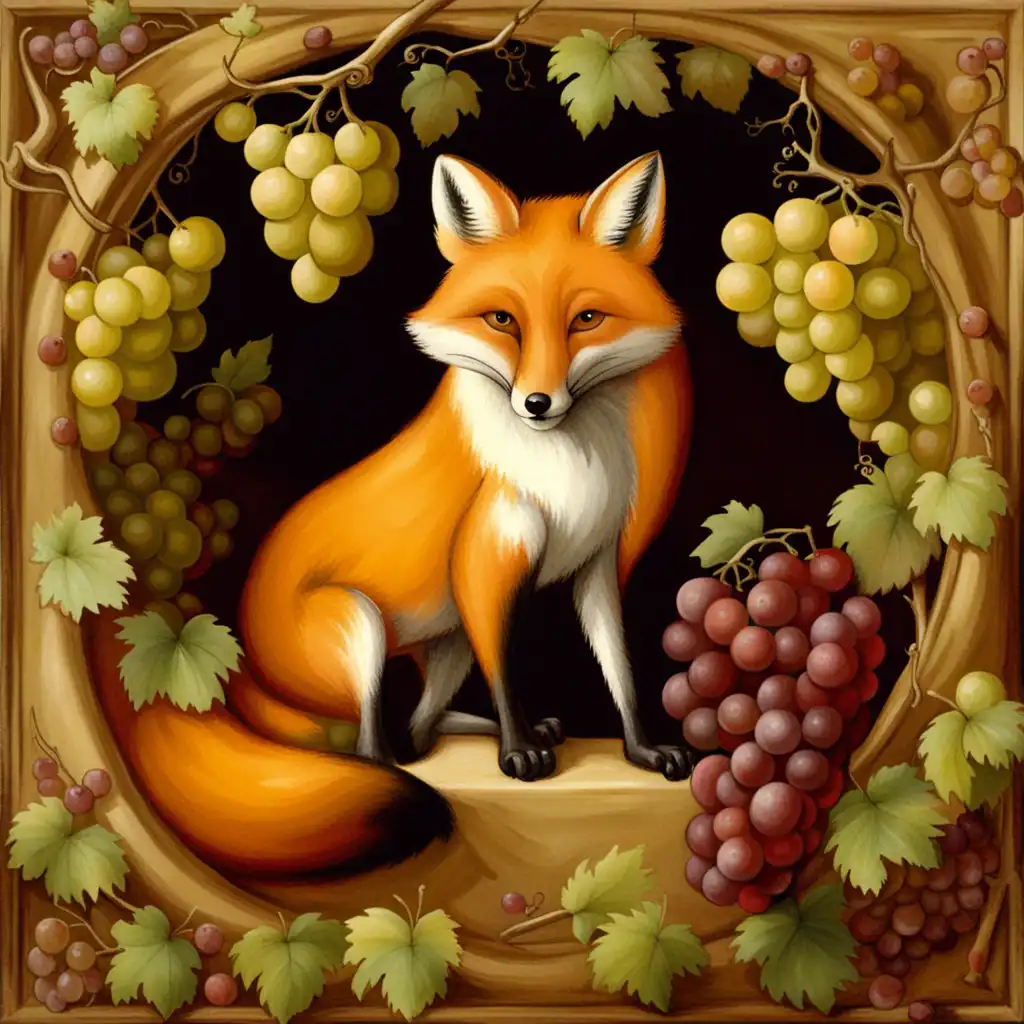
The Fox and the Grapes is a famous fable that teaches us not to desire what we cannot have.
fable
ˈfeɪbl
불러오는 중…
ˈfeɪbl
A short story, usually with animals as characters, conveying a moral.
The Fox and the Grapes is a famous fable that teaches us not to desire what we cannot have.

ˈfeɪbl
A story or an account of something, which is not true.
The tale of the Loch Ness Monster is a fable that has been debunked many times.
오디오를 불러오지 못했어요. 잠시 후 다시 시도해 주세요.
A fable is a short story that teaches a lesson or moral. It often features animals as characters and uses storytelling to get its point across. Fables are usually easy to understand and are often used to teach children about life lessons in a fun and engaging way. You can use the word "fable" when talking about stories like "The Tortoise and the Hare" or "The Boy Who Cried Wolf."
An allegory is a story, poem, or picture that can be interpreted to reveal a hidden meaning, typically a moral or political one.
In simpler terms, an allegory is a story with hidden meaning and symbolism, while a fable is a story with a straightforward moral lesson.
However, allegories tend to be more complex and abstract, while fables are more accessible and easily understood by younger audiences.
단어 열기: Allegory →Fantasy is a genre of fiction that involves imaginary worlds and creatures, often with magical or supernatural elements.
Fantasies appeal to a wider range of audiences and are often more complex in terms of plot, characterization, and world-building.
In short, fables are short, simple stories with a moral lesson, while fantasies are more complex, imaginative stories that take place in alternate worlds or with mythical creatures.
단어 열기: Fantasy →Folklore refers to the traditional beliefs, customs, and stories passed down through generations by a particular group of people.
So, while a fable is a specific type of story with a set structure and purpose, folklore encompasses a broader range of traditional stories, beliefs, and customs from a particular culture or community.
단어 열기: Folklore →A legend is a story that has been passed down through generations, often involving real or mythical characters and events.
In summary, fables are used to teach a simple lesson while legends are used to explain cultural beliefs or traditions.
단어 열기: Legend →A myth is a traditional story that explains the beliefs or practices of a society or culture. Myths often involve gods or other supernatural beings and may contain some historical or scientific truth.
For example, Greek myths explain the origin of the world and the actions of their gods.
Unlike myths, fables are not necessarily based on any religious or cultural tradition. Instead, they are meant to teach a lesson or provide a moral message.
In summary, myths are traditional stories that explain cultural beliefs or practices, while fables are short stories that teach moral lessons through animal or inanimate characters.
단어 열기: Myth →A parable is a brief story that is meant to teach a religious or spiritual lesson. It often has a symbolic meaning and is open to interpretation.
For example, "The Good Samaritan" is a parable that teaches us the lesson of 'loving our neighbor as ourselves.'
So, while both fables and parables aim to teach a lesson, fables are more straightforward with a clear moral, while parables are more open-ended and symbolic with a religious or spiritual meaning.
단어 열기: Parable →A fable is a kind of story that usually involves animals, plants or objects that have human characteristics and are given moral lessons to teach.
These characters in the fable are used to represent people, and the story is intended to teach some kind of lesson or give some kind of advice.
A story on the other hand is a general term used to describe any kind of narrative or account of events, real or imaginary.
Stories can be true or false, serious or silly, long or short, and can be read or told in many different ways.
So the key difference between a fable and a story is that a fable is a specific kind of story designed to convey a moral lesson, while a story is a more general term that can describe any kind of narrative.
Fables are typically aimed at teaching morals, while stories are told for many different reasons, including entertainment, education, and historical accounts.
단어 열기: Story →A tale is a story, often of a mythical nature, that may or may not have moral undertones.
Tales can be fictional or based on real events, and can include elements of magic, adventure, and heroism.
In essence, fables are specifically designed to teach morals, while tales are more focused on entertainment or adventure.
단어 열기: Tale →Ragnarok. The fabled end of the world, when giants monsters and Norse gods battle for the future.
YouTube에서 보기 ↗There is nothing in the world more shameful than establishing one's self on lies and fables.
wolves has always appeared in folklore fable and even in modern literature and films misunderstanding breeds fear and fear can breed hatred European settlers brought an image of a savage deceitful sinister creature to the new world and
YouTube에서 보기 ↗From this, without doubt, sprang the fable. Man created it thus, because it was not given him to see more than himself and nature, which surrounds him; but he created it true with a truth all its own.
And if you go on the diagonal you get content and form, and then beauty and truth. And it probably applies just as much to music and movies and fine art, which has nothing whatsoever to do with vision at all, or for that matter nothing to do with our conference theme of "Inspired by Nature," except to the extent of the fable of the frog
YouTube에서 보기 ↗The movies I make, I never see them as accurately portraying a life, but more like fables.
it's late afternoon and once again he's on the trail of the fabled bull sharks
YouTube에서 보기 ↗Fables should be taught as fables, myths as myths, and miracles as poetic fantasies. To teach superstitions as truths is a most terrible thing. The child mind accepts and believes them, and only through great pain and perhaps tragedy can he be in after years relieved of them.
are inclusive that we have a reasonable chance of hearing using once we get to parallel just because we're human beings so this little you know science fiction story little political fable I just told
YouTube에서 보기 ↗Nobody sees the obvious, nobody observes the ordinary. There are more miracles in a square yard of earth than in all the fables of the Church.
and the fabled bridge across the river Nai He. Manning the bridge was an old woman who offered worthy souls a bowl of soup. After drinking the spirits forgot their previous life, and were sent back to the world of the living in a new form.
YouTube에서 보기 ↗What is history but a fable agreed upon?
and things could go terribly awry. So I think when it comes to markets, we have a little bit of a similar fable in our heads. We believe that the markets is this magic pot that obeys only one make more money. Only those words said exactly that way
YouTube에서 보기 ↗Because philosophy arises from awe, a philosopher is bound in his way to be a lover of myths and poetic fables. Poets and philosophers are alike in being big with wonder.
Meaning they'll never have their fabled day in court that we talk about in television shows and in movies. And this is the untold part of the story of mass incarceration in America -- how we became the largest jailer in the world.
YouTube에서 보기 ↗Fable is more historical than fact, because fact tells us about one man and fable tells us about a million men.
And a human's first bout with flying was falling accidentally tripping, or slipping on that fabled banana peel. Once your ground is dragged out from under you, a world of wonder comes rushing in. I had found my territory.
YouTube에서 보기 ↗How many things we held yesterday as articles of faith which today we tell as fables.
human beings have always told their histories and truths through parable and fable. We are inveterate storytellers. But where in our increasingly secular and fragmented world, do we offer communality of experience,
YouTube에서 보기 ↗The moral of a fable is eternal. The moral of a story is temporary to a story.