
hobo
noun hobo
ˈhəʊbəʊ
A person who travels and works little, often living on the street.
He left his home and decided to live life as a hobo, moving from town to town.
hobo
ˈhəʊbəʊ
加载中…
ˈhəʊbəʊ
A person who travels and works little, often living on the street.
He left his home and decided to live life as a hobo, moving from town to town.
ˈhəʊbəʊ
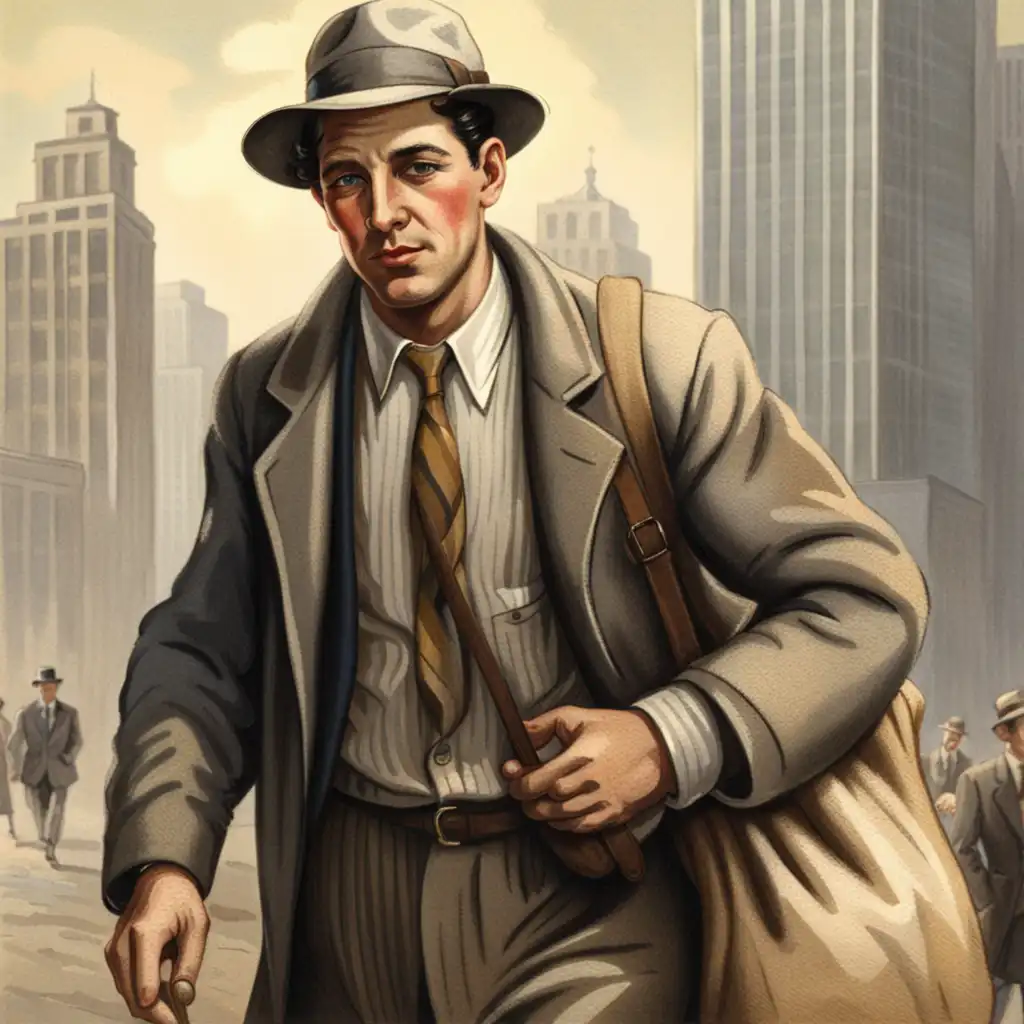
A migrant worker who travels without a fixed home.
During the 1930s, many hobos moved from city to city looking for work.

ˈhəʊbəʊ
Someone who attends a social event without being invited or contributes nothing.
He was a hobo at the party, just eating the food and not mingling with anyone.
音频无法加载,请稍后再试。
The word 'hobo' is an informal term for a person who is homeless or travels around looking for work. It originated in the United States during the Great Depression, when many people lost their homes and had to travel to find work. It is important to note that the word 'hobo' can be seen as derogatory or offensive, so it is best to avoid using it in formal or professional settings. Instead, it is better to use terms like "homeless person" or "nomad" to describe someone who is in a similar situation.
Drift means to move aimlessly or without a plan, while hobo refers to a homeless person who travels around looking for work.
Drift can be used in different contexts, such as when talking about the movement of a ship or the movement of a person who is wandering without a specific destination.
For example, "The boat was left to drift in the open sea" or "She drifted from town to town, never settling in one place for long."
Drift refers to aimless movement, while hobo refers to a homeless person who travels around.
打开单词: Drift →Itinerant can refer to anyone who travels frequently or is without a permanent home, but doesn't necessarily imply homelessness or illicit methods of transportation.
打开单词: Itinerant →Nomad, on the other hand, refers to people who live a life of constantly moving from place to place in search of resources needed to survive.
Nomads may travel with their families and livestock and have a specific route they follow. Hobo is typically applicable when referring to people who travel for the sake of wandering or finding work, whereas nomad is more commonly used for people who have a specific lifestyle of continuous movement in search of resources.
打开单词: Nomad →Rambler refers to someone who enjoys taking long walks or hikes for leisure, usually through nature or scenic areas.
A hobo is someone who travels for survival while a rambler travels for leisure.
打开单词: Rambler →While the terms hobo and tramp are often used interchangeably to describe homeless or itinerant people, they have slightly different meanings.
A tramp is someone who travels around without a specific purpose or goal. They may beg or panhandle for money, and are often seen as more of a burden on society than hobos.
The term tramp has been around since the early 1800s and is often associated with the Victorian era.
打开单词: Tramp →Both hobo and vagabond refer to a homeless person, but there is a slight difference in their meanings.
A vagabond is someone who is more of a wanderer and tends to have no particular destination in mind. The term vagabond can also describe a person who is avoiding responsibility or living without a fixed home.
打开单词: Vagabond →Wander means to travel aimlessly without a specific destination or purpose.
Hobo describes a specific type of homeless person, while wander is a more general term for traveling without a set plan.
打开单词: Wander →A glimpse of life on the...
在 YouTube 上观看 ↗When I met people they said, 'You do look like a hobo, but you smell really good.
Meteor Showers 101 %\PIPE%...
在 YouTube 上观看 ↗Travel like a pro, not like a hobo. That's my motto.
I'd rather look like a hobo and be super comfortable than wear something not comfortable.
My mother, we were a very poor family. When I was a kid, we would be in our little room, and there would be a knock on the door almost every night with a hobo begging for food. Even though we didn't even have enough to eat, my mother always found something to give them.
I grew up poor. I never had any money. I was a hobo, you know, ride the freights.
When I was younger, I'd be in the studio three days straight to get something right, and my manager would be like, 'Go home!' Even now, I still sleep in the studio sometimes, but I can't do it quite as often. I've got gigs; I can't have my hobo beard! But if you love what you're doing, you can't stop. It's obsessive.
I have sung in hobo jungles, and I have sung for the Rockefellers, and I am proud that I have never refused to sing for anybody.
I would describe my personal style as putting Twiggy and Yoko Ono together. It is hobo with no rules.
I wanted to - any chance I had to dress up as a boy, like Halloween, I would be a pirate or a ghost that wore a tie. A hobo.
I don't particularly dislike any kind of person that might be reading my stuff. They like it and that's cool, but I don't do the work for any kind of group in particular, except for hobos, who just plain kick ass and light up my life.