No se pudo cargar el audio. Inténtalo de nuevo más tarde.
Cómo se usa
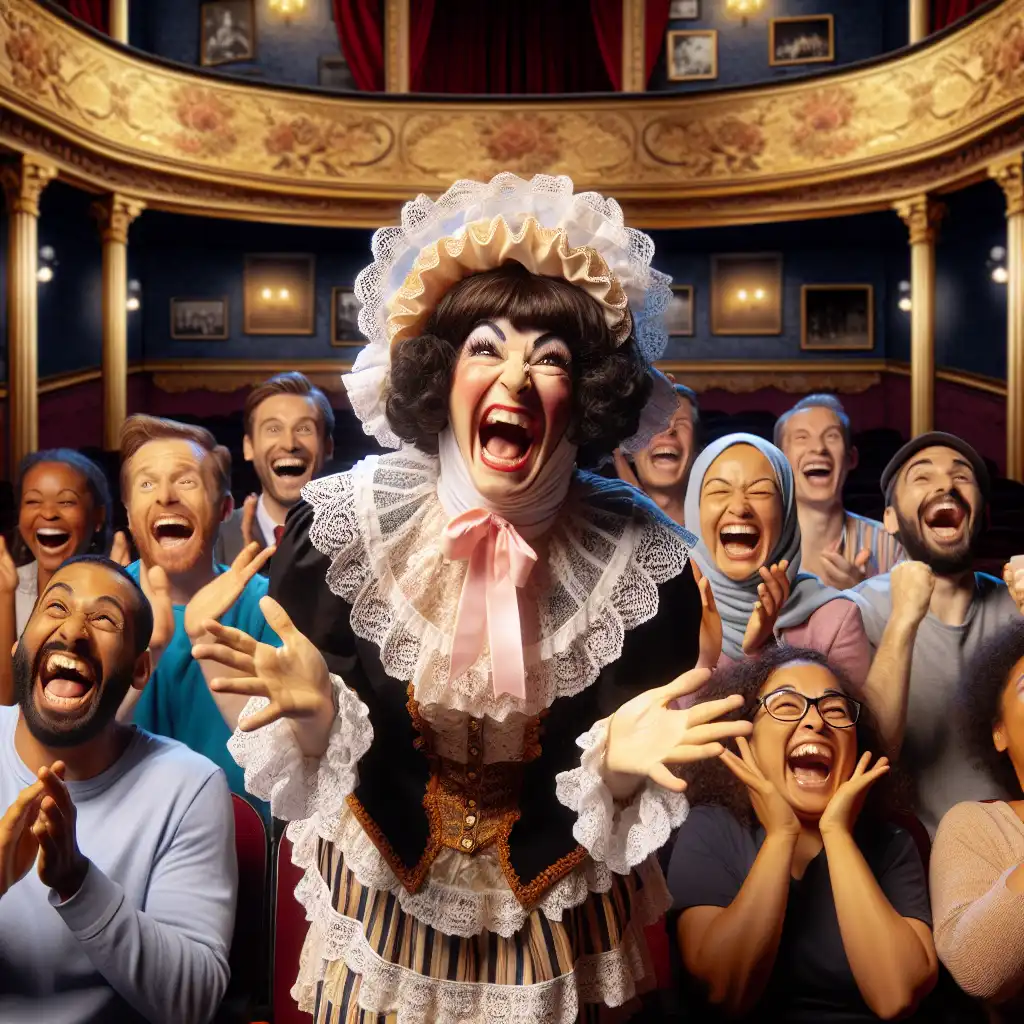
Vaudeville was a type of entertainment in the late 19th and early 20th centuries in the United States. It was a variety show that featured different performances such as comedy, music, dance, and acrobatics. It was performed in theaters and was popular among the working class. Today, the word 'vaudeville' is used to describe any kind of variety show or performance that has multiple acts.
Burlesque refers to a type of entertainment that involves comedy, music, and provocative dancing, typically with a strong emphasis on sexuality.
It often involves exaggerated and humorous takes on serious topics, and is usually geared towards adult audiences. Burlesque shows can be found in nightclubs or theaters, and performers often wear costumes that are meant to be sexually suggestive.
Burlesque is a type of adult-oriented entertainment that emphasizes sexuality and humor, while vaudeville is a more broad type of variety show that features a mix of family-friendly performances.
Cabaret typically refers to a type of nightclub entertainment that includes music, dance, comedy, and sometimes adult themes.
It originated in France in the early 20th century and became popular in Europe and America. Cabaret shows often have a small, intimate setting and may include table service with food and drinks.
Cabaret tends to be more adult-oriented and includes a mixture of entertainment, while vaudeville is typically family-friendly and features a variety of acts.
Cabaret shows often have a smaller, more intimate setting, while vaudeville shows were performed in large theaters.
Entertainment refers to any sort of performance or activity that is meant to amuse or provide enjoyment to an audience.
While entertainment is a broad term that can apply to many different types of performances or activities, vaudeville specifically refers to a type of variety show that has fallen out of popularity in modern times.
A revue is a type of theatrical production that typically consists of a series of sketches, songs, and dances that are loosely tied together by a theme or concept.
While both revues and vaudeville shows are forms of entertainment that feature multiple acts or performances, a revue tends to be more focused on showcasing the individual talents of performers, while vaudeville shows are more about providing a diverse range of acts for audiences to enjoy.
Additionally, while both forms of entertainment have largely fallen out of favor in modern times, revues are still occasionally produced, while vaudeville is largely a thing of the past.
For me, my preference for comedy is grounding it in the psychology of the character, and not just kind of making faces. Even when it's a crazy character, grounded comedy resonates more with people because it doesn't look like you're watching someone do vaudeville. No offense to vaudeville.
I once read that in vaudeville, it was often the straight guy who got paid more than the comic because that's the tougher job. He has to set up the jokes in just the right way.
There were a great many in vaudeville - people who never quite came through. But they had their place, and they filled it. They kept theatres open. Those pan-timers, those interstate-timers, those four-a-dayers, those six-a-dayers - they were an integral part of that endearing merry-go-round called vaudeville.
When you are traveling in vaudeville, you experience so many different kinds of audiences, depending on what time of the week it is, how long the pubs have been open, and things like that.