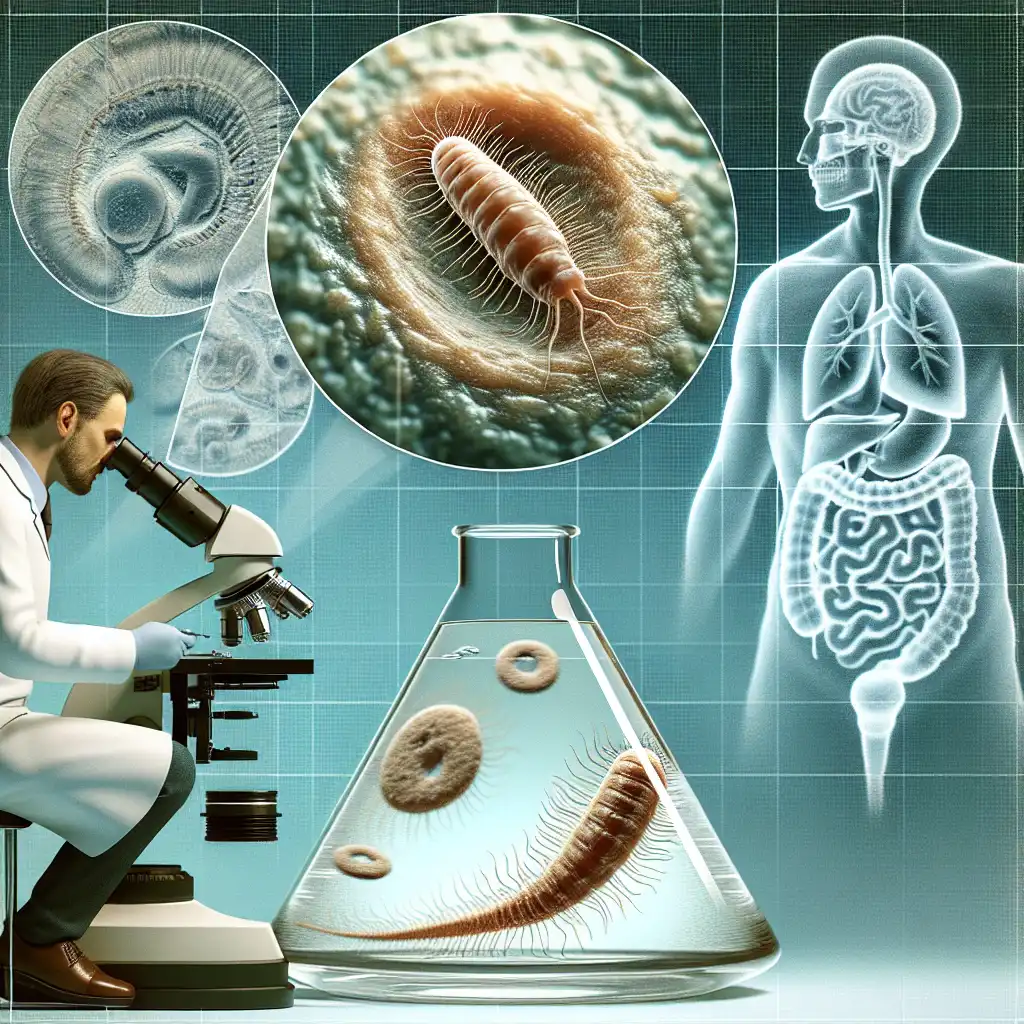
protozoan
noun protozoan
ˌprəʊtəˈzəʊən
A tiny animal with only one cell, often found in water.
The disease is caused by a protozoan which infects the intestinal tract.
protozoan
ˌprəʊtəˈzəʊən
読み込み中…
ˌprəʊtəˈzəʊən
A tiny animal with only one cell, often found in water.
The disease is caused by a protozoan which infects the intestinal tract.
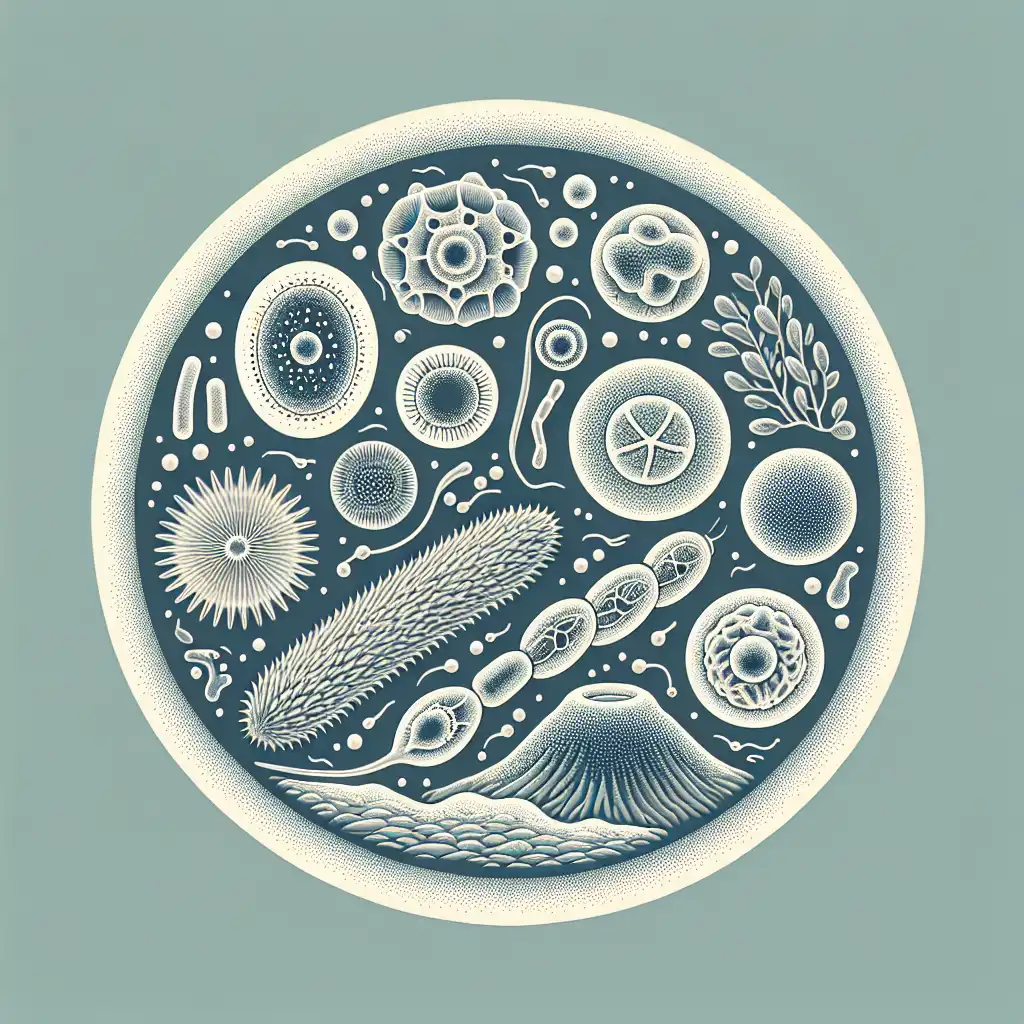
ˌprəʊtəˈzəʊən
Related to or about a protozoan, the tiny animal with only one cell.
The protozoan life cycle is complex and involves several stages.
音声を読み込めませんでした。しばらくしてからもう一度お試しください。
Protozoan refers to a type of single-celled organism that lives in water or soil. They are found everywhere in the world, including fresh and saltwater, and often play an essential role in their ecosystems. Protozoa can be harmful, like the one that causes malaria, or helpful, like the ones that break down organic matter in soil. Overall, protozoa are an essential part of the natural world and contribute to the health of our planet.
An amoeba is a specific type of protozoan. Protozoan is a general term used for any single-celled organism that moves independently and has a nucleus.
Amoebas are a type of protozoan that move by extending their cytoplasm, or cell material, in a process called pseudopodia.
Overall, amoebas are a type of protozoan, but not all protozoans are amoebas.
単語を開く: Amoeba →Flagellate describes a type of organism that has a long, whip-like tail called a flagellum that it uses for movement.
A flagellate can be a type of protozoan, but not all protozoans are flagellates.
Flagellate refers to a specific type of movement structure while protozoan refers to a broader category of single-celled organisms that have different methods of movement.
単語を開く: Flagellate →Microbe is a term used to describe any small living organism that cannot be seen with the naked eye, including bacteria, viruses, and some fungi.
Protozoan refers specifically to a group of single-celled organisms that belong to the kingdom Protista, and they are larger and more complex than many other microbes.
Protozoa are found in water and soil and are often responsible for diseases like malaria and amoebic dysentery. So, while all protozoa are microbes, not all microbes are protozoa.
単語を開く: Microbe →Microorganism is a broad term used to describe tiny living things that can only be seen under a microscope. This term can apply to many different types of organisms, including bacteria, viruses, fungi, and protozoans.
So, while all protozoans are microorganisms, not all microorganisms are protozoans. The term microorganism is more general, while protozoan is more specific to an individual type of single-celled organism.
単語を開く: Microorganism →A parasite is an organism that lives on or inside another organism (the host) and benefits by deriving nutrients at the host's expense.
Parasites can be bacteria, fungi, animals, or plants. They may or may not cause disease in the host organism.
These parasites are known to cause a variety of diseases in humans, including malaria, African sleeping sickness, and giardiasis.
So, while all parasites are organisms that live off of another organism, protozoans specifically refer to a group of single-celled eukaryotic organisms, some of which are parasitic.
単語を開く: Parasite →A pathogen is any organism that can cause disease in its host, including bacteria, viruses, fungi, and parasites. Protozoans are a particular type of unicellular organisms that are often found in water and soil.
While some protozoans can cause diseases (such as malaria, caused by the protozoan Plasmodium), not all protozoans are pathogenic.
In essence, pathogen is a broader term that encompasses all types of disease-causing organisms, while protozoan refers specifically to a type of unicellular organism.
単語を開く: Pathogen →Kitra Cahana: My father,...
YouTube で見る ↗Could Vaccines Help Save...
YouTube で見る ↗