snicker
verb snicker
ˈsnɪkər
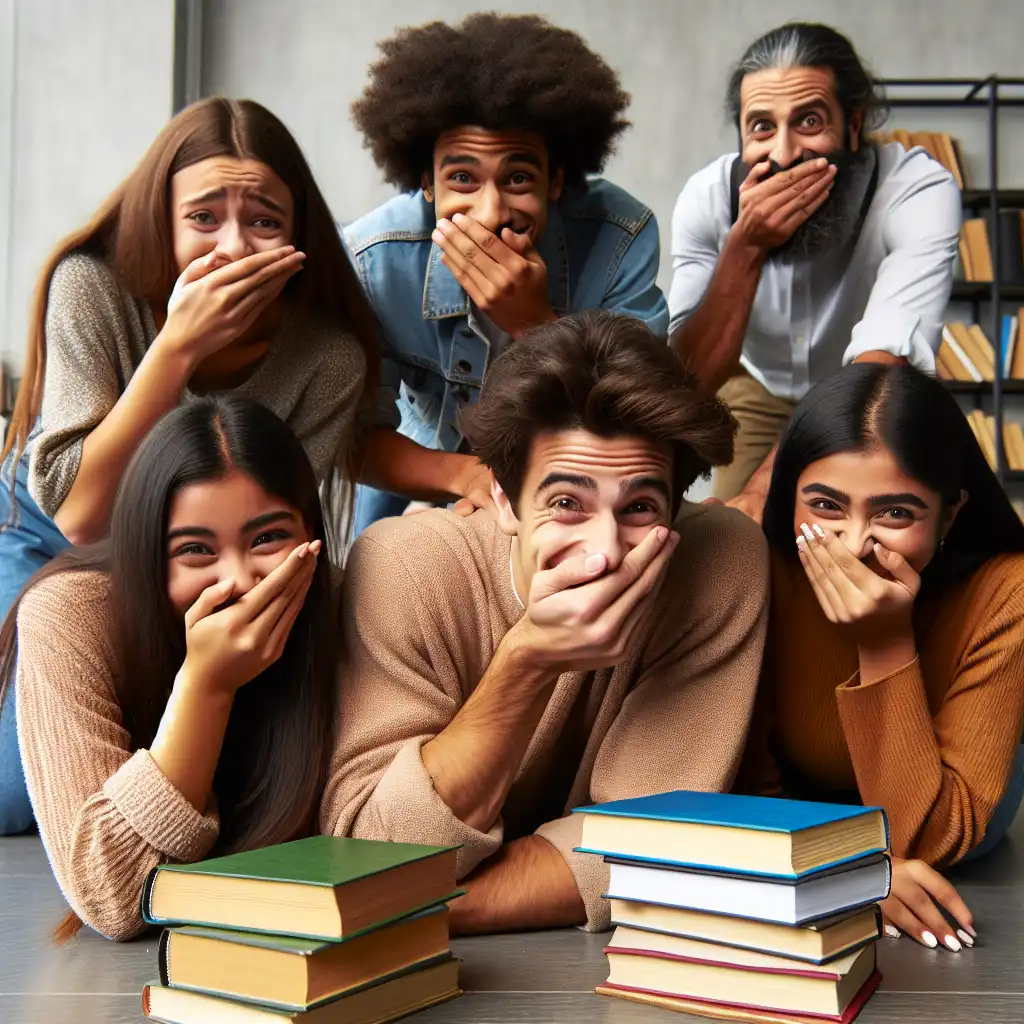
To laugh in a secretive or disrespectful manner
The students snickered when the teacher tripped.
snicker
ˈsnɪkər
加载中…
ˈsnɪkər
To laugh in a secretive or disrespectful manner
The students snickered when the teacher tripped.
ˈsnɪkər
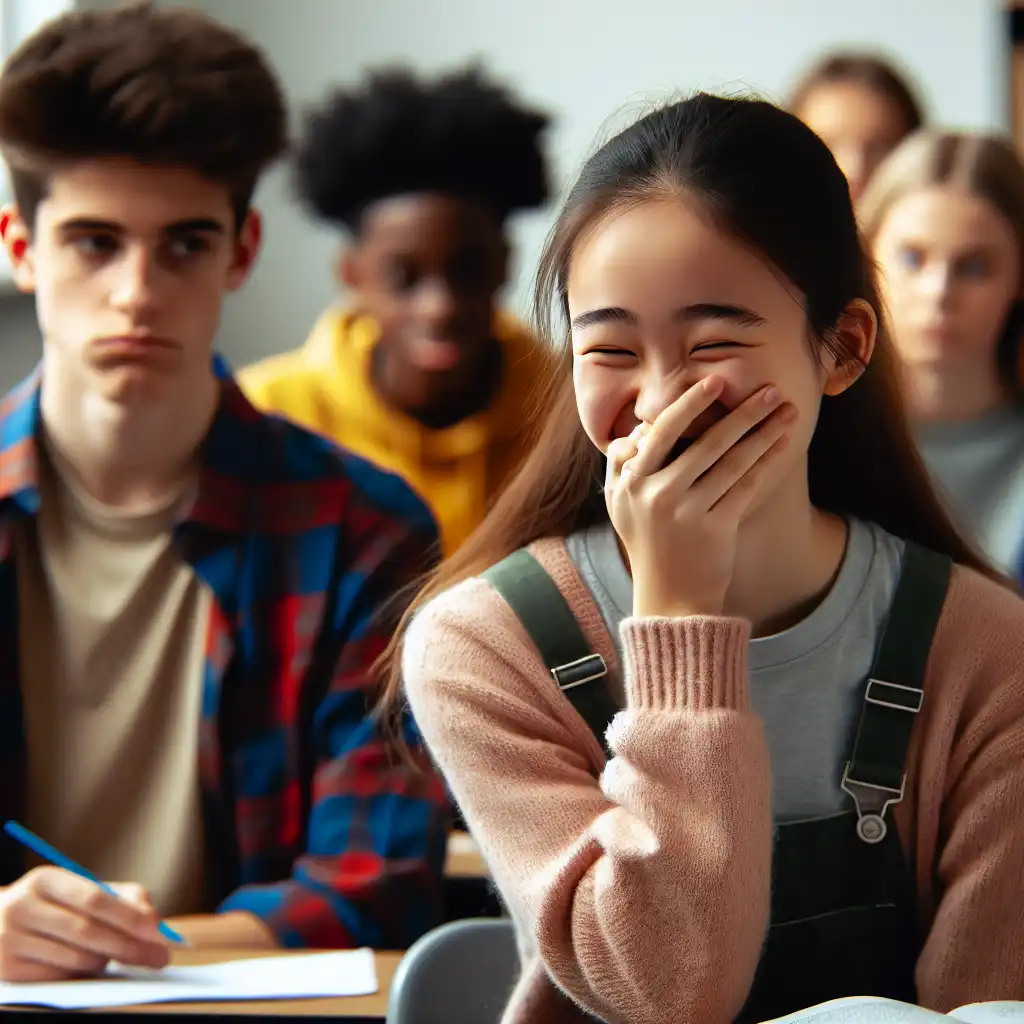
A secretive or disrespectful laugh
She could hear a snicker from the back of the room.
音频无法加载,请稍后再试。
The word 'snicker' means to laugh quietly or in a suppressed way. It's usually used to describe a sound made by someone who is amused by something, but trying to hide it, like when someone tells a joke but it's not appropriate to laugh out loud. You can use the word 'snicker' in sentences like "She couldn't help but snicker at his silly joke" or "I heard him snicker when I tripped on my shoelaces." It's important to remember that 'snicker' is generally considered an informal or casual word, and might not be appropriate to use in formal or professional contexts.
The word “chuckle” means to laugh in a soft and quiet manner.
It is usually a slightly longer and more audible laugh than a “giggle.” People usually chuckle when they find something mildly amusing or humorous.
On the other hand, “snicker” refers to a half-suppressed laugh that is often accompanied by a sneer or a smirk. It is a brief, low-pitched sound, usually less lengthy and less noticeable than a chuckle.
In summary, chuckling is a soft, light-hearted laugh whereas snickering is more reserved and often has negative undertones.
打开单词: Chuckle →The difference between giggle and snicker is their intensity and the way they sound.
A giggle is a quiet, light and pleasant laugh, while a snicker is a more muffled and often mean-spirited laugh.
You would use giggle when you find something cute, funny or endearing, and you simply can't help but let out a small, happy laugh.
A giggle is a positive expression of amusement, while a snicker can be negative and potentially hurtful.
打开单词: Giggle →Simper means to smile in a way that shows you are smug, silly, or insincere, while snicker means to laugh quietly in a disrespectful way.
Simper usually describes someone who is being excessively sweet or trying to flatter someone in a way that seems fake or insincere, while snicker is often used to describe someone who is being rude or mocking someone else.
You might simper to try to get something you want from someone, whereas you might snicker at a joke at someone else's expense.
打开单词: Simper →A smirk is a smug, conceited, or arrogant smile, which is often meant to show superiority over someone or to express disdain, mockery, or contempt.
Both words refer to a negative expression or behavior, but a smirk is more of a facial expression, while a snicker is more of a sound that one makes while laughing.
A smirk is also more intentional and deliberate, while a snicker can be more spontaneous and uncontrollable. Both words are applicable in situations where someone is trying to make fun of or humiliate someone else.
打开单词: Smirk →Both snicker and snigger refer to a suppressed or stifled laughter or smirk, but they have a subtle difference in meaning and usage.
Snigger has a negative connotation and is associated with mocking or making fun of someone, especially for their race, ethnicity, or social status.
It is a more derisive and scornful way of laughing, often used to express contempt or disapproval. For example, a person might snigger at a person's accent, clothing or manners.
Snicker is used to express amusement or light-heartedness, while snigger denotes ridicule or scorn.
打开单词: Snigger →Titter has a more light-hearted or nervous feeling, like a titter might be a response to something mildly amusing or uncomfortable.
You might use snicker to describe a mean-spirited laugh, while titter might be more appropriate for a nervous or slightly embarrassed giggle.
打开单词: Titter →The psychological weight...
在 YouTube 上观看 ↗People who are pierced should not be snickered at, should not become the object of ridicule, should not be singled out for special and uneven and unequal treatment. They should be respected just like everybody else.
The biology of gender,...
在 YouTube 上观看 ↗A word is an arbitrary label - that's the foundation of linguistics. But many people think otherwise. They believe in word magic: that uttering a spell, incantation, curse, or prayer can change the world. Don't snicker: Would you ever say, 'Nothing has gone wrong yet' without looking for wood to knock?
Food Aggression %\PIPE%...
在 YouTube 上观看 ↗For a comic to put a public performance in jeopardy for a snickering little laugh - no, no, no, I don't believe in it.
KISS has always been outside of the borders of what other bands can do. Not that some of these other bands wouldn't want to do it - the fact that they may snicker or look down their noses at what we do is more out of jealously than anything else.
I had always sung in choirs. Even when it was something to be laughed at or made fun of, you know, in school. And I was always the kid who was picked at the Christmas concert to sing the solo, you know, while the other kids snickered in the front few rows.
I avoid writing about sex out of a certainty that no matter how grown up and matter-of-fact I might try to be, there is a snickering yet nun-terrorized 12-year-old-boy inside me who would at some point be certain to grab the reins in his hairy palms.
I came to work one day, and Ricky was playing music on his guitar, just snickering. He played me the riff that turned out to be 'Rock Lobster,' and it was hilarious. He was just trying to be funny. His guitar style made it moodier, and it really is a driving song, but it does have that funny humor to it.
The punditry snicker, the politicians sneer, and the editorialists scoff, but the American people speak and Donald J. Trump rises - commandingly so - confounding the powerful institutions of Washington D.C. and New York and earning him the ire of both.
There must be something solemn, serious, and tender about any attitude which we denominate religious. If glad, it must not grin or snicker; if sad, it must not scream or curse.