slang
noun slang
slæŋ
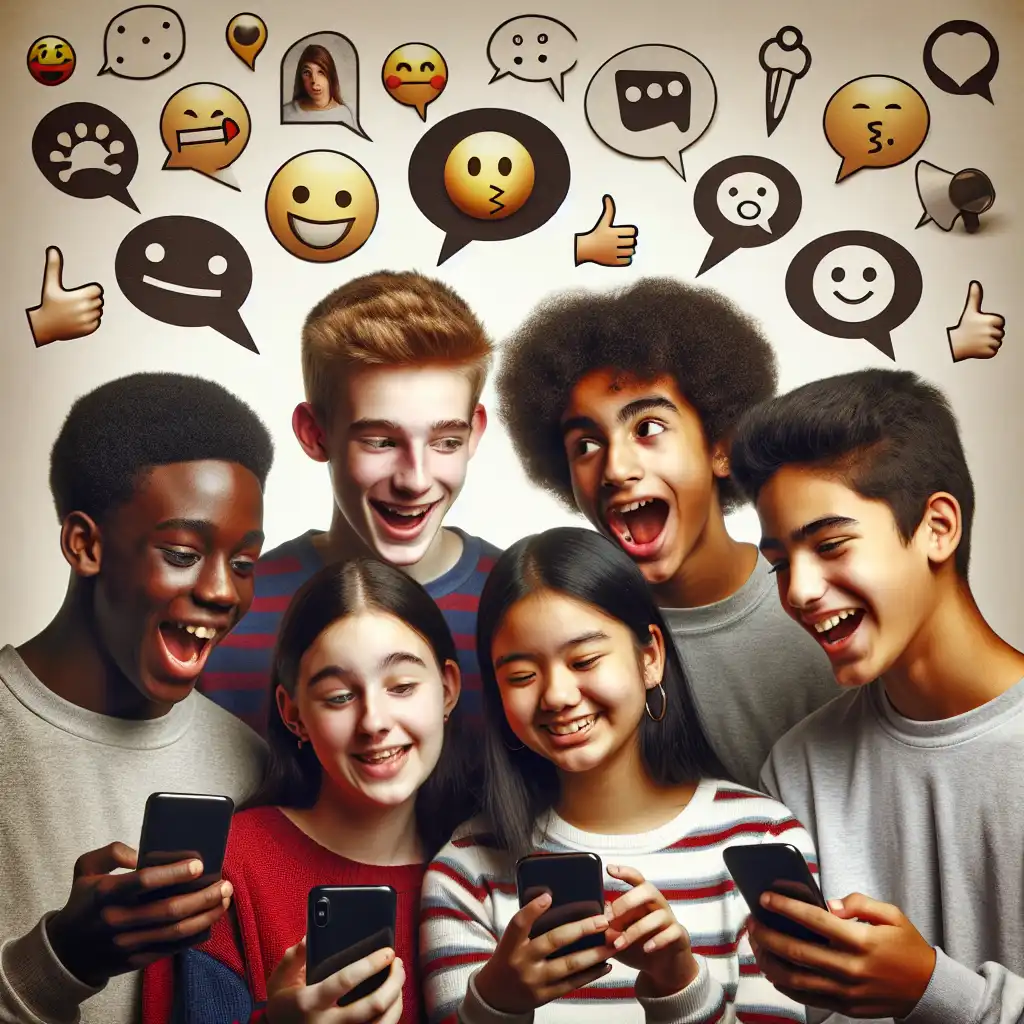
A type of language made up of informal words and phrases known and used by a particular group of people
Texting abbreviations are an example of modern slang.
slang
slæŋ
Cargando…
slæŋ
A type of language made up of informal words and phrases known and used by a particular group of people
Texting abbreviations are an example of modern slang.

slæŋ
The use of informal and unofficial words or phrases that are not part of standard vocabulary
The latest slang among young people can be hard to keep up with.

slæŋ
To use informal and unofficial words or phrases in speech or writing
He's always slanging with his friends.
No se pudo cargar el audio. Inténtalo de nuevo más tarde.
Slang is a type of language that is used by people in informal situations, like with friends or in casual conversations. It's made up of words and phrases that aren't always in a dictionary, and it can be different from one region to another or even between different groups of people. As an English learner, it's important to be aware of slang so that you can understand it when you hear it, but also to use it cautiously, as it may not be appropriate in formal settings. It's always best to stick to standard English when speaking to teachers or in an academic setting. Some examples of slang words and phrases include "lit" (meaning great or exciting), "savage" (meaning someone who is really cool or tough), and "YOLO" (an acronym for "you only live once").
The difference between argot and slang is that argot refers to a specialized language or set of terms used by a particular group, such as criminals or soldiers, while slang refers to informal words and phrases that are commonly used in everyday language.
Argot is often used in more secretive or exclusive settings, where members of a specific group may use their own unique vocabulary and expressions to maintain their identity and communicate with one another without being understood by outsiders.
Both argot and slang are forms of language that evolve over time and can be influenced by a range of factors, such as social trends, technology, music, and popular culture.
Abrir palabra: Argot →Cant refers to a specialized vocabulary used by a particular group, profession or community. It's used for communication within that group, but may not be readily understood outside of it.
Cant is more specialized and specific to a certain group, while slang is more widely used in everyday conversation.
Abrir palabra: Cant →Colloquialism refers to informal language used in everyday conversation. It is a type of language that is specific to a certain region or culture and not used in formal situations.
For example, "gonna" instead of "going to" or "y'all" instead of "you all" are colloquialisms commonly used in Southern US.
Both colloquialisms and slang are informal language used in everyday conversation, but the difference is that colloquialism is generally more widely used and understood, while slang is more specific and used only within a particular group of people.
Colloquialism is applicable in everyday conversation and informal writing, while slang is mostly used in spoken language between friends and peers.
Abrir palabra: Colloquialism →A dialect is a form of a language that is spoken in a particular geographic or social group, which includes unique vocabulary, grammar, and pronunciation.
Dialect refers to a regional or social variation within a language, while slang is informal language made up of words and phrases that are not considered standard.
Dialect is applicable in academic, formal, and professional settings, while slang is more appropriate in casual, informal, and social settings.
Abrir palabra: Dialect →Idioms are phrases or expressions that have a meaning different from the literal meaning of the words used. For example, "break a leg" means "good luck" in theater.
Idioms are commonly used in formal writing and speech to add style and personality.
In summary, idioms are used in formal writing and speech to add personality and meaning, while slang is used in casual conversation to express current trends and add personality.
Abrir palabra: Idiom →Jargon is a specific language or set of terms used in a particular profession or field. It usually helps professionals communicate more efficiently with each other, but can be difficult for outsiders to understand.
Jargon is used within a specific profession or field to communicate more effectively, while slang is informal language used by specific groups of people to create a sense of identity.
Abrir palabra: Jargon →Patois refers to a regional dialect with its own unique grammar and vocabulary, typically spoken by people in a particular area or community.
Patois is applicable in situations where people from a particular region or community want to communicate with one another using their own dialect.
Abrir palabra: Patois →Vernacular refers to the language or dialect spoken by people in a particular region or community. It is the everyday language that is used by most native speakers in a given area.
Vernacular can include slang, but it also encompasses the grammatical structures, pronunciation, and vocabulary that are unique to a specific place or group of people.
Simply put, slang is a type of informal language used within a specific group, while vernacular refers to the everyday language used by people in a particular region or community.
Abrir palabra: Vernacular →and he saw trolleys with long lines of people trying to get to where they wanted to go. He said well why don't I just put a sign on my car that takes people wherever they want to go for a jitney -- that was slang for a nickel. And so people jumped on board,
Ver en YouTube ↗It is too late to be studying Hebrew; it is more important to understand even the slang of today.
us because they're one of three groups which are known to learn their vocalizations so we humans take learning for granted because we use it all the time when learning speeches youngsters and learning new slang as adults in Hmong birds though and among animals in general it's a relatively rare
Ver en YouTube ↗I like to add props to render the specificities of place - paintings, food, clothing, signs, infrastructure, music, sayings and slang particular to the region and particular to the character. And props shouldn't just sit there; they should get used.
billion people in the developing world who lack access to electricity another aspect that really excites me is how cheap these can be made these thin slang films are made by mixing two inexpensive readily abundant salts to
Ver en YouTube ↗All our efforts to guard and guide our children may just get in the way of the one thing they need most from us: to be deeply loved yet left alone so they can try a new skill, new slang, new style, new flip-flops. So they can trip a few times, make mistakes, cross them out, try again, with no one keeping score.
That grizzly image has since been immortalized as shorthand slang for single-minded cult-like thinking, "They drank the Kool-aid." Today there are thousands of cults around the world. It's important to note two things about them.
Ver en YouTube ↗Booze' was once a popular term in the slang or 'cant' of the criminal underworld, which may explain its rebellious overtones today.
important gaps in the English language. But how real are they if we use them primarily as slang and they don't yet appear in a dictionary?
Ver en YouTube ↗The sea speaks a language polite people never repeat. It is a colossal scavenger slang and has no respect.
so um also um what's really cool about this is that it understands slang like when when the kids talk to it you know it understands what uh what the kid is asking and also it and the main thing that i really really adore is that it actually leaves the
Ver en YouTube ↗Words have life and must be cared for. If they are stolen for ugly uses or careless slang or false promotion work, they need to be brought back to their original meaning - back to their roots.
Reggie stopped becoming the best to me, because what Etheridge Knight taught me was that I could make my words sound like music, even my small ones the monosyllables, the ifs ands buts whats, the gangsta in my slang could fall right on the ear,
Ver en YouTube ↗Dutch is our first language. When you talk to older people, you speak Dutch. It's more respectful. The local language, you talk with your friends. You don't talk to your parents like that with the local slang.
from this subsiding verb, our modern meaning of fizzle developed as slang in the 1800s. Originally used on college campuses to describe failure, specifically on an exam, it wasn't long before the word came to mean exactly what it does today
Ver en YouTube ↗The only thing that kept us from going bigger worldwide was the language barrier. All the corn that we did on 'Hee Haw,' it was hard to translate into their slang.
So then there was a lot more beers and then the day ended with a challenge to bring the mustache back. So in Australia "mo" is slang for mustache, so we renamed the month of November "Movember" and created some pretty basic rules which still stand today.
Ver en YouTube ↗I was inspired by 'Bootylicious' being able to scale the dictionary walls thanks to just one individual, Beyonce. But Beyonce has the world's ears, so what I had to do was to work my word - which is 'honk', as slang for money, really really hard.
they dictated how words should be used, rather than documenting the way people actually used language in daily life. When Webster broke this convention and included slang words in his dictionary, critics accused him of polluting the English language.
Ver en YouTube ↗I make up many words but we can go on for forever about slang words that E-40 created. That has always been one of my things since was youngster. I have always being creative with my words.