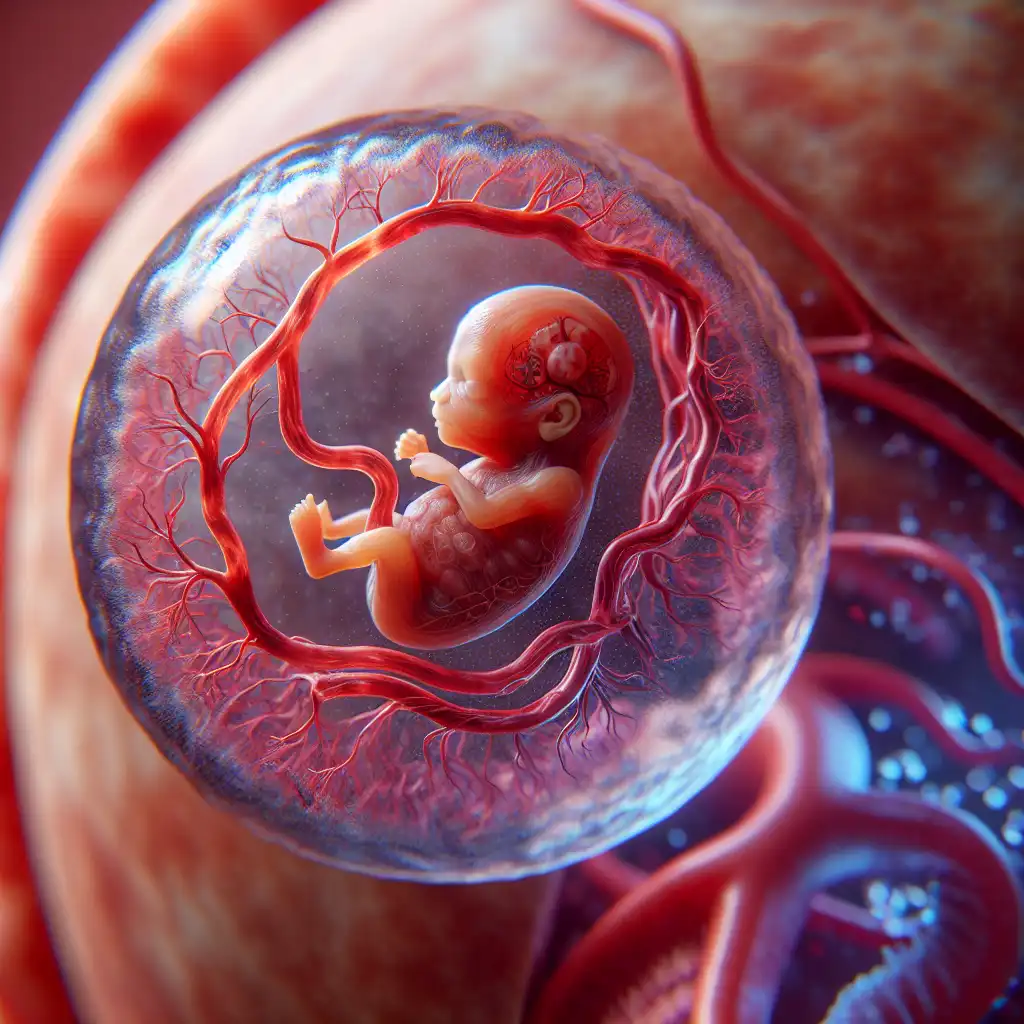
The word 'placental' is used to describe animals, such as humans, who give birth to their babies after they have developed a special organ called the placenta while they are pregnant. This organ connects the mother's blood supply with her developing baby's blood supply, so that the baby can get all the nutrients it needs to grow. When someone says that an animal is 'placental', they mean that it has this organ and gives birth to live babies instead of laying eggs.
Fetal refers to everything related to the developing baby inside the mother's womb, while placental refers to the organ that connects the fetus to the mother's uterus and allows for nutrient and waste exchange.
Fetal is applicable when talking about the baby's growth, development, and health, while placental is applicable when discussing the role of the placenta in providing nutrition and removing waste products.
For example, a doctor may perform a fetal ultrasound to check on the baby's well-being, but may also monitor the placental function if there are concerns about the baby's growth or if the mother has certain medical conditions that can affect placental function.
Mammal is a type of animal that is characterized by the presence of mammary glands, which produce milk to feed their offspring.
Placental on the other hand, refers to a type of mammal that gives birth to young ones that develop inside the mother's placenta, which provides vital nutrients and oxygen to the developing embryo.
In simpler terms, all mammals have mammary glands and produce milk, while only placental mammals give birth to offspring that develop inside the placenta.
Examples of placental mammals include humans, dogs, cats, and elephants among others.
Umbilical refers to the umbilical cord, which is a flexible, tube-like structure that connects the fetus to the placenta.
Placental pertains to the placenta, while umbilical pertains to the umbilical cord. Each term is applicable in the context of pregnancy and childbirth.