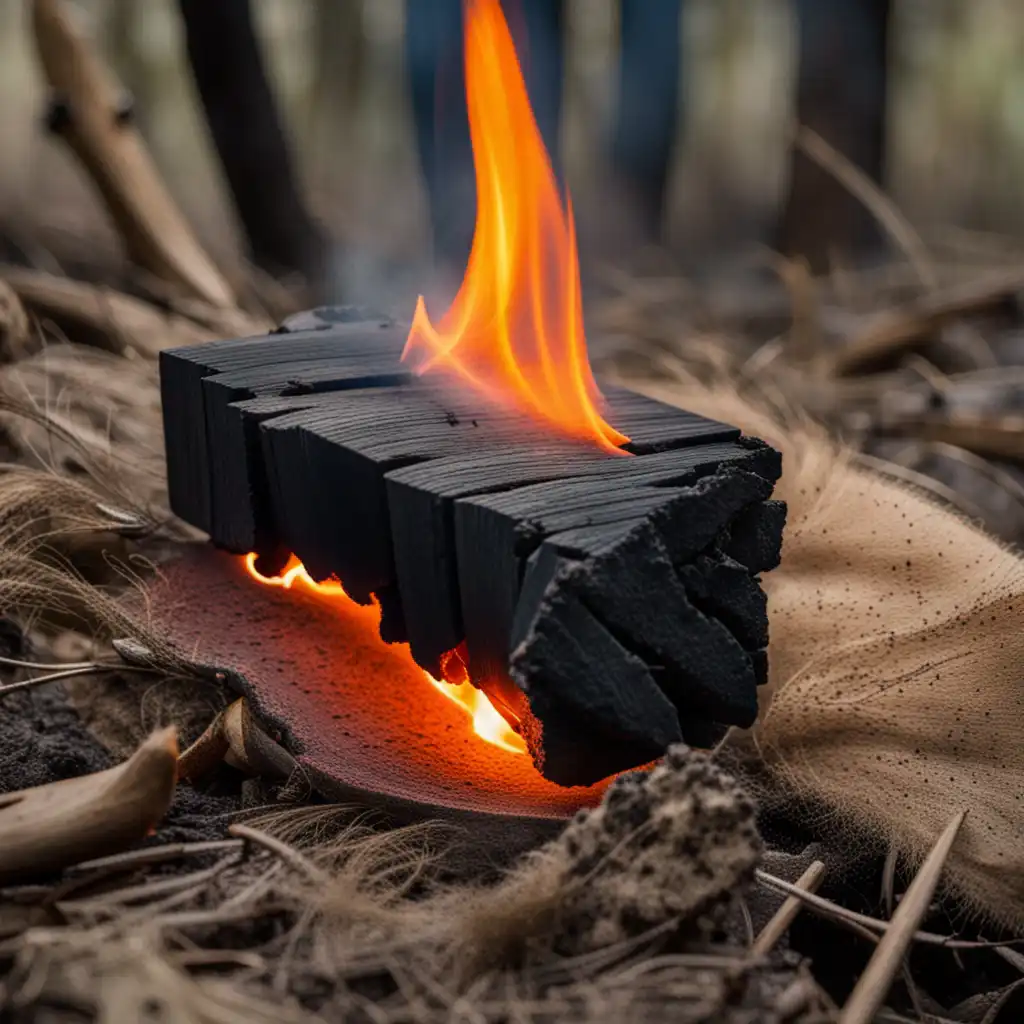
carbonize
verb carbonize
ˈkɑːrbənaɪz
To change something into carbon, often by burning it without enough air.
During the process, the wood is carbonized to increase its strength.
carbonize
ˈkɑːrbənaɪz
불러오는 중…
ˈkɑːrbənaɪz
To change something into carbon, often by burning it without enough air.
During the process, the wood is carbonized to increase its strength.

ˈkɑːrbənaɪz
To coat or impregnate with carbon.
The steel is carbonized to improve its surface hardness.
오디오를 불러오지 못했어요. 잠시 후 다시 시도해 주세요.
The word 'carbonize' means to turn something into carbon or charcoal by burning it at a very high temperature in the absence of oxygen. This process is commonly used in the production of charcoal for fuel or in the creation of industrial materials such as carbon fibers. The word can also be used figuratively to describe the process of something becoming blackened or charred due to burning. Overall, 'carbonize' is a technical term used in specific contexts like science or industry, and is not commonly used in everyday conversation.
Blaze means to burn brightly and fiercely, usually with flames visible.
It is often used to describe a fire that is burning out of control or with great intensity. Blaze is applicable when there is an active fire or flames burning.
Blaze describes a fire with visible flames, while carbonize describes a process of heating materials until they break down into carbon-rich residue.
단어 열기: Blaze →Burn refers to the process of something being consumed by fire, resulting in the production of heat and light.
Burn is more commonly used to describe things that are on fire and producing flames, while carbonize is used when the continued presence of flames is not necessary, such as when cooking food or producing charcoal.
단어 열기: Burn →Carbonize and char are both related to the burning process but they have different applications. Carbonize means to convert something into carbon or its derivatives by heating it in the absence of oxygen.
This usually involves turning organic materials into charcoal through a slow process such as pyrolysis. Carbonization is used in the production of activated carbon, fuel, and other industrial applications.
Char refers to the partial burning or blackening of a material due to incomplete combustion or exposure to high heat, but with some oxygen still present.
Char is often produced when natural ingredients such as wood or meat are grilled, and can provide a desirable smoky flavor.
Carbonize is the process of converting something into carbon through heating without oxygen, while char refers to the blackening of a material through partial burning or exposure to high heat with some oxygen present.
Carbonize is typically used in industrial applications, while char is commonly associated with cooking and grilling.
단어 열기: Char →Flame refers specifically to the visible, hot, glowing gas that is produced when something is burning.
A flame is usually characterized by its bright, colorful appearance and the way that it flickers or dances in the air.
Flames are often associated with fire, but they can also be produced by other sources of heat, such as gas stoves or torches.
The word carbonize describes a process of transformation that occurs when a substance is heated or burned to the point of becoming carbon, while flame refers to the visible, hot gas that is produced when something is burning.
단어 열기: Flame →Both carbonize and incinerate refer to burning something, but there is a difference in the result and application.
Incinerate means to burn something completely at a high temperature. This process is used for waste disposal, and is commonly used for medical waste or hazardous materials.
Carbonize is a slower process that breaks down something into carbon, while incinerate is a faster process that burns something completely.
단어 열기: Incinerate →Carbonize and scorch are both verbs that describe the burning of something, however, they differ in their intensity and result.
Scorch means to burn something slightly, causing discoloration or damage to the surface. This can occur from exposure to heat or flame, or from sunlight or chemicals.
For example, if you accidentally leave an iron on a synthetic fabric, you may scorch the material and leave a brown or yellow mark.
Carbonize involves complete burning into carbon, while scorch involves partial burning and damage to the surface. Carbonize is applicable in the manufacturing of certain materials or the preservation of biological specimens, while scorch can happen in everyday life and can be caused by heat, light, or chemicals.
단어 열기: Scorch →Sear means to cook the surface of something quickly at a high temperature, usually in a pan or on a grill. It is applicable when you want to brown the surface of meat or vegetables while keeping the inside moist and tender.
단어 열기: Sear →Singe means to burn or scorch something slightly, usually on the surface, without causing complete burning.
Carbonize usually describes the process of turning organic materials like wood, coal, or animal bones into charcoal. Singe on the other hand, can describe accidental burns, like when you accidentally touch a hot pot and singe your finger, or when you slightly burn the hair on your head while using a curling iron.
Carbonize means to completely burn something into carbon, while singe means to partially burn or scorch something. Carbonize is used for controlled burning to create charcoal, and singe can happen accidentally or be used intentionally for things like cooking or hairstyling.
단어 열기: Singe →One Man’s Quest to Save...
YouTube에서 보기 ↗