
preferential
adjective preferential
ˌprefəˈrenʃl
Favoring one person or thing over others
Some members of the team received preferential treatment.
preferential
ˌprefəˈrenʃl
Chargement…
ˌprefəˈrenʃl
Favoring one person or thing over others
Some members of the team received preferential treatment.

ˌprefəˈrenʃl
Relating to the practice of giving better treatment to some people
The government has set preferential policies for the poor.
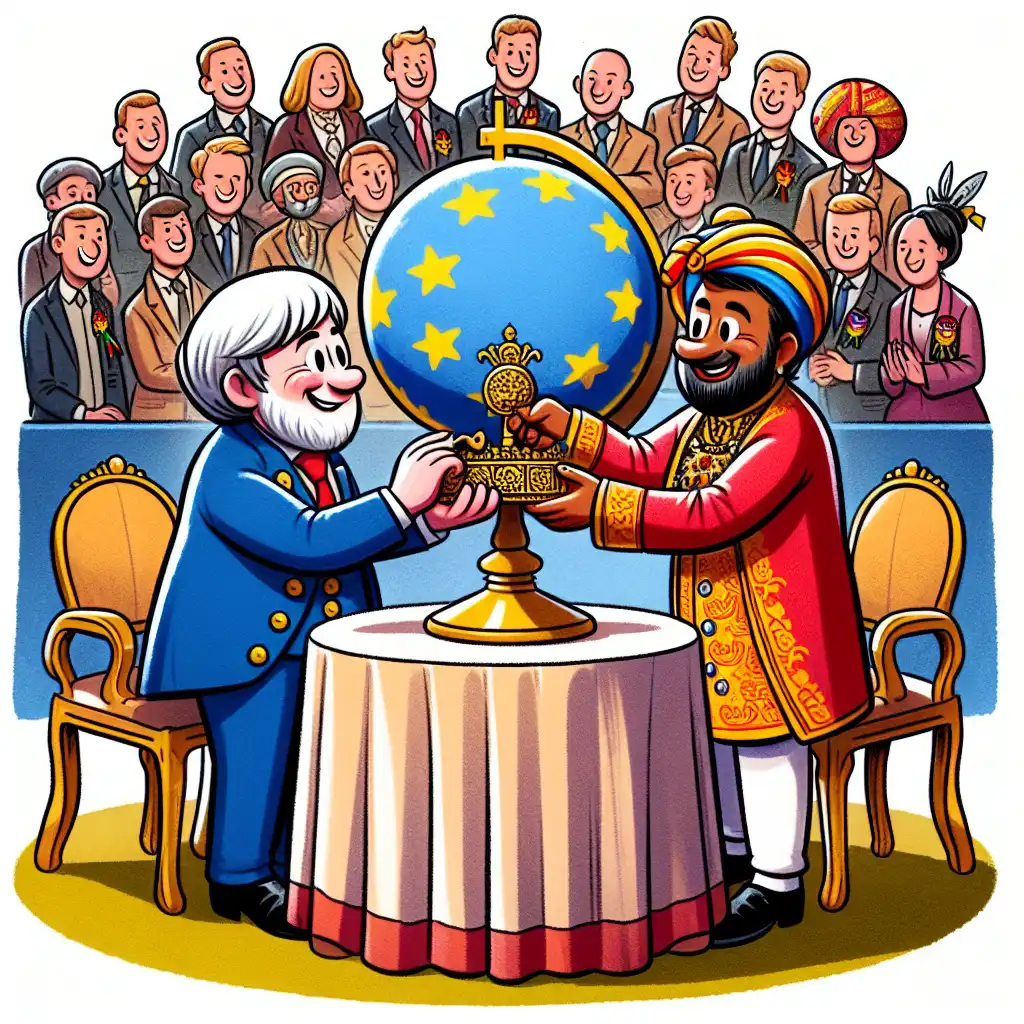
ˌprefəˈrenʃl
Relating to a trade agreement where one country makes better trade deals to another
They have a preferential trade agreement with neighboring countries.
Impossible de charger l’audio. Réessayez plus tard.
The word "preferential" is used to describe something that is given or received as a preference, meaning it is chosen or favored over other options. This can refer to things like preferential treatment, which means someone is given special treatment over others, or preferential pricing, which means someone is given a lower price compared to others. In general, "preferential" is used to emphasize that something is being favored or chosen over other options.
Discriminatory refers to treating someone unfairly or differently based on their race, gender, religion, or other personal characteristics.
For example, if a company chooses to hire only men and not women, it is considered discriminatory.
Discriminatory practices seek to exclude or harm certain groups of people, while preferential practices aim to promote equality and diversity.
Ouvrir le mot: Discriminatory →Exclusive means something that is limited or available to only a select few individuals or groups. For example, an exclusive club may only allow members who meet certain criteria, while an exclusive product may only be available to a specific market.
Exclusive refers to something that is limited or restricted to certain people or groups, while preferential refers to something that is given priority or special treatment.
Ouvrir le mot: Exclusive →Favourable refers to something that is positive, advantageous or beneficial. For example, a favourable climate for crops or a favourable outcome in a court case.
Favourable can describe any situation where something is positive, while preferential is used when talking about a preferred option or treatment.
A good way to remember the difference is that favourable is about the situation itself, while preferential is about how someone is treated within that situation.
Ouvrir le mot: Favourable →Privilege means a special advantage or right that a person or group has. It is applied when someone has an advantage over others based on their position, race, or status.
For example, if you are born into a wealthy family, you have the privilege of access to more resources and opportunities than someone who is born into a poor family.
Thus, the main difference between the two words is that preferential is related to personal choice, while privilege is related to social or cultural advantage.
Ouvrir le mot: Privilege →Selective refers to being particular or discriminating in choosing or accepting something. For example, if someone is selective about the clothes they wear, they carefully choose what they wear based on certain criteria such as style, material, or brand.
In summary, ‘preferential’ is applicable when someone has a greater liking for one thing over another, while ‘selective’ is applicable when someone carefully chooses or accepts something based on certain criteria.
Ouvrir le mot: Selective →Special means unique or distinct in some way, or something that is different from others in a notable way.
It is used when referring to something that is important, significant, or unusual. For example, a special event may be a celebration like a birthday party, or a unique experience like traveling to a different country.
Preferential refers to giving someone or something an advantage, while special refers to something that is unique or different from others.
Ouvrir le mot: Special →Which sunscreen should...
Voir sur YouTube ↗The biggest revenue target is the preferential rate for long-term capital gains, which raises a perennial question: Why should capital income be taxed at a much lower rate than ordinary income? Capital assets are owned overwhelmingly by the rich.
Doesn't everyone deserve...
Voir sur YouTube ↗There is nothing morally objectionable in stating that a country has the inalienable right to decide on the exact number of immigrants and the exact type of immigrants that it wishes to let into its borders. As part of that calculus, it is perfectly rational to exhibit preferential treatment to immigrants who share one's cultural values.
How to Get Around 'No...
Voir sur YouTube ↗Obama routinely pushed policy that pleased the tech-savvy, including his successful effort to keep broadband suppliers from giving preferential treatment to bigger web companies over individuals.
Leaving the E.U. without a preferential trade arrangement in place would make the U.K. significantly poorer.
When I'm working, I'll often be upgraded to a suite though I don't ask for preferential treatment. I'll be there with a tour manager, my band and various promotions people and the hotel will offer to upgrade one of us; luckily, it's usually me.
Should the U.S. grant preferential treatment on trade to an egregious human rights violator that allows human traffickers to operate unencumbered within its borders? The obvious answer would seem to be 'No.
The pretty girls get all the good stuff. Oh, God. So not true. I unlearned this after years of coaching beautiful clients. Yes, these lovelies get preferential treatment in most life scenarios, but there's a catch: While everyone's looking at them, virtually no one sees them.
Legacies, athletes, and favored racial minorities all receive preferential treatment from admissions committees to the exclusion of academically better-qualified students.
I do not have an issue with specific countries or companies; what I'm interested in are schemes which allow for preferential treatment, for selectivity... If this has to change, it's countries that will have to change this.
President Obama has regularly granted special access to reporters who give him preferential coverage.