
paranoia
noun paranoia
ˌpærəˈnɔɪə
Unreasonable fear or suspicion of others
His paranoia made him distrust everyone around him.
paranoia
ˌpærəˈnɔɪə
Loading…
ˌpærəˈnɔɪə
Unreasonable fear or suspicion of others
His paranoia made him distrust everyone around him.
ˌpærəˈnɔɪə
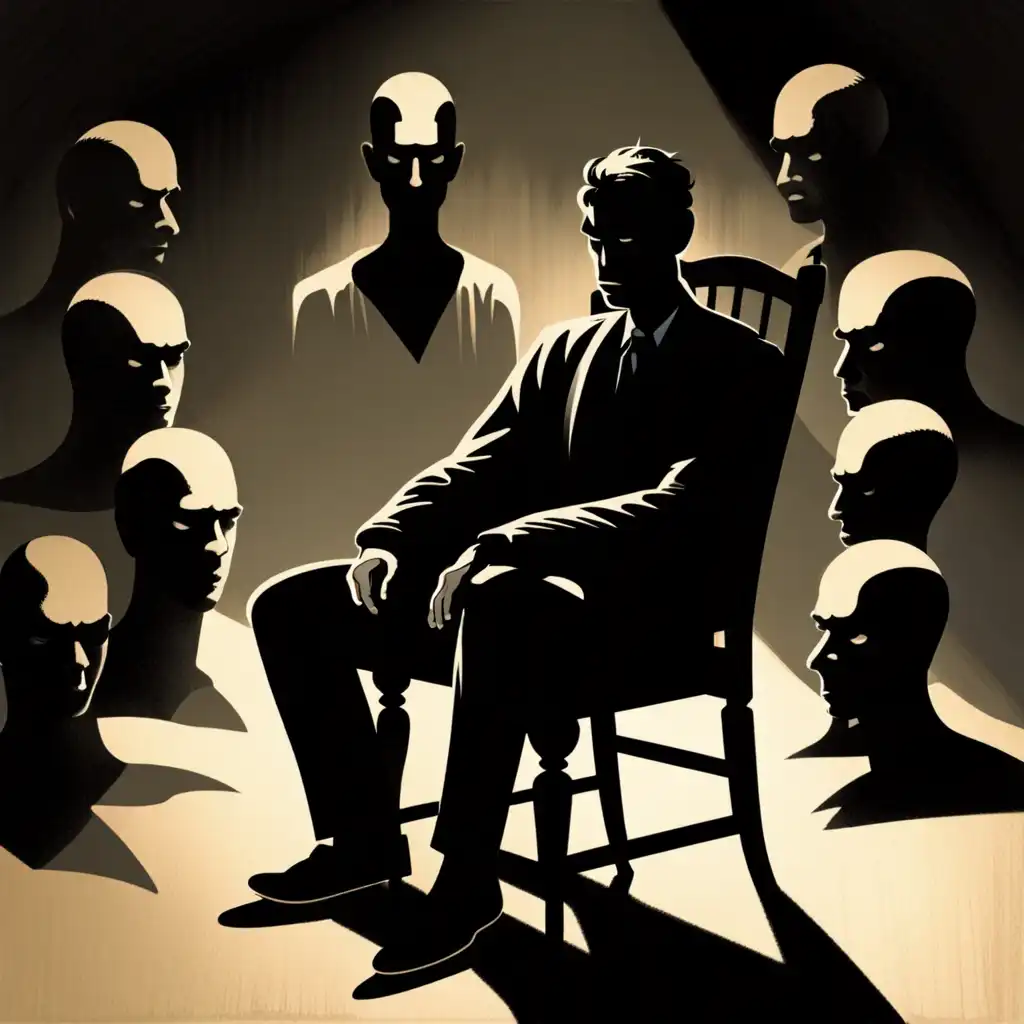
A mental illness in which a person wrongly believes others are intending harm to them
He was diagnosed with paranoia because he constantly thought people were out to get him.
Audio could not be loaded. Please try again later.
Paranoia is a word that describes a mental state in which someone feels very anxious, suspicious, and fearful of others. It is usually used when someone believes that people are trying to harm them, even though there is no evidence to support this belief. We might hear someone say, "He suffers from paranoia," which means he has these feelings and thoughts about people trying to hurt him. It's important to note that paranoia is a serious condition and should be spoken about and discussed carefully as it can be harmful to those experiencing it.
Anxiety is a feeling of worry, nervousness, or unease about something with an uncertain outcome. It is a common feeling in everyday life, and it can happen when someone is facing a challenge or a life-changing situation.
Paranoia is a more extreme form of anxiety that involves feeling suspicious or mistrustful of others or the world around you.
Anxiety is a normal feeling of unease, while paranoia is an extreme form of anxiety that involves irrational suspicions and mistrust.
Anxiety is applicable in everyday life, while paranoia is a mental illness that requires professional help to treat.
Open word: Anxiety →Delusion is a belief that is not based on reality or evidence. For example, a person may believe that they have special powers or abilities that others do not have when there is no evidence to support such a belief.
Delusions can occur in different mental illnesses such as schizophrenia and bipolar disorder.
Paranoia is a type of delusion that involves the unfounded belief that other people are out to harm or deceive you in some way.
Paranoia can also be a symptom of various mental illnesses such as schizophrenia, bipolar disorder, and delusional disorder.
Delusion is a false belief that is not based on reality or evidence, while paranoia is a type of delusion that involves a belief that others are out to harm or deceive you.
Open word: Delusion →Distrust means not trusting someone or something because of past experiences or lack of evidence, while paranoia is an excessive and irrational suspicion of others.
Distrust is more applicable when we have reason not to trust someone or something, while paranoia is when our distrust becomes extreme and starts to affect our daily lives.
For example, if a person has been lied to by their friend in the past and therefore doesn't fully trust them, this would be considered distrust.
Open word: Distrust →Fear is a natural emotion we feel in response to something that is threatening or dangerous. For example, feeling afraid of heights or spiders is a common fear that many people experience.
Paranoia is an irrational or excessive fear of something that is not necessarily dangerous or threatening. It involves a sense of mistrust or suspicion towards others, even when there is no evidence to support it.
Fear is a natural and appropriate emotion while paranoia is an excessive and irrational emotion. Fear is applicable in response to real danger or threats, while paranoia is applicable in situations where there is no real threat.
Open word: Fear →Mistrust means to have a lack of trust or confidence in someone or something. It is a feeling of doubt or suspicion that can be based on past experiences or present circumstances.
For example, if someone has betrayed your trust in the past, you may mistrust them in the future.
Mistrust is a normal and rational feeling of doubt or suspicion, while paranoia is an extreme and irrational belief that others are out to harm you.
Mistrust is applicable in situations where you have reason to doubt someone's trustworthiness, while paranoia is a more extreme form of mistrust that may require professional help to address.
Open word: Mistrust →Obsession is when someone becomes fixated on something or someone, usually to an unhealthy or abnormal degree. This could be a hobby, a person, a goal, or anything else.
In brief, obsession is being fixated while paranoia is being fearful or suspicious.
Obsession can be about anything while paranoia is usually related to danger.
Open word: Obsession →Phobia is an extreme or irrational fear of something, which can cause a person to avoid specific situations or activities.
For example, a person with arachnophobia may be overly fearful of spiders and will try to avoid them at all costs. Phobia is applicable when a person has an irrational fear of something that disrupts their daily life.
Open word: Phobia →Suspicion is a feeling of distrust or doubt in someone or something, often based on some evidence or past experience.
Suspicion is applicable when someone has a gut feeling or evidence that something is not right and becomes cautious in their approach towards the situation or person.
Paranoia is an extreme and irrational fear while suspicion is a more rational and cautious distrust.
Open word: Suspicion →They were the victims of paranoia about the supernatural, misdirected religious fervor— and a justice system that valued repentance over truth.
Watch on YouTube ↗We live in a world dominated by fear and paranoia.
Instead of saying it's all about winning a competition, people will realize success is really more about contribution. I believe that the most meaningful way to succeed is to help other people succeed. And if we can spread that belief, we can actually turn paranoia upside down.
Watch on YouTube ↗There's a deep-seated paranoia that Americans have about not being Americans or something.
why shouldn't they believe it it's real except for a few tiny things we reconstructed scenes the person who helped create the creature his special effects expert wild paranoia against
Watch on YouTube ↗I just live my life how I live as a person. I certainly am not, like, a saint or an angel by any means. I'm not anything like that. But I live just how I live. I mean, I have a little paranoia, but that's about it.
candor candor principal intelligence vision no evidence of paranoia my God my God how
Watch on YouTube ↗When I leave a recording session, there is usually a lot of paranoia or superstition on my part, like I'm afraid to hear what we've done.
resulting in erratic mood changes. At the top of the brain, they cause paranoia and hallucinations, and once they reach the brain's rear, the plaques and tangles work together to erase the mind's deepest memories. Eventually the control centers governing heart rate and breathing are overpowered as well resulting in death.
Watch on YouTube ↗The secret to a happy, successful life of paranoia is to keep careful track of your persecutors.
So then you have a lot of paranoia about what's coming next, and that's part of the founding ethos, is really worrying about what's coming next. So that's an advantage. And then in terms of the culture, it's very big on freedom and responsibility.
Watch on YouTube ↗I will never be one of the happy stupid that were born somewhere. This way of life is excellent for the imagination. It develops your paranoia. You feel paranoid when you don't understand a country, and being paranoiac is excellent for fiction.
you've probably had this experience over and over. So trust your intuition that it's not you bringing paranoia to the workplace, that these kind of stereotypes and otherisms are rife and alive. I think that's the first thing. And then the second thing is having these layers of support
Watch on YouTube ↗Most of my friends are not actors. Most people have an idea of what an actor's life is, and it's pure glamour and excitement: it's easy and free and everyone loves you. But with a certain level of fame, there's a real level of paranoia and depression that comes with what you do, that nobody talks about.
experienced this kind of sudden profound plunge into deep depression via anxiety sort of bordering on paranoia i just felt awful it was just like going down this kind of spiral my whole reason for being there felt ridiculous you know this book i was trying to write felt
Watch on YouTube ↗The paranoiac is the exact image of the ruler. The only difference is their position in the world. One might even think the paranoiac the more impressive of the two because he is sufficient unto himself and cannot be shaken by failure.
infinite space to create privacy you know I feel safe here you live in terror with this paranoia of terrorism this is a very safe place you don't know what the rest of the world looks like so I go
Watch on YouTube ↗Cambridge Analytica sought to identify mental vulnerabilities in voters and worked to exploit them by targeting information designed to activate some of the worst characteristics in people, such as neuroticism, paranoia and racial biases.
You see he was diagnosed with bipolar disorder at a young age, and the lyrics of the song describe the mental anguish and exhaustion for life of minorities in America dealing with symptoms of post-traumatic stress disorder, loneliness suicidal ideation and paranoia.
Watch on YouTube ↗Paranoia is just another word for ignorance.