polenta
noun polenta
pəʊˈlentə
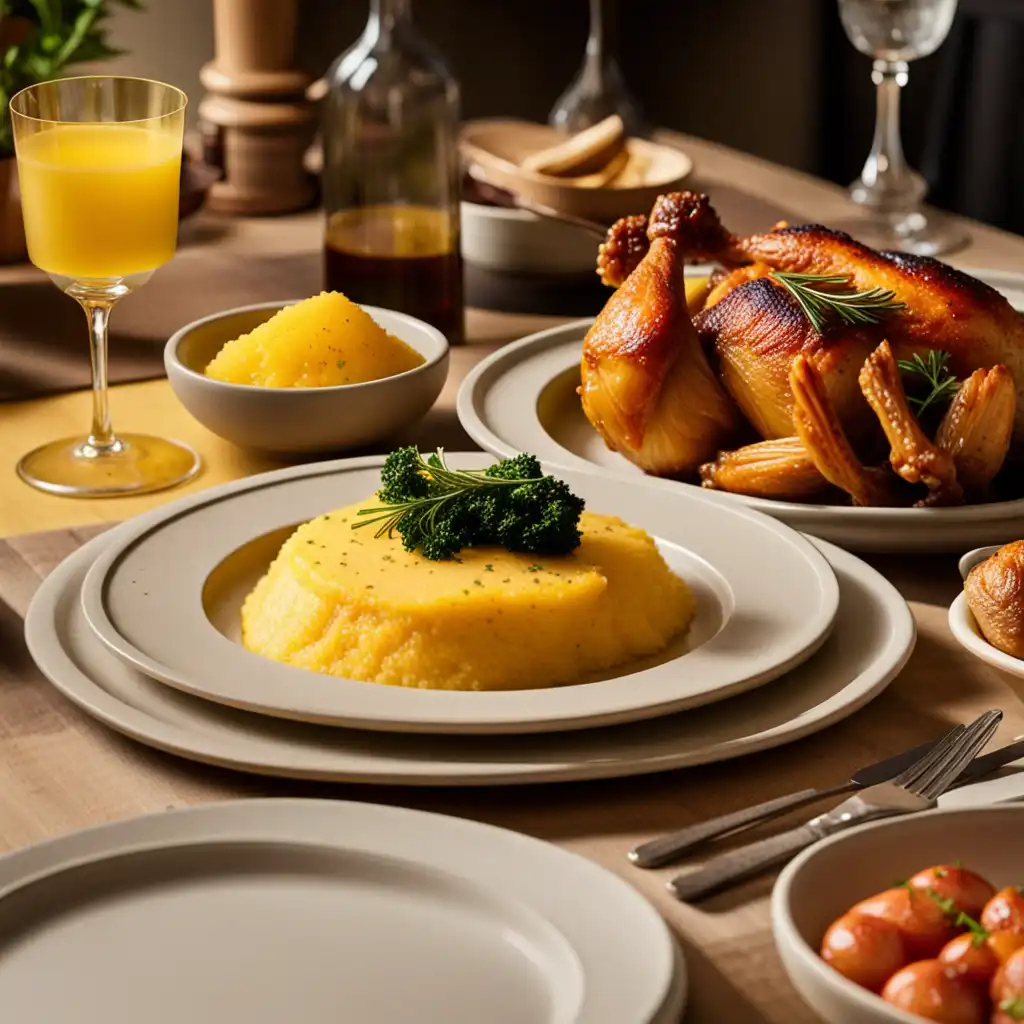
A type of food made from cornmeal that has been boiled in water or broth.
For dinner, we are having roasted chicken and polenta.
polenta
pəʊˈlentə
लोड हो रहा है…
pəʊˈlentə
A type of food made from cornmeal that has been boiled in water or broth.
For dinner, we are having roasted chicken and polenta.
ऑडियो लोड नहीं हो सका। कृपया बाद में फिर कोशिश करें।
Polenta is a dish from Italy made by cooking cornmeal in water or broth until it thickens into a porridge-like consistency. It can be served on its own or as a side dish with meat, vegetables, or cheese. It is commonly eaten in Northern Italy and other parts of Europe. In the United States, polenta is often found in Italian restaurants or in stores as a packaged mix to make at home.
Cornmeal and polenta are both made from ground corn, but they differ in their texture and how they are cooked. Cornmeal is a coarser texture, while polenta is more finely ground.
Cornmeal is often used in American cuisine for things like cornbread or fried foods, while polenta is a traditional Italian dish that can be served creamy or fried.
शब्द खोलें: Cornmeal →Grit and polenta are different terms for cornmeal, but they are used in slightly different ways.
Grits typically refer to a coarse type of cornmeal that is boiled and served as a breakfast dish in the Southern United States.
In summary, grits are a specific type of coarse cornmeal traditionally served as a breakfast dish in the Southern United States, while polenta is a finer type of cornmeal used as a versatile side dish or base for other foods in Italian cuisine.
शब्द खोलें: Grit →Hominy is a food made from dried corn kernels that have been treated with an alkali solution. It is commonly used in Southern and Mexican cuisines to make dishes like grits or pozole.
The main difference is that hominy is a specific ingredient while polenta is a dish or preparation method.
Hominy is often used in the preparation of other dishes, while polenta is typically served on its own.
शब्द खोलें: Hominy →Polenta and porridge are both dishes made from grains, but the main difference is the type of grain used and the consistency of the final product.
Porridge is a general term used for any grain that is boiled with water or milk until it forms a thick, creamy consistency.
Oatmeal is a common type of porridge, but you can also make porridge from grains like rice, quinoa, or barley. Porridge is a staple breakfast dish in many cultures, and is often served with toppings like fruit, honey, or nuts.
Polenta is a creamy dish made from cornmeal, while porridge is a general term for any dish made from boiled grains that result in a thick, creamy consistency.
शब्द खोलें: Porridge →Polenta and semolina are both grains that can be used in cooking, but they are different.
Semolina is made from wheat and is often used to make pasta, couscous, and desserts like Cream of Wheat. It is a little coarser than flour and has a slightly gritty texture.
So, while both polenta and semolina are edible grains, they are used in different ways in the kitchen.
शब्द खोलें: Semolina →Safari Live - Day 35 %\PIPE%...
YouTube पर देखें ↗My mother made soft polenta often, and as a child, I would watch her stir until she looked like her arm would fall off.
My father always cooks more polenta than he needs for a meal. The excess he spreads on an oiled surface and chills. Next day, he cuts out chunks, fries them in olive oil and serves with salad.
I'd love to give my girls a traditional Thanksgiving with turkey and all that jazz, but we've raised them to love Tuscan food so much that they don't care for it. My favorite is a nice polenta with beef stew and broccoli rabe on the side.
I love making savory stratas for Christmas morning. I get excited about it. It's a polenta strata with homemade bread, with a billion eggs and Parmesan cheese. I'll drizzle truffle oil over the whole thing, which will just destroy people. It's amazing.
If you come to The Kitchen and get a pork chop with polenta, which is our kind of food - simple - there is only one way it should taste at The Kitchen.
Polenta is one of those ingredients that in many homes spends its days at the back of the kitchen cupboard, on the 'no one knows quite what to do with it' shelf.
We go to Italy every winter, and my husband's mother has a bingo party on Christmas. Every woman brings a dish: lentils, cavolo nero, tons of beans, polenta, every type of cheese, bruschetta, fresh vegetables, and local olive oil and wine.
Polenta is to northern Italy what bread is to Tuscany, what pasta is to Emilia-Romagna and what rice is to the Veneto: easy to make, hungry to absorb other flavours, and hugely versatile.