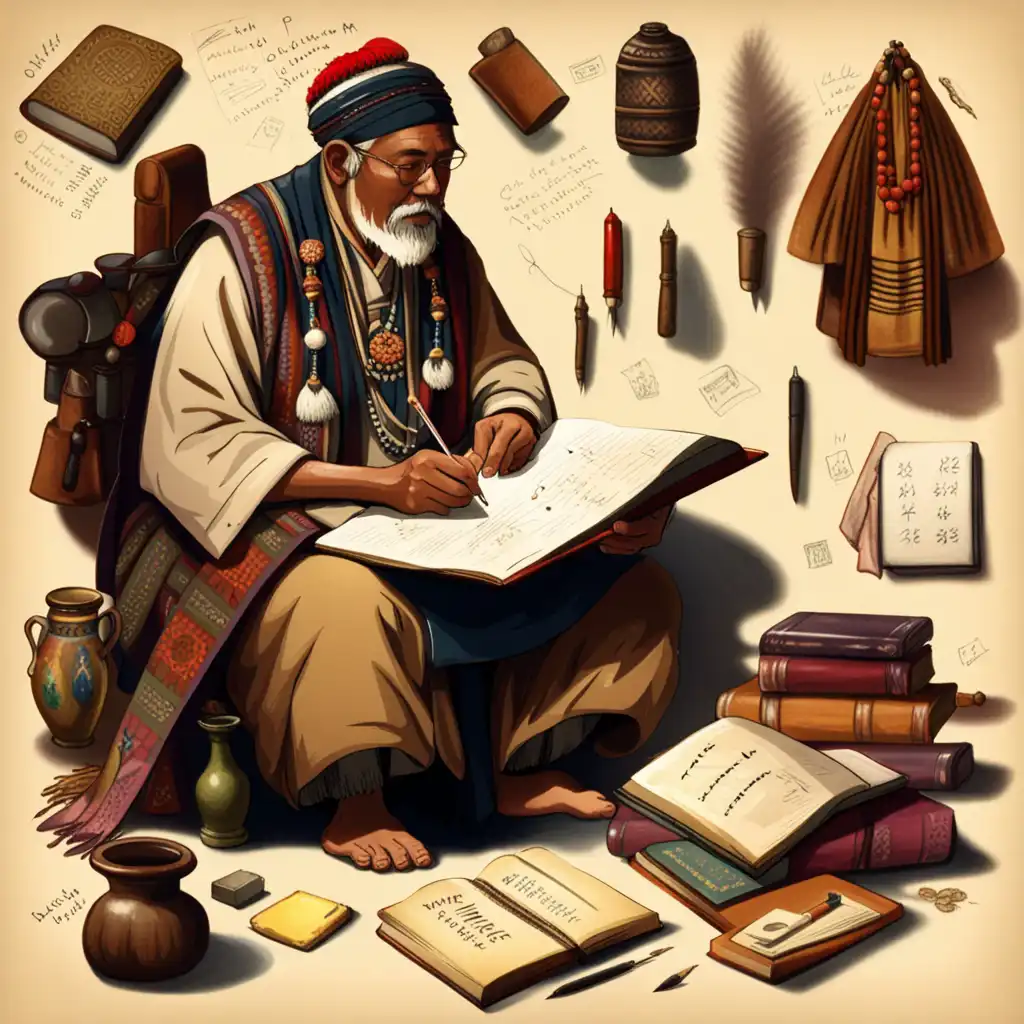
A folklorist is a person who studies traditional customs, stories, beliefs, and practices from a particular group of people. They explore how these traditions shape and reflect the culture of a community. Folklorists can work in a variety of areas, such as academia, museums, or cultural organizations. The word 'folklorist' is often used in the field of anthropology and cultural studies.
Anthropologists study human societies and cultures, while folklorists study traditional art, customs, and beliefs of a particular group of people.
Anthropologists strive to understand the broader context of human experience, while folklorists focus on specific aspects of culture.
For example, an anthropologist may study the history and development of a particular society, while a folklorist may focus on the traditional stories, myths, and legends of that society.
Both anthropologists and folklorists are applicable in the fields of history, culture studies, and social sciences.
An ethnologist is someone who studies the culture, traditions, and practices of different ethnic groups or societies. They look at things like religion, language, art, and social systems to better understand how people live their lives.
Ethnologists might travel to different parts of the world to conduct research or work in museums, archives, or universities.
Overall, both ethnologists and folklorists are interested in learning about how people live their lives and how different societies function.
However, ethnologists tend to focus on broader cultural practices and traditions, while folklorists are more interested in the specific stories, songs, and myths that are shared within a particular cultural group.
As a folklorist, I have come to believe that no piece of folklore continues to be transmitted unless it means something - even if neither the speaker nor the audience can articulate what that meaning might be.