proletarian
adjective proletarian
ˌprəʊləˈteriən
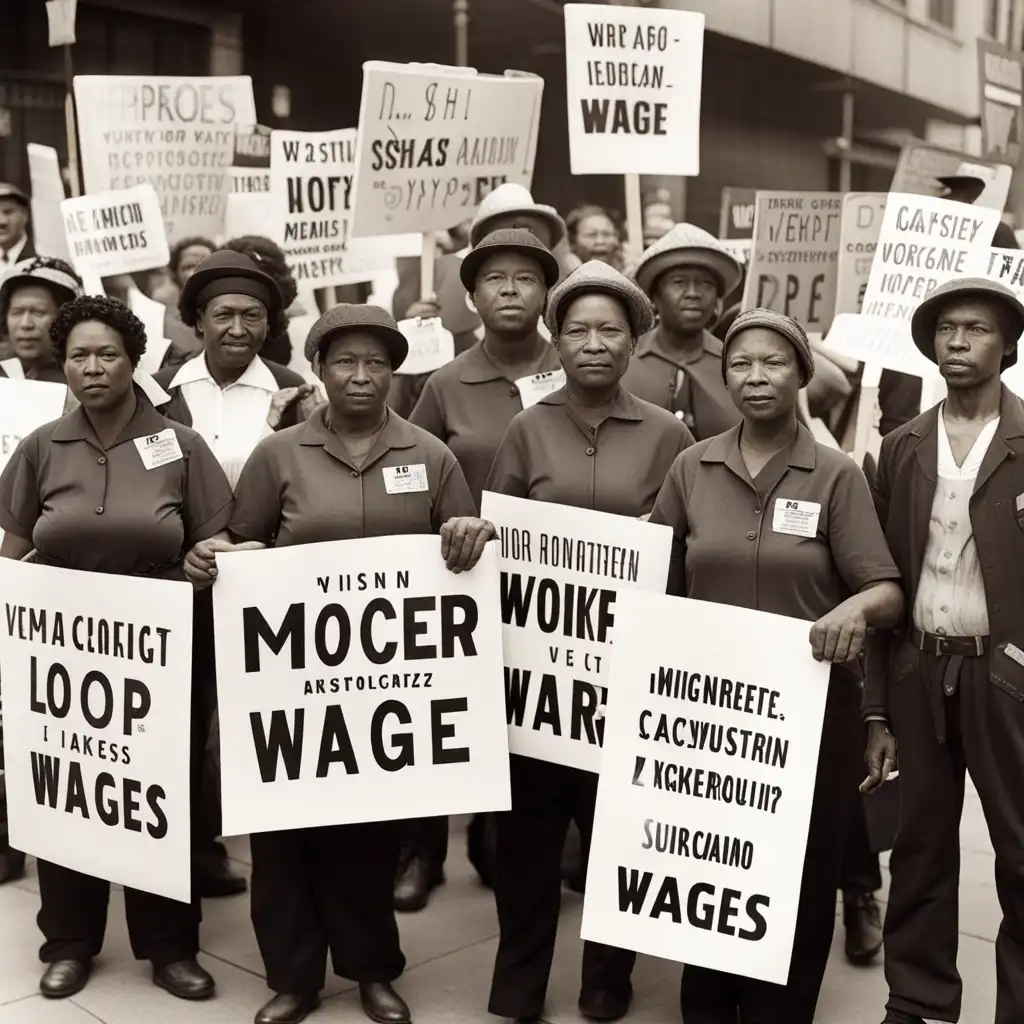
Relating to regular working class people.
The proletarian movement campaigned for better wages.
proletarian
ˌprəʊləˈteriən
Cargando…
ˌprəʊləˈteriən
Relating to regular working class people.
The proletarian movement campaigned for better wages.

ˌprəʊləˈteriən
Relating to people who do not own property and must work for others.
His proletarian upbringing made him understand the struggles of the working class.

ˌprəʊləˈteriən
A person of the laboring class.
As a proletarian, he worked long hours at the factory.
No se pudo cargar el audio. Inténtalo de nuevo más tarde.
The word "proletarian" generally refers to a member of the working class, particularly in the context of Marxist theory. It can be used to describe someone who does manual labor or works in low-paying jobs, and may have little control over their work or financial situation. In modern usage, it can also be used more generally to describe someone who is disadvantaged or marginalized in society. It is not a common word in everyday conversation and is mostly used in academic or political contexts.
Common refers to something that is widely shared or occurs frequently, while the word proletarian refers to a member of the working class.
Common is applicable in situations where something is not rare or exclusive, such as common sense or a common household item.
Abrir palabra: Common →An employee is someone who is hired to work for a company or organization and carries out a particular job or role. This term is widely applicable and can refer to people from various backgrounds, skill sets, and industries.
An employee is a generic term that can refer to anyone who is working for a company or organization, while the term proletarian is a specific term used within Marxist theory to describe a particular class of workers.
Abrir palabra: Employee →Impoverish means to make someone or something poor or to decrease their wealth.
Impoverish is a verb used to describe the act of decreasing wealth or resources, while proletarian is an adjective used to describe a person's social and economic class.
Impoverish can be applied to individuals, groups, or even entire regions or countries, while proletarian is specifically applied to people who work low-paying jobs in a capitalist economy.
Abrir palabra: Impoverish →Labour refers to work or employment, while the word proletarian refers to a member of the working class.
Labour can be used in a variety of contexts, such as discussing specific job tasks or referring to the overall concept of work.
For example, "I laboured for hours on my school project" or "Labour unions are organizations that protect workers' rights."
Labour refers to work in general, while proletarian specifically refers to the working class.
Abrir palabra: Labour →Peon refers to a person who is at the bottom of a social hierarchy and has menial or low-status work.
Both words describe workers, but peon often connotes a lower social status and more arduous work, whereas proletarian is more of a general term to describe someone who relies on selling their labor to make a living.
Peon is less commonly used in modern English than proletarian.
Abrir palabra: Peon →Plebeian refers to someone who is a member of the lower class in ancient Roman society.
However, plebeian has a historical context and is not often used in contemporary discussions, while proletarian is still commonly used today to describe the working class.
Abrir palabra: Plebeian →Proletarian refers to a member of the working class, particularly those who work in factories or industries. Underprivileged refers to those who lack certain advantages or opportunities, like education, money or social status.
Underprivileged is a more general term that can apply to a variety of situations where disadvantage or lack of resources are at play, such as living in poverty or not having access to healthcare or education.
Abrir palabra: Underprivileged →Why humans run the world...
Ver en YouTube ↗Let the ruling classes tremble at a communist revolution. The proletarians have nothing to lose but their chains. They have a world to win. Workingmen of all countries, unite!
Storytellers Summit Day...
Ver en YouTube ↗We might not be back. I might be in jail. I might be anywhere. But when I leave, you'll remember I said, with the last words on my lips, that I am a revolutionary. And you're going to have to keep on saying that. You're going to have to say that I am a proletariat; I am the people.
Social democracy... is only the advance guard of the proletariat, a small piece of the total working masses; blood from their blood, and flesh from their flesh.
The whole dream of democracy is to raise the proletarian to the level of stupidity attained by the bourgeois.
I do not see a necessary connection between proletarian literature and some set percentage of words which bring the blushes to a maiden's cheek.
This is the absolute truth: and on this truth our tactics must be based. All tactics that are not based on this are false, and lead the proletariat to terrible defeat.
Women's propaganda must touch upon all those questions which are of great importance to the general proletarian movement. The main task is, indeed, to awaken the women's class consciousness and to incorporate them into the class struggle.
Most of my characters aren't hillbillies anyway. Let's just call them proletariat with a disposition towards criminal activity.
The Russian revolution was to an unprecedented degree the cause of the proletariat of the whole world becoming more revolutionary.
One of the surest signs of the estimated changes in the consciousness of the American proletariat is to be found in the character of the demands now being put forward by the leadership.