revue
noun revue
rɪˈvjuː
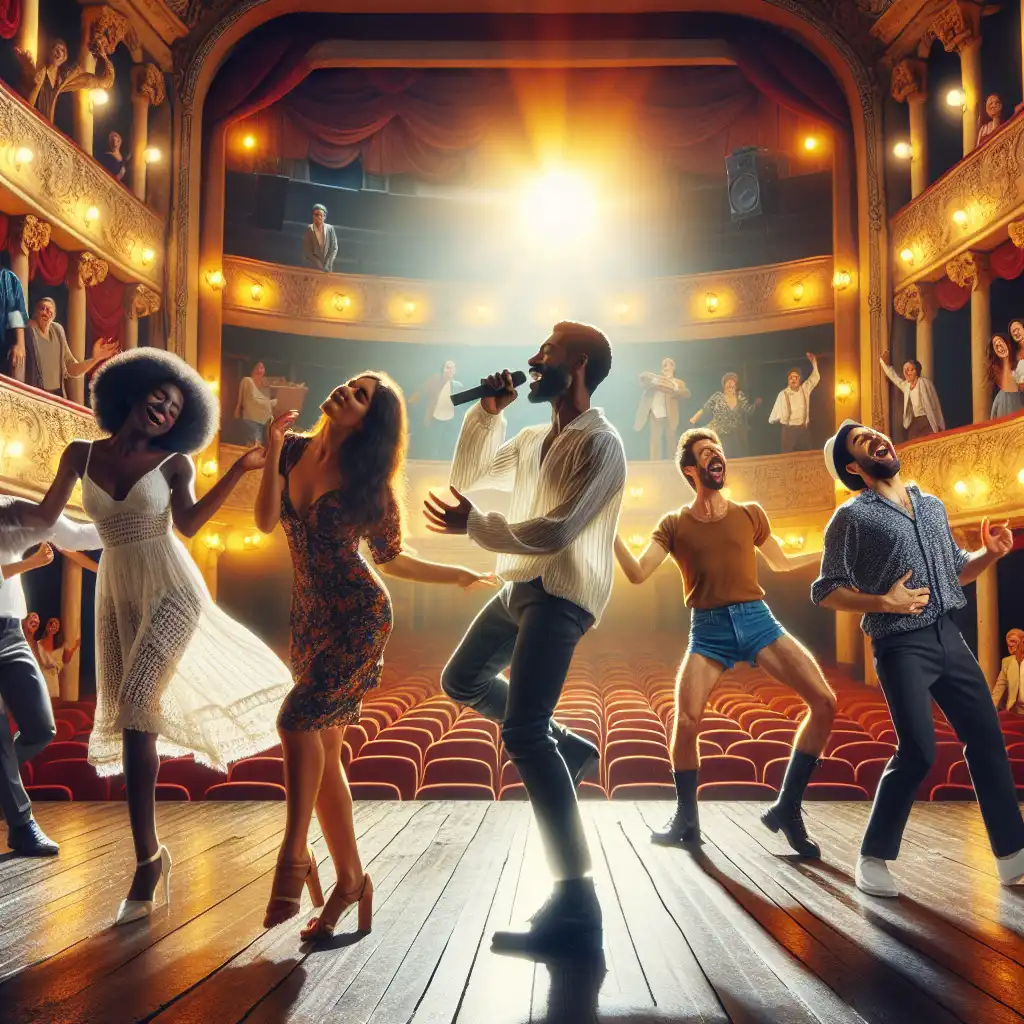
A type of theatre show that combines songs, dance, and comedy sketches.
We went to see a musical revue at the local theatre last night.
revue
rɪˈvjuː
Đang tải…
rɪˈvjuː
A type of theatre show that combines songs, dance, and comedy sketches.
We went to see a musical revue at the local theatre last night.
Không tải được âm thanh. Vui lòng thử lại sau.
The word 'revue' is used to describe a type of theatrical show or performance that includes a variety of different acts, such as music, dance, comedy, and skits. Revues are often performed in theaters and are meant to be entertaining and engaging for the audience. They can be thought of as a type of musical or variety show that features a mix of different types of entertainment. If you hear someone talking about going to see a revue, they are referring to a type of show that is designed to be fun and entertaining.
Compilation refers to a collection or gathering of various things, usually songs or music tracks, into a single album or package.
Mở từ: Compilation →An exhibition is a public display of objects or artwork.
It can be used to showcase products or services, as well as to educate people on a particular topic or theme. For instance, an art exhibition might feature paintings, sculptures, and other works of art.
An exhibition is a physical display of objects or artwork, while a revue is a live theatrical performance featuring a variety of acts.
Mở từ: Exhibition →Performance refers to a single or series of acts where an individual, group or organization showcases their skills or abilities in front of an audience.
In essence, performance is a more general term that can encompass a wide range of entertainment, while revue is a specific type of show with its own distinct format and style.
Mở từ: Performance →Produce means to create or bring forth something, such as a product, goods, or an event. For example, if someone says they are producing a new movie, it means they are overseeing the creation and completion of the movie from start to finish.
Produce is used when someone is creating or overseeing the manufacture or development of something, while revue is used specifically to describe a type of theatrical performance.
Mở từ: Produce →A programme is a schedule or a plan of events or activities. It is commonly used for events such as concerts, theatrical performances or even a school function.
A programme is a detailed plan or schedule of an event while a revue refers to a type of theatrical production that consists of a series of musical and comedy acts.
Mở từ: Programme →Review refers to an evaluation or assessment of something, such as a book, movie, or product.
It is usually written or spoken by someone who has experienced the thing being reviewed and shares their opinion with others.
Review refers to a critique or analysis of something, while revue is a type of performance that combines various forms of entertainment.
Mở từ: Review →It is usually performed in a theater and often has a theme or storyline running through it. Revues are often used to showcase the talents of performers.
Show is a broader term that can refer to any type of performance, including theater, dance, music, or even television programs.
Show can also refer to a specific production or event.
In essence, revue is a specific type of show that involves a combination of singing, dancing, and comedy, while show is a general term that can encompass a wide range of performance genres.
Mở từ: Show →Revue and spectacle both refer to forms of entertainment, but they differ in their structure and content.
A spectacle is a larger production that is often more theatrical in nature.
A spectacle may include a narrative storyline and focus more on a central plot or theme, rather than individual acts.
A revue is a collection of musical performances or skits that are loosely connected, while a spectacle is a larger, more theatrical production that is often more dramatic and intense.
Mở từ: Spectacle →It's not just a revue where one song is done, then another. There are concepts and ideas at work.
One of these days, I'd like to put together a revue of all my music, which would probably turn into a marathon. There's a couple of hit songs from almost every phase of my career. At the same time, visually, if you don't handle it properly, it could be a cacophony of craziness, because there's just so many different kinds of music.
When I was younger, I wanted to own a circus and create this bizarre revue that went from town to town. I suppose, in a way, I got my wish because when you're working on a film, you're in a traveling circus.
I grew up with music hall and revue and was used to filling in the little gaps here and there to get bigger audience reaction.
It wasn't until I did a musical revue in Paris in the 1980s called 'Black and Blue,' and met the great men and women responsible for the progress of tap dance, that my relationship with the dance really began.
I played around with the idea of touring with a soul revue, with Smokey Robinson, Sam Moore, Darlene Love, people like that.
Dietz and Schwartz have sort of fallen by the wayside a little bit, and they are up there with Rodgers and Hart and Irving Berlin and Cole Porter. They are the finest of the revue composers - their stuff is so good and so strong.
My portrayal of Fagin was all to do with my experience in comedy and revue.