
dogma
noun dogma
ˈdɔːɡmə
A belief or set of beliefs that is strongly supported by a group or organization.
The popular dogma of our age is that bigger is better.
dogma
ˈdɔːɡmə
Cargando…
ˈdɔːɡmə
A belief or set of beliefs that is strongly supported by a group or organization.
The popular dogma of our age is that bigger is better.
ˈdɔːɡmə
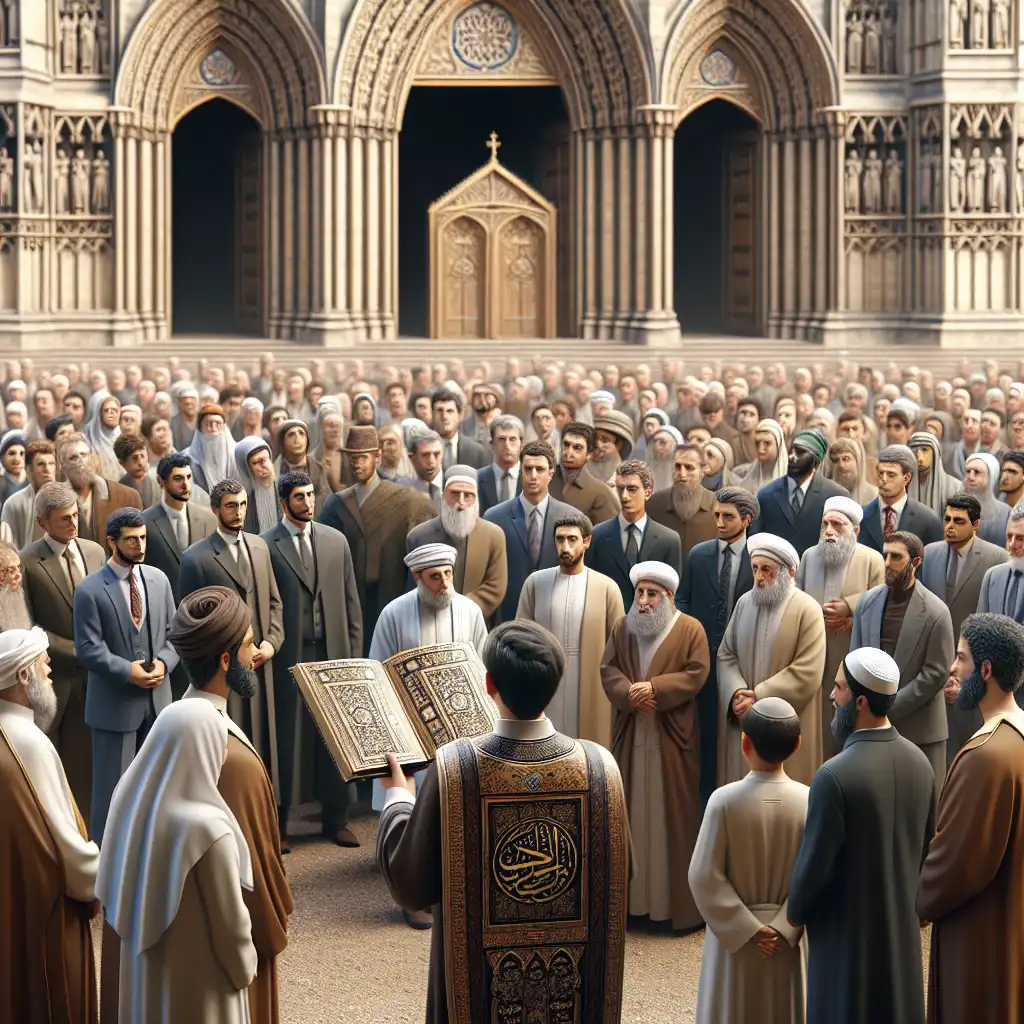
A principle or set of principles established by a religion or an authoritative figure, considered to be absolutely true
Many people believe in the dogma of the Church without questioning its origin or validity.

ˈdɔːɡmə
A belief or point of view that is accepted by the members of a group without being questioned or doubted.
Critics argue that the company's business dogma does not allow for innovation.
No se pudo cargar el audio. Inténtalo de nuevo más tarde.
The word 'dogma' refers to a set of beliefs or principles that are considered to be true and cannot be disputed. It can be used in different contexts such as religion, politics, or philosophy, where certain ideas or doctrines are considered to be absolute and not open to critique or questioning. For instance, when we talk about religious dogma, it refers to the set of rules or beliefs that people follow without questioning as they are believed to be true and sacred. Similarly, in politics, dogma may refer to certain ideologies or principles that political parties follow without deviation. Overall, the term 'dogma' implies a rigid belief system that is not open to revision or discussion.
Belief refers to something that a person thinks is true or trusts in without necessarily having any proof. For instance, a person may believe that their favorite sports team will win the championship because they have faith in them based on past success.
Dogma means a set of principles or beliefs that are considered to be absolutely true and must be followed without question.
These principles are often held by a religious or political group and can be seen as rigid and inflexible. For instance, a religious dogma may be the belief that there is only one true God and that all other gods are false.
The difference between belief and dogma is that belief refers to a personal conviction, while dogma is a set of established principles that dictate what must be believed or practiced.
Abrir palabra: Belief →Conviction refers to a strong belief or opinion that is based on personal experience or evidence. It is flexible and open to change if new evidence or experiences arise.
Conviction is applicable in personal beliefs, while dogma is applicable in religion or ideology.
It is important to maintain a balance between personal convictions and respecting others' dogma.
Abrir palabra: Conviction →Creed and dogma are both words used to describe a set of religious beliefs or principles.
A creed is a statement of faith or belief, often used in a religious context. It is a summary of what a particular religious group or organization believes.
For example, the Nicene Creed is a statement of Christian belief widely used by many different denominations of Christianity.
Unlike a creed, which is more of a summary or a statement of belief, dogma is more specific and prescriptive.
In general, creeds are applicable in more general religious or philosophical discussions as they summarize collective beliefs, while dogmas are more specific and applicable in religious teachings and practices, where strict adherence to certain principles is required.
Abrir palabra: Creed →Doctrine refers to a set of beliefs or principles, often religious or political, that guide a person's actions and decisions.
In simpler terms, doctrine is a set of guidelines or principles that can adapt and change over time, while dogma is a set of beliefs that are considered absolute and unalterable.
Doctrine might apply to a student handbook that outlines the school's policies, while dogma might apply to the core beliefs of a particular religion.
Abrir palabra: Doctrine →Ideology refers to a set of beliefs, values, or ideas that shape one's worldview and guide their actions and decision making.
Ideologies can be political, social, or cultural in nature and are often associated with movements that seek to change society in some way.
Examples of ideologies include socialism, capitalism, feminism, or nationalism.
The main difference between dogma and ideology is that dogma emphasizes the importance of unquestioned beliefs, while ideology emphasizes the importance of beliefs that align with one's worldview and are subject to debate and discussion.
Abrir palabra: Ideology →There are some differences between the words dogma and philosophy. Dogma refers to a set of beliefs or rules that are accepted as true, without questioning.
Philosophy is the study of the fundamental nature of knowledge, reality, and existence. It is about asking questions and exploring different ideas and perspectives.
Philosophy is a more open-minded approach to understanding the world and involves critical thinking and analysis. Philosophers question everything, including commonly held beliefs and assumptions.
Philosophy encourages people to think for themselves, to explore different ideas and to arrive at their own conclusions.
Dogma is a strict set of beliefs that people adhere to without questioning, while philosophy is the study of the fundamental nature of knowledge, reality, and existence, and is about asking questions and exploring different ideas and perspectives.
Abrir palabra: Philosophy →Dogma is a set of beliefs or principles that are considered to be true, absolute, and unchangeable, often backed by religion or ideology, and can be imposed on individuals or society.
On the other hand, principles are basic guidelines or rules that govern human behavior and interactions, based on values such as honesty, fairness, respect, and responsibility.
Dogma is rigid, inflexible, and imposed, while principles are flexible, adaptable, and chosen. Dogma is applicable in religious or ideological contexts, while principles are applicable in ethical, moral or social contexts.
Abrir palabra: Principle →Dogma and tenet are both beliefs or principles, but they have slightly different meanings.
Tenet refers to a principle or belief that is generally held to be true or valid, but is not necessarily considered to be absolute or unchanging.
It can be applied to a wider range of fields, such as philosophy, science, or even personal values. For example, the scientific tenet of evolution by natural selection is widely accepted, but it is subject to ongoing debate and refinement as new evidence emerges.
Dogma implies a strict adherence to a specific set of beliefs or principles that are considered to be absolute and unchanging, while tenet refers to a more general principle or belief that is widely accepted but subject to ongoing questioning and refinement.
Abrir palabra: Tenet →But he said "The dogmas of the quiet past are inadequate to the stormy present. The occasion is piled high with difficulty, and we must rise with the occasion." I love that.
Ver en YouTube ↗Constant development is the law of life, and a man who always tries to maintain his dogmas in order to appear consistent drives himself into a false position.
globalized world morality is so complex we need to move away from dogma but this is just my own personal ideology thank
Ver en YouTube ↗Your time is limited, so don't waste it living someone else's life. Don't be trapped by dogma - which is living with the results of other people's thinking. Don't let the noise of others' opinions drown out your own inner voice. And most important, have the courage to follow your heart and intuition.
around Aleppo is trying to run a number of schools free from ideology and religious dogma and focus on nonviolent as a way of life all of this comes at great personal risk and sacrifice because activists like
Ver en YouTube ↗Enlightened leadership is spiritual if we understand spirituality not as some kind of religious dogma or ideology but as the domain of awareness where we experience values like truth, goodness, beauty, love and compassion, and also intuition, creativity, insight and focused attention.
Of all the people I've worked with they will all tell you the same thing. One they became extremists because they wanted to belong not because of ideology or dogma. And second what brought them out was receiving compassion
Ver en YouTube ↗Dogmas are collective conceptual prisons. And the strange thing is that people love their prison cells because they give them a sense of security and a false sense of 'I know.' Nothing has inflicted more suffering on humanity than its dogmas.
Our circle of sympathy has been expanded by history journalism and the narrative arts. And our puny rational faculties have been multiplied by the norms and institutions of reason, intellectual curiosity open debate, skepticism of authority and dogma
Ver en YouTube ↗People tend not to want to question dogma. But I'm afraid of dogma.
But he said "The dogmas of the quiet past are inadequate to the stormy present. The occasion is piled high with difficulty, and we must rise with the occasion." I love that.
Ver en YouTube ↗I think that it's more important for an economist to be wise and sophisticated in scientific method than it is for a physicist because with controlled laboratory experiments possible, they practically guide you; you couldn't go astray. Whereas in economics, by dogma and misunderstanding, you can go very sadly astray.
which appears to be paralyzing our globalized world. Reality is so complex we need to move away from dogma. But this is just my own personal ideology. Thank you.
Ver en YouTube ↗Until every soul is freely permitted to investigate every book and creed and dogma for itself, the world cannot be free.
neuroscience cognitive science -- are going to increasingly in the years to come, upset various dogmas, careers and deeply-held political belief systems. And that presents us with a choice. The choice is whether certain facts about humans,
Ver en YouTube ↗As I am a seeker of truth, I refuse to believe in every bit of dogma as a fact.
Being satisfied with dogma and just-so stories, rather than criticizing them and trying to guess better explanations of the world and of their own condition.
Ver en YouTube ↗We throw to the winds the old dogma that governments can give rights. Before governments were organized, no one denies that each individual possessed the right to protect his own life, liberty and property.
Before the scientific revolution, they believed that everything important knowable, was already known, enshrined in ancient writings institutions and in some genuinely useful rules of thumb -- which were however entrenched as dogmas,
Ver en YouTube ↗Eliminate laws and dogmas that hinder the progress of the world and develop the heart in the form of compassion.