
adaptation
noun adaptation
ˌædæpˈteɪʃn
The process of changing to fit a new situation or environment.
The adaptation of desert plants to dry conditions is amazing.
adaptation
ˌædæpˈteɪʃn
Loading…
ˌædæpˈteɪʃn
The process of changing to fit a new situation or environment.
The adaptation of desert plants to dry conditions is amazing.

ˌædæpˈteɪʃn
A work of art, such as a film or book, that is based on another piece of art, such as a book or play.
The film is an adaptation of a book of the same title.
ˌædæpˈteɪʃn
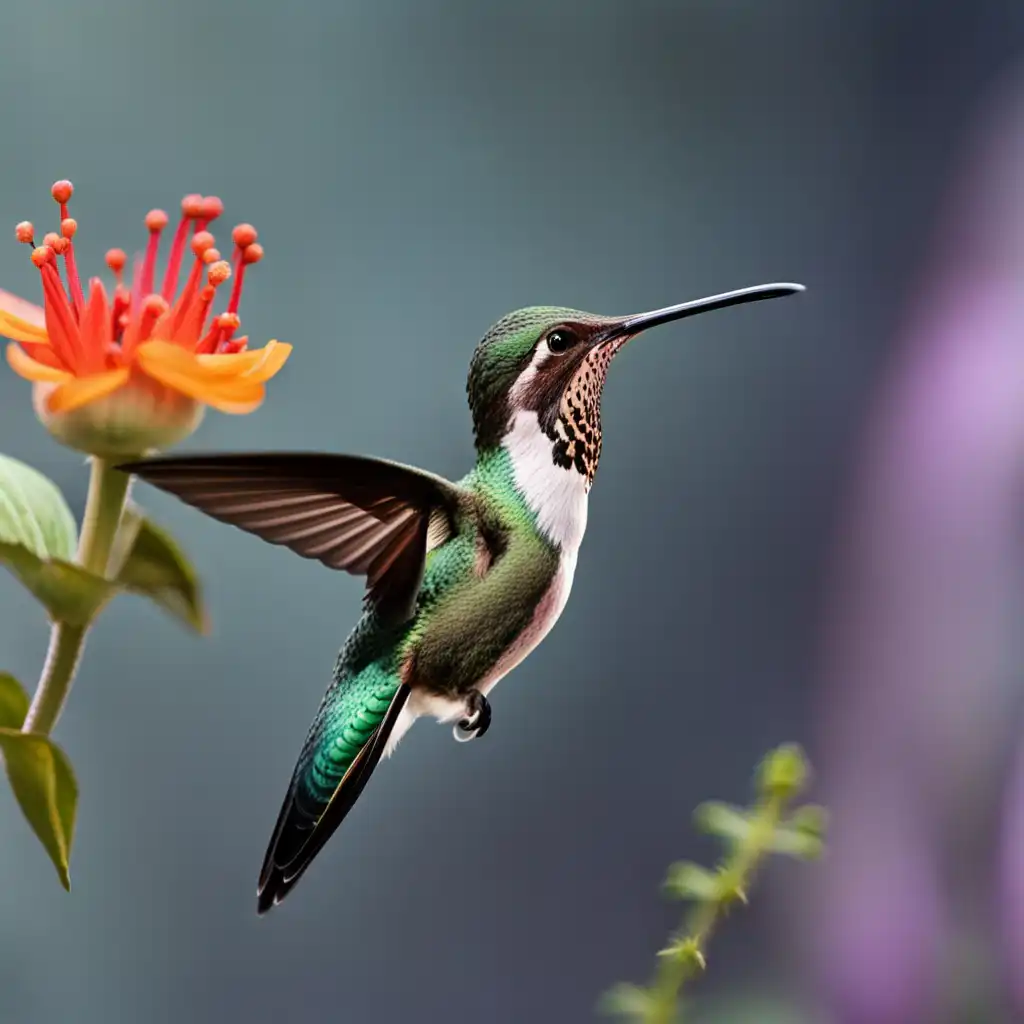
The characteristic of an organism that helps it survive and reproduce in its environment.
The long beak of the hummingbird is an adaptation for feeding on nectar.

ˌædæpˈteɪʃn
The process of changing a product or system to suit different conditions or needs.
Further adaptation of the software is necessary to meet our needs.
Audio could not be loaded. Please try again later.
'Adaptation' refers to changing or modifying something to fit a different situation or environment. It can be used to describe how people or animals adjust to new living conditions or how certain things are altered to suit a specific purpose. For example, a movie or book that is based on a previous work is said to be an adaptation. In everyday life, adaptation involves learning to adjust to new experiences, challenges, and circumstances.
Accommodation refers to the act of adjusting or changing one's own behavior or actions in order to fit in or work with a particular situation or environment.
Accommodation refers to short-term adjustments, while adaptation is a more long-term process of change. They can both be applicable in situations where change or adjustment is necessary, but the exact choice between accommodation and adaptation will depend on the context and the specific challenges facing the individual or group.
Open word: Accommodation →Adjustment means making small changes to an existing situation to improve it. For example, adjusting the temperature on the air conditioner to make a room more comfortable.
Adaptation is about changing to fit in a new situation, and adjustment is about making small changes to an existing situation.
Adaptation is more applicable when dealing with major changes, while adjustment is more applicable when dealing with minor changes.
Open word: Adjustment →Alteration generally entails making significant changes to something that affect its fundamental nature or structure.
However, if a dress's neckline is completely changed or if sleeves are removed, then it is considered an alteration.
Adaptation refers to making modifications to something in order to make it better fit a particular situation, while alteration entails more significant changes that may fundamentally change the nature of the thing being altered.
Open word: Alteration →Conversion refers to the process of changing something completely into something else. For example, converting a gas-powered car into an electric car involves replacing the engine and making other significant modifications.
Both adaptation and conversion are applicable in various contexts, but adaptation is more commonly used when referring to natural or gradual changes, while conversion is more often used when referring to intentional or drastic changes.
Adaptation is about making adjustments to something to better suit a new situation, while conversion is about completely transforming something into something else.
Open word: Conversion →Modification refers to making changes or alterations to something to improve its performance or appearance. For example, modifying a car by adding a spoiler for better aerodynamics.
Adaptation is more applicable in a natural context, such as the adaptation of animals to their environment, while modification is more applicable in a human-made context, such as modifying a product to improve its function or design.
Open word: Modification →Adaptation refers to the process of adjusting to new or changed circumstances, while reformation refers to the process of improving or changing for the better.
Reformation is more applicable in situations where there is a need to make changes to a system or a belief that is not working well or is outdated, such as reformation of political or social institutions, education systems, or religious beliefs.
Adaptation is about adjusting to the present, while reformation is about improving the future.
Open word: Reformation →Revision refers to making changes or improvements to something with the goal of making it better. This term is often used in writing, where authors revise their drafts to improve the clarity, structure, or content of their work.
Adaptation is about changing something to fit a new context, while revision is about improving something that already exists.
Open word: Revision →Transform refers to changing something completely into something else. For example, transforming raw ingredients into a finished product or transforming a caterpillar into a butterfly.
Both words involve change, but adaptation is more about adjusting and transform is about complete change. Adaptation is applicable when something needs to be modified to fit into a new context, while transform is applicable when something needs to be fundamentally changed into something different.
Open word: Transform →animals bioluminesce to match the glow. Predators or prey looking up from below are deceived by this camoflauge, unable to see the creatures silhouette. Such otherworldly adaptations also arise from the need to locate
Watch on YouTube ↗Whatever there be of progress in life comes not through adaptation but through daring.
and it is but it's maybe it's not their ability to to fight and be deadly that's the key to the success maybe it's their parental care maybe it's their incredible adaptation so this deadliest bird in the world could also be a very caring parent and that's how he survives um that
Watch on YouTube ↗I actually want to do a theatrical adaptation of 'Hateful Eight' because I actually like the idea of other actors having a chance to play my characters and see what happens from that.
dragonflies are intimately connected with freshwater ecosystems and it's the strategies and adaptations that dragonflies implore teach phase of their lifecycle but make them such a success in this habitat
Watch on YouTube ↗The truth is that I know very few novelists who have been satisfied with the adaptation of their books for the screen.
But what I am going to do is tell you that the most important thing, besides all of these adaptations is the fact that these organisms have figured out a way to do the amazing things they do while taking care of the place
Watch on YouTube ↗I think that my main criticism in that book was directed at the general assumption that adaptation characterizes populations and species, rather than simply the individuals in the populations and species.
for the last ten years one project is called psycho geographies and I like to think of it as a catalogue of humanity as a composite of infinite interactions between cultural adaptations and genetic
Watch on YouTube ↗It is a miracle of harmony, of the adaptation of the free inner life to the outward necessity of things.
it's the combination of these biological adaptations that gives nocturnal animals their unique visual powers. Imagine what it might be like to witness through their eyes the world that wakes up when the Sun goes down.
Watch on YouTube ↗Any adaptation - and I've done three in my career. I did 'Sweeney Todd' and 'Hugo' and 'Coriolanus.' It's important to find what makes it a movie as opposed to just a film presentation of a stage play.
Even if we solved those problems we might face new ones. Cancer cells are masters of adaptation, adjusting their molecular and cellular characteristics to survive under stress. When they're bombarded by radiation or chemotherapy, some cancer cells can effectively switch on protective shields
Watch on YouTube ↗As far as 'Birdsong' is concerned, I think the television program made a very honorable attempt at it, but the truth of the matter is that adaptations of long, ambitious books very seldom transfer well to the screen, and why would they?
Despite laying eggs and other adaptations that we associate more with non-mammals, like the duck-bill platypus's webbed feet, bill, and the venomous spur males have on their feet, they are in fact mammals. That's because they share the defining characteristics of mammalia
Watch on YouTube ↗What I've gathered from people who are big fans of the 'Musketeers', they adore the books to the degree where an awful lot of them, even if they have problems with an adaptation, normally still lap it up because they just love the whole idea of it.
while descriptivists see variation and adaptation as a natural and necessary part of language. For much of history the vast majority of language was spoken. But as people became more interconnected and writing gained importance,
Watch on YouTube ↗Characters, conflict and geography are things that must be considered while making movies from adaptations.
and accurately record what they see. But our eyes are remarkably efficient adaptations, the result of hundreds of millions of years of coevolution with our brains. And so what if we don't always see the world exactly as it is.
Watch on YouTube ↗Often in the past, there have been authors that were deeply disappointed in their adaptation, but that's because they haven't accepted the fact that a movie is a different thing, and it can't possibly be the same as the book.