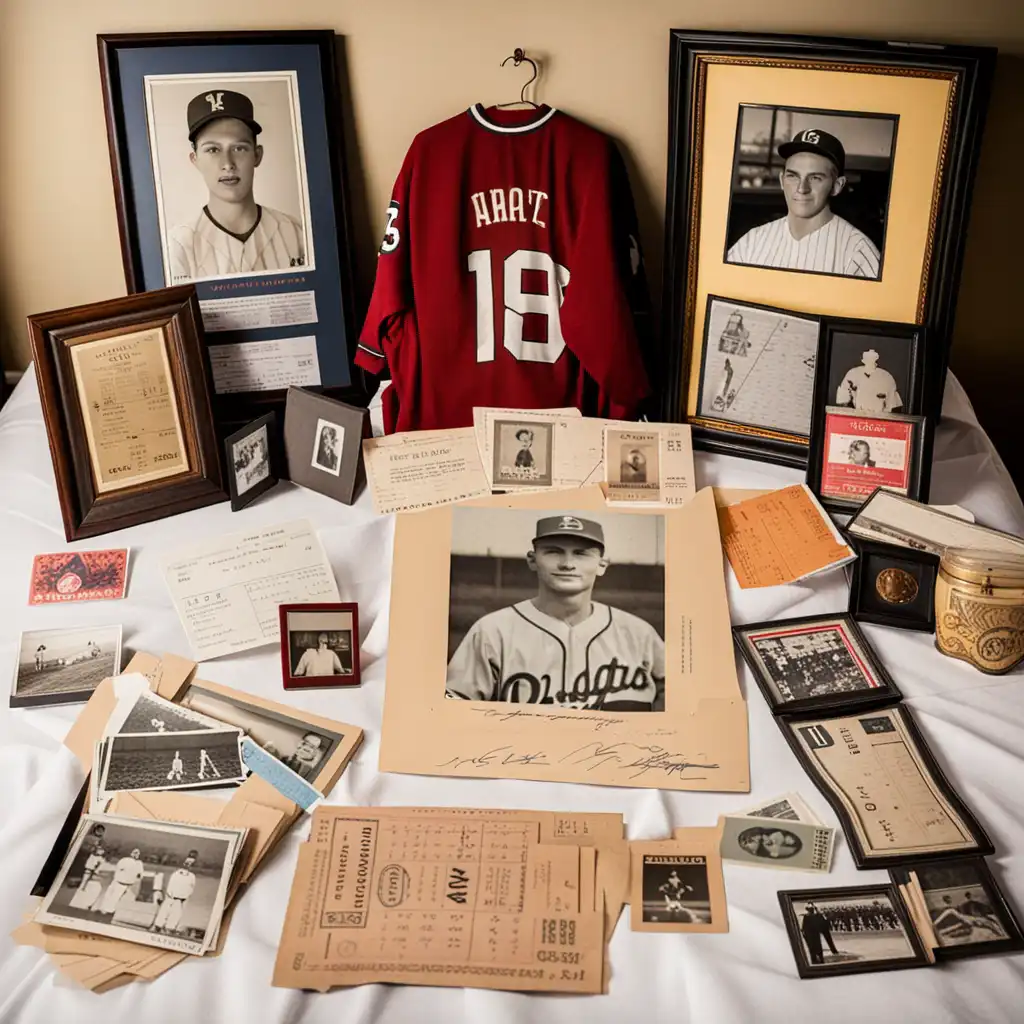
memorabilia
noun memorabilia
ˌmemərəˈbɪliə
Objects saved from the past, because of their historical or sentimental value
He has a collection of sports memorabilia
memorabilia
ˌmemərəˈbɪliə
Cargando…
ˌmemərəˈbɪliə
Objects saved from the past, because of their historical or sentimental value
He has a collection of sports memorabilia
No se pudo cargar el audio. Inténtalo de nuevo más tarde.
'Memorabilia' refers to objects or items that are associated with a particular event, person or time period and are often of sentimental value. These objects are typically kept or collected as a way to remember a significant moment or person. For example, a sports fan might collect memorabilia such as signed jerseys, game tickets or programs, while a music fan might collect concert tickets and posters. The word 'memorabilia' can be used in a sentence like: "My grandmother has a collection of Beatles memorabilia from the 1960s."
A keepsake is a personal item that holds sentimental value, often given as a gift or passed down from a family member. It could be something like a piece of jewelry or a photo album.
Keepsakes are usually smaller, more personal items that hold emotional significance.
In summary, keepsakes are personal and emotional items, while memorabilia are more general items associated with a specific event or person.
Abrir palabra: Keepsake →Memento refers to a keepsake or a reminder of a particular moment or event.
The main difference between the two is that a memento is usually something personal and sentimental, while memorabilia are typically more valuable and have a wider historical or cultural significance.
Abrir palabra: Memento →Relics are objects that are considered to be of historical or religious significance or that hold cultural importance. Relics may be artifacts or objects from a past era, or they may pertain to religious or saintly figures, such as the bones of a saint or a piece of clothing worn by a religious figure.
Memorabilia is personal or sentimental, while relics are historically, religiously, or culturally significant objects.
Abrir palabra: Relic →Remembrance refers to the act of remembering, honoring, and recalling something or someone from the past, often through mental or emotional means, such as through a moment of silence or a memorial service.
Abrir palabra: Remembrance →Souvenir generally refers to items that are sold as a memento or remembrance from a particular place, event, or trip.
Souvenirs are often mass-produced, such as keychains or t-shirts with a place or event's name on them. They are usually not unique, and their value comes from their association with a particular location or memory.
Memorabilia is an item that holds personal or historical significance, while a souvenir is a mass-produced item that serves as a reminder of a particular place or event.
Abrir palabra: Souvenir →A token is a physical object that represents something else, usually something intangible. Tokens are often used as a way to signify membership in a particular group or as a form of currency.
For example, a subway token represents a ride on the subway, while a poker chip represents a certain amount of money in a casino.
Memorabilia is a collection of objects with sentimental or historical value, while a token is a physical item that symbolizes something else.
Abrir palabra: Token →Treasure typically refers to valuable items that have monetary worth, such as gold or precious jewels.
Memorabilia is often collected and displayed by individuals who are passionate about a certain hobby or interest, while treasure is usually found through archaeological digs or searches for lost or hidden treasure.
Memorabilia is associated with sentimental and historical value, while treasure is associated with monetary value.
Abrir palabra: Treasure →wartime memorabilia including his photo albums his grown grandchildren who you see in that photo were stunned grandpa had never before pulled out this box he had never shown it to anybody his entire life my visit prompted him to
Ver en YouTube ↗Personally, I find the world of memorabilia fascinating: how people get so focused on one genre, music, or person.
all for the possibility that someone gave them something beyond a scholarship, no matter how petty. In one case I questioned Ohio State football players who received free tattoos and cash in exchange for memorabilia.
Ver en YouTube ↗Most of us cluster somewhere in the middle of most statistical distributions. But there are lots of bell curves, and pretty much everyone is on a tail of at least one of them. We may collect strange memorabilia or read esoteric books, hold unusual religious beliefs or wear odd-sized shoes, suffer rare diseases or enjoy obscure movies.
I can imagine in years to come that my papers and memorabilia, my journals and letters, will find themselves always in the company of people who care about many of the things I do.
I don't keep a lot of memorabilia around.
I actually collect old First and Second World War memorabilia.
I haven't collected memorabilia. I am not a person who lives in the past.
I'm a tomorrow's person. I don't collect memorabilia.
I'm a bit of a pick-pocket on-set. If something is small enough to go in my pocket, and it will be neat memorabilia, it's gone.
Your memorabilia becomes more significant. It does put you in a different category.
I don't collect any memorabilia. I wish I'd have kept everything I had. But who knew you had to keep it. Just gave it away. And we lost so much and we didn't look after a lot of it.