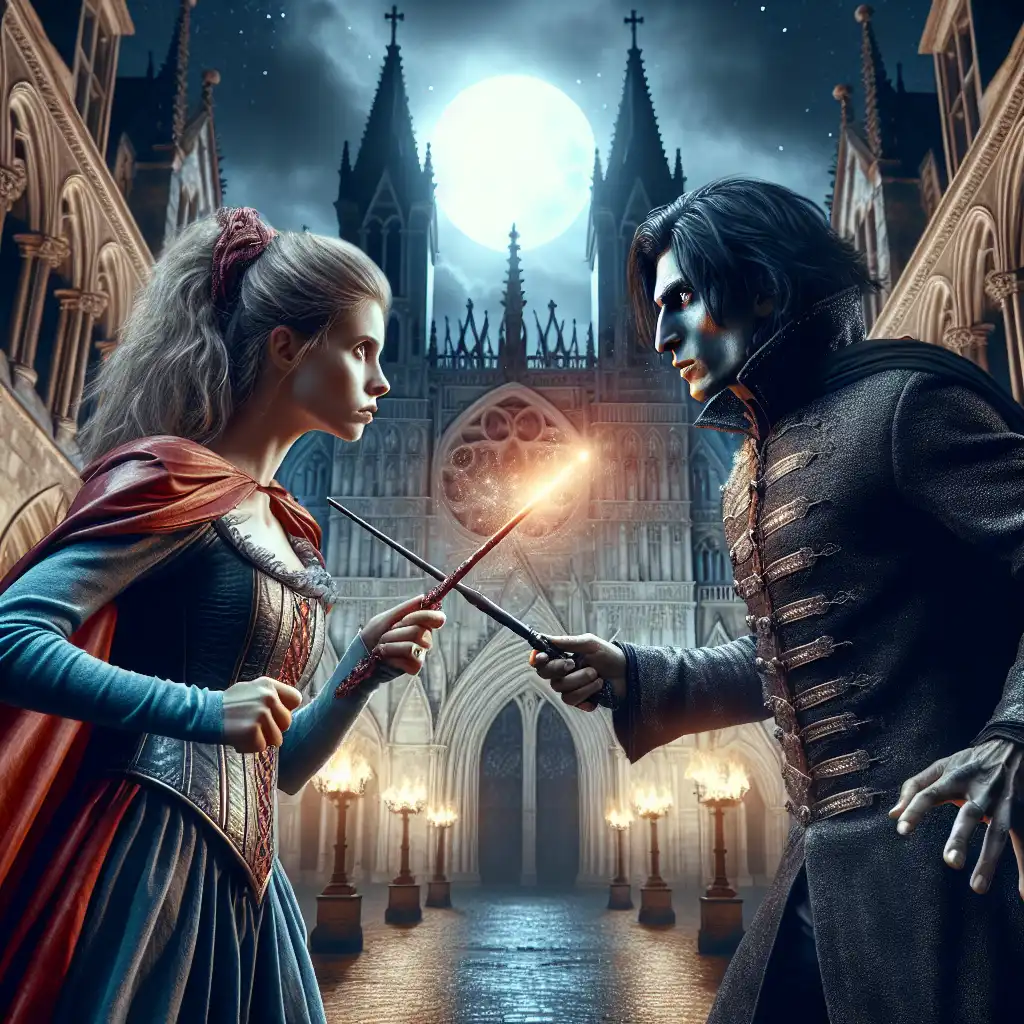
antagonist
noun antagonist
ænˈtæɡənɪst
A character in a story who opposes the main character
In the Harry Potter series, Lord Voldemort is the antagonist.
antagonist
ænˈtæɡənɪst
Đang tải…
ænˈtæɡənɪst
A character in a story who opposes the main character
In the Harry Potter series, Lord Voldemort is the antagonist.

ænˈtæɡənɪst
A person who actively opposes or is hostile to someone or something
He became my biggest antagonist after I took the job he wanted.

ænˈtæɡənɪst
A substance that interferes with or inhibits the physiological action of another
Beta blockers are antagonists that prevent adrenaline from acting on the heart.
Không tải được âm thanh. Vui lòng thử lại sau.
The word 'antagonist' is used to describe a person or thing that works against or opposes another person or thing. It is often used in stories or movies to describe the villain or the bad guy. For example, in the story of Snow White, the evil queen is the antagonist. Outside of stories, the word can be used to describe someone who is against you in a competition or argument, or a substance that blocks the effect of another substance.
Both adversary and antagonist refer to someone who opposes or is in conflict with another person, but the difference lies in their underlying motivations.
An adversary is generally someone who opposes or challenges another person or group because of a disagreement or difference of opinion.
In simpler terms, an adversary is like a rival, and antagonist is more like an enemy.
Adversary can be used in situations such as sports, politics, or business where there is a healthy competition or disagreement, while antagonist is often used in fictional stories where there is a clear villain trying to harm the protagonist.
Mở từ: Adversary →A challenger is someone who presents a challenge or obstacle to the protagonist. They can be a rival or an opponent, but they are not necessarily the bad guy.
In simpler terms, an antagonist is the main enemy in a story, while a challenger is simply someone who makes things difficult for the main character.
Mở từ: Challenger →Competitor refers to someone who is in a competition or contest with another person, group or organization. They are trying to win or do better than their competitors.
For example, athletes in a race are all competitors, aiming to cross the finish line first.
In summary, while an antagonist is always an opponent, a competitor is only an opponent in the context of a competition or contest.
Mở từ: Competitor →Contrarian refers to someone who goes against the popular consensus or opinion, usually in a non-hostile manner.
It is used when someone is against with a different viewpoint to challenge a popular or an agreed notion. For example, a contrarian might argue against a widely accepted idea, such as the benefits of going to college, and suggest an alternative approach, such as starting a business straight after high school.
The main difference between the words antagonist and contrarian lies in the degree of hostility or opposition they imply.
Antagonist suggests a more confrontational opposition, whereas contrarian suggests more of a non-hostile, alternative viewpoint.
Mở từ: Contrarian →Enemy refers to a person or group that is actively opposed or hostile towards another person or group.
Antagonist is applicable in literature or storytelling while enemy is applicable in real-life situations. The former represents opposition to the protagonist while the latter represents opposition to a group or individual.
Mở từ: Enemy →Foe refers to a personal enemy or opponent. This is someone who is actively working against the protagonist or whom the protagonist sees as a threat.
Both terms are applicable in storytelling, but antagonist is a more general term that can refer to any kind of opposition, while foe specifically implies a personal conflict.
Mở từ: Foe →Both antagonist and nemesis refer to a character or force that opposes the protagonist (the main character).
However, antagonist refers to a more general and broader term for a character or force that creates conflict for the protagonist, while nemesis refers specifically to a character or force that is the protagonist's archenemy or greatest adversary.
An antagonist could be any character or force that opposes the protagonist, while a nemesis is a specific type of antagonist that is particularly powerful or significant in opposing the protagonist.
Mở từ: Nemesis →Both antagonist and opponent refer to someone who is against another person, but antagonist often implies a more intense and personal conflict, like a villain in a story who actively tries to harm the protagonist.
Opponent refers more generally to someone in a competition or disagreement, like a political opponent or a sports team.
An antagonist is an enemy, while an opponent is simply someone you compete with.
Mở từ: Opponent →A rival is someone who competes with another person or group for the same goal or prize. This competition can be friendly, but it can also be cutthroat and intense.
For example, in sports, two teams can be rivals as they compete to win games and championships.
An antagonist opposes the protagonist in a story or conflict, while a rival competes with someone else for a goal or prize.
Mở từ: Rival →How does caffeine keep...
Xem trên YouTube ↗He that struggles with us strengthens our nerves, and sharpens our skill. Our antagonist is our helper.
This is what democracy...
Xem trên YouTube ↗We want our villains and antagonists to have distinct motivations.
This Tiny Beetle Is...
Xem trên YouTube ↗People view the police not as allies, but as antagonists, and think of them not with respect or gratitude, but with suspicion and distrust.
Zoo Quest For A Dragon...
Xem trên YouTube ↗The way I wanted to write it, is with a hero, or sort of a pure character who was the protagonist. And the antagonists were these demonic evil children, cause when you're a kid, seven or eight years old, and you're looking at the world around you - everything seems black or white, good or bad.
The emergence of drama...
Xem trên YouTube ↗I don't understand when people say character actors. You either have the protagonist or the antagonist and I've played both. It's an actor's role to play a character. Does that mean that main stream heroes and heroines are characterless?
Saving Manatees: What It...
Xem trên YouTube ↗I'm a filmmaker, and I was most influenced by Hitchcock's films. How he could plant such deep enriched characters and then make us care both about the antagonist and protagonist was masterful.
Photographer Danny Lyon...
Xem trên YouTube ↗The whole concept of ECW was that the biggest star of the promotion was the promotion itself. It didn't matter if a persona was designed to elicit cheers or boos. It didn't matter if someone was an antagonist or protagonist. The whole concept was to fight for the honor of the cause. The cause was ECW itself.
An anti-hero of one's...
Xem trên YouTube ↗Indian mythology and its characters have always fascinated me and I find the antagonists especially very interesting.
How we'll become cyborgs...
Xem trên YouTube ↗Each character, be it the antagonist or the protagonist, brings with himself his own personality... and I have tried to stay true to each one of them; each is enjoyable in their own way!
The pattern behind...
Xem trên YouTube ↗Remember that when you meet your antagonist, to do everything in a mild agreeable manner. Let your courage be keen, but, at the same time, as polished as your sword.