starlight
noun starlight
ˈstɑːrlaɪt
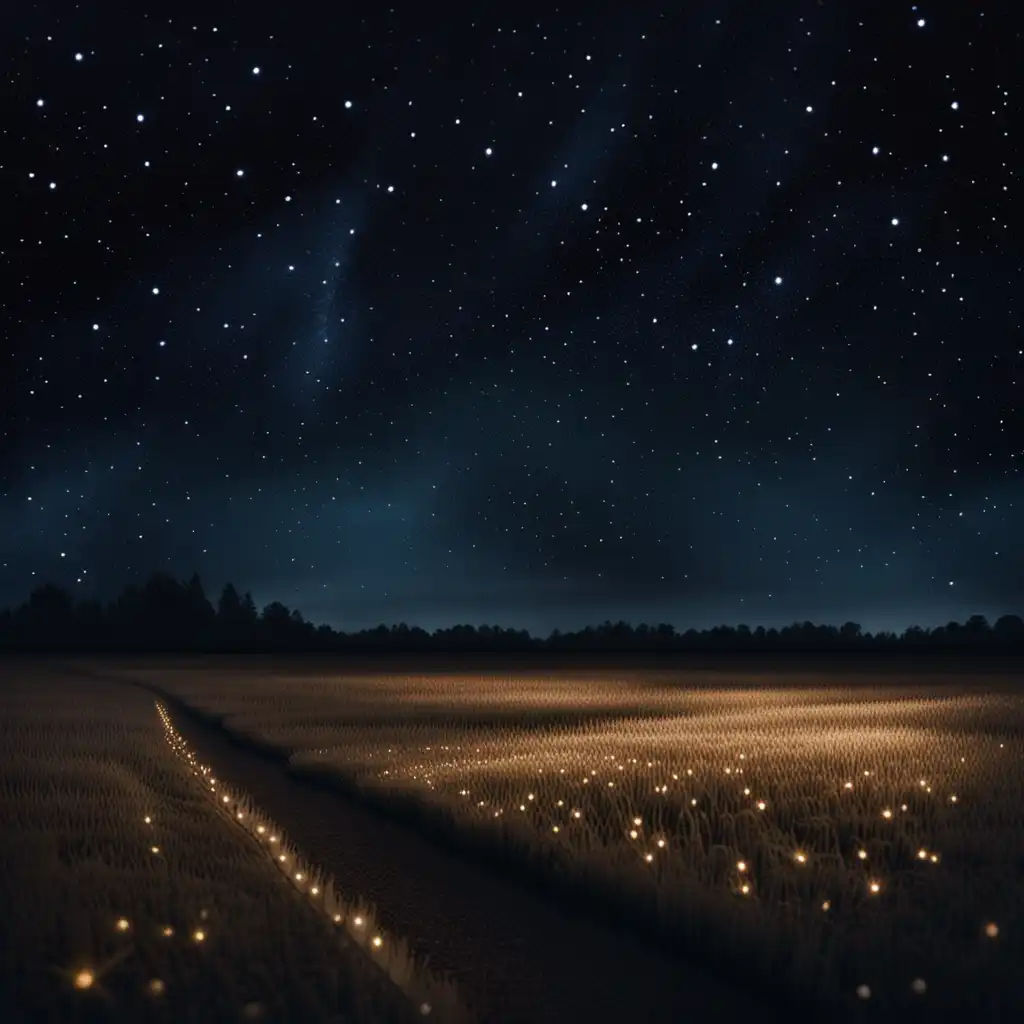
The light that comes from stars in the sky at night
The field was lit in a soft glow by the starlight.
starlight
ˈstɑːrlaɪt
読み込み中…
ˈstɑːrlaɪt
The light that comes from stars in the sky at night
The field was lit in a soft glow by the starlight.
音声を読み込めませんでした。しばらくしてからもう一度お試しください。
Starlight refers to the light that comes from stars in the sky at night. You can use the word starlight when you talk about going outside and looking at the stars or when you describe something shining like starlight. For example, you might say "The night was quiet except for the sound of crickets and the soft glow of starlight."
Moonlight refers to the light reflected by the moon and is generally brighter and more diffused than starlight. It is applicable when the moon is visible in the night sky and provides ambient light for outdoor activities.
Starlight refers to the light emitted by stars and is much dimmer than moonlight. It is applicable when the moon is not visible or is very dim in the night sky and when stargazing or observing constellations.
Moonlight provides brighter ambient light while starlight is dimmer and more suited to stargazing.
単語を開く: Moonlight →Starlight refers to the light emitted by stars in the night sky, while twilight refers to the period of time before sunrise and after sunset when the sky is partially illuminated.
Starlight is applicable at night when the sky is dark and stars are visible. Twilight is applicable during the early morning and late evening when the sun is near the horizon and the sky transitions from light to dark or vice versa.
単語を開く: Twilight →about the universe at large scales, such as how does gravity work? might be answered by studying these systems. So that was very big. The second things is very hot. Okay if I take an image of a galaxy cluster, and I subtract away all of the starlight,
YouTube で見る ↗I've read that a naked eye can see six thousand stars in the hundred billion galaxies, but I couldn't believe it, what with the sky white with starlight. I saw a million stars with one eye and two million with both.
for the very far future. You see we learned that our universe is not static, that space is expanding, that that expansion is speeding up and that there might be other universes all by carefully examining faint pinpoints of starlight
YouTube で見る ↗And I say the sacred hoop of my people was one of the many hoops that made one circle, wide as daylight and as starlight, and in the center grew one mighty flowering tree to shelter all the children of one mother and one father.
protection but that's actually experienced so you've read in the news about discovering planets and other star systems and that's actually how we determine that there's a planet is that when it passes in front of starlight it clearly is not creating an eclipse on earth but the brightness of the star
YouTube で見る ↗The pinpoints of starlight we see with the naked eye are photons that have been streaming toward us for a few years or a few thousand.
hunt anything they want with impunity camouflage is such that in black and white for example and to the monochromatic vision of any animal in that light level a lion on ordinary grass is invisible it's perfectly counter shaded against starlight
YouTube で見る ↗The Big Bang theory is the idea that if we go back early enough in the history of the universe - and we can do this, of course, by looking at starlight coming to us from billions of years ago - we will see a very hot and dense period where the universe was much smaller, denser, and hotter.
meaning that something in space was getting in the way and blocking starlight. And so at this point, we set out to learn everything we could about the star to see if we could find any clues to what was going on. And the citizen scientists who helped us in this discovery,
YouTube で見る ↗Here's a question we all ask ourselves at least once when we're young: Where does that starlight come from? It's been there before I was born, and before my grandmother, and her grandmother were born. So just how far is that star from Earth?
We'll see. Next thing we want to look at is, are there planets around other stars that might have life? So we will be looking in this way at small stars that have Earth-sized planets. When a planet goes in front of the star it can block some starlight,
YouTube で見る ↗In 1999, my team discovered that the star Upsilon Andromedae was circled by three gas-giant planets - the first distant multiplanet system ever found. That same year, other researchers observed the first 'transit' of an exoplanet - a planet blocking out a small fraction of the starlight as it passes in front of the star.
so just in a sort of shallow knee-deep water and the squid is nocturnal so during the day it buries itself in the sand and sleeps but then at night it has to come out to hunt and so on bright nights when there's lots of starlight or moonlight that light can penetrate the depth of the water the squid lives in
YouTube で見る ↗Some scenes are just more people's thing than others, and I know that my Gay New York is truly whatever I make of it. If I want her loud and lively, she's there. If I want sunsets and starlight, Battery Park, here I come.
I like to call these the prima donna of the galaxy world, because they are kind of show offs. And we call them active galactic nuclei. And we call them that because their nucleus, or their center are very active. So at the center there that's actually where most of the starlight comes out from. And yet what we actually see is light
YouTube で見る ↗up a little bit okay not good that's nice yeah that's good that's good yeah that's excellent some more of that please the starlight cameras reveal one of the little-known wonders of the world and a key to finding the giant squid
YouTube で見る ↗that from an individual's point of view, the world never improved. Nothing new was learned. The first clue to the origin of starlight
YouTube で見る ↗