
mannerism
noun mannerism
ˈmænərɪzəm
A special way in which a person behaves or does things.
One of his mannerisms is always touching his chin when he's thinking.
mannerism
ˈmænərɪzəm
Đang tải…
ˈmænərɪzəm
A special way in which a person behaves or does things.
One of his mannerisms is always touching his chin when he's thinking.
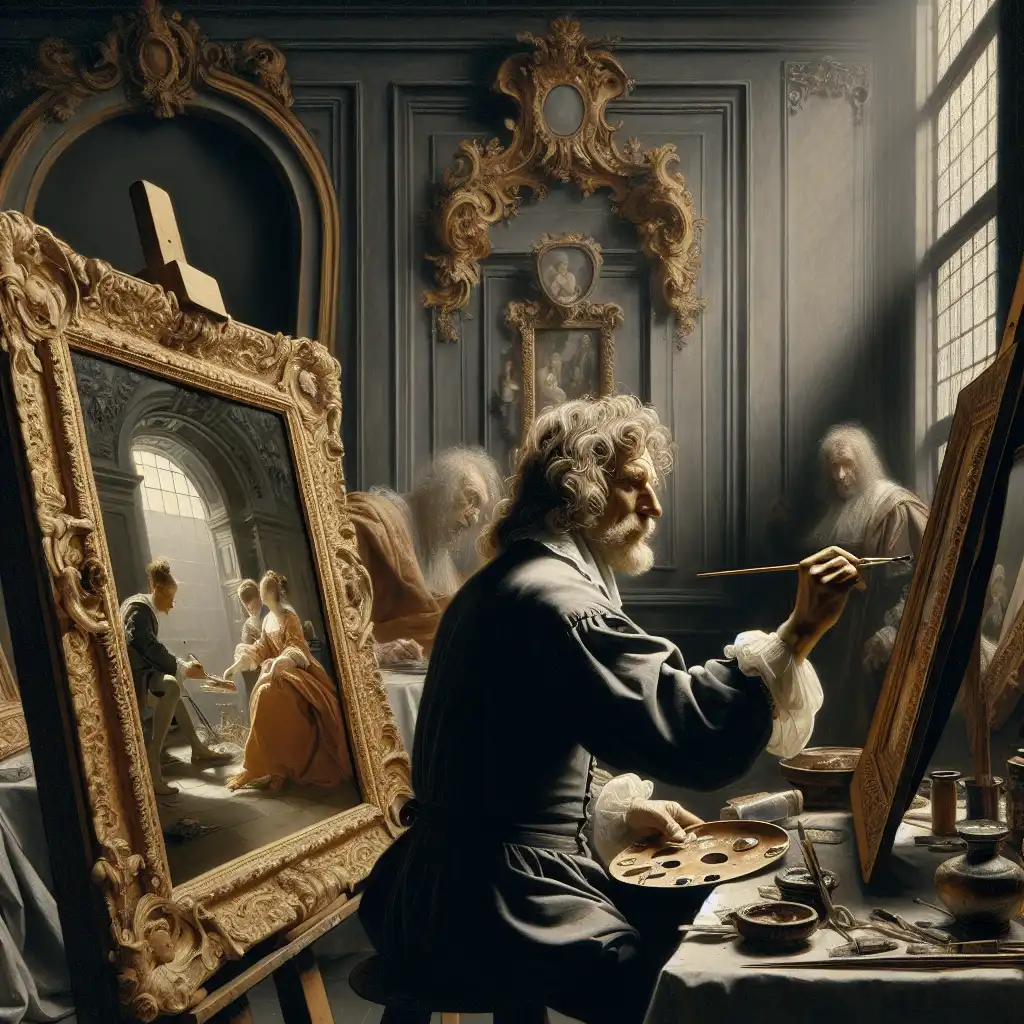
ˈmænərɪzəm
A particular style or way in art, music, or literature that is typical of a certain period or group of artists.
His paintings bear the influence of mannerism, a style popular in the late Renaissance period.
Không tải được âm thanh. Vui lòng thử lại sau.
Mannerism is a word used to describe a particular way of behaving, speaking or doing something that is unusual or exaggerated. It often refers to a specific style in art or architecture where there is a deliberate exaggeration of certain features for decorative effect. It can also be used to describe someone's attitude or behavior that is seen as artificial or affected. For example, if someone speaks with a mannerism, they might have a particular way of pronouncing words or using certain phrases that stands out as unusual. Overall, the word mannerism suggests a sense of studied artificiality or affectation.
Eccentricity refers to behavior or characteristics that deviate from the norm or are unconventional.
Eccentricity is applicable when describing someone who is out of the ordinary or has peculiar tendencies, while mannerism is applicable when describing someone's distinct style or behavior.
Mở từ: Eccentricity →A foible is a minor weakness, flaw, or peculiar habit of someone's character. It refers to a small mistake or fault that is not very important in the grand scheme of things.
Foibles are applicable to a person's personal habits, behavior, or character traits. Mannerisms are applicable to a person's physical gestures, movements, or speech patterns.
Mở từ: Foible →A habit is something that someone does repeatedly and often automatically, without thinking about it.
For example, biting one's nails is a habit, as it is something that is done repeatedly without conscious thought. Twirling one's hair is a mannerism, as it is a distinctive behavior that is characteristic of an individual.
Habits can be positive or negative, while mannerisms are neither good nor bad. A person's habits can be changed with effort, while mannerisms are more difficult to change as they often occur unconsciously.
Both words are applicable in describing human behavior, but habits are generally more ingrained and have a greater impact on a person's life, while mannerisms are more superficial and less significant.
Mở từ: Habit →Both ‘idiosyncrasy’ and ‘mannerism’ relate to unusual behavior or habits of an individual, yet there is a subtle difference between the words.
An idiosyncrasy refers to a peculiar behavior or trait that is unique to an individual. For example, your friend may have an idiosyncrasy of sniffing loudly when they are nervous.
To sum up, an idiosyncrasy is a unique trait of an individual, whereas a mannerism is a common behavior or habit of a group.
Mở từ: Idiosyncrasy →Peculiarity refers to something that is unusual or distinctive about a person or thing.
It can refer to something that is specific to an individual or that sets them apart from others. For example, someone who has a very unique sense of style or who has an unusual hobby or interest could be said to have peculiarities.
Both words are applicable in different situations. Mannerism is more often used to describe someone's behavior or actions, while peculiarity is often used to describe someone's personality or character traits.
Mannerism refers to a specific way of doing something, while peculiarity implies that someone or something is distinct or unusual in some way.
Mở từ: Peculiarity →A quirk is a peculiar or unexpected behavior that is unique to an individual.
Quirks can be seen as eccentricities or idiosyncrasies that set a person apart from others.
For example, someone who always wears mismatched socks could be said to have a quirk.
Mannerism refers to a more general habit or pattern of behavior, while quirks are more specific and individualistic.
Mở từ: Quirk →Both mannerism and style have to do with the way something is done or created, but there are some differences between the two words.
Style refers to a more general way of doing something that is characteristic of a certain time period, culture, or group of people.
For example, if you look at the fashion styles of the 1960s, you might see a lot of bright colors, bold patterns, and flower crowns — those are all characteristics of the "hippie" style that was popular at the time.
So, while both words have to do with the way something is done, mannerism is more individualistic and style is more about broader trends and cultural norms.
Mở từ: Style →Both mannerism and trait describe aspects of a person's behavior or personality.
A trait is a characteristic or quality that is part of a person's personality. It tends to be more ingrained and consistent than a mannerism.
For example, someone might have a trait of being compassionate, or being introverted. Traits are often seen as more important in defining a person's overall character.
A mannerism is a specific habit, while a trait is a more general characteristic of a person.
Mở từ: Trait →Inside a cartoonist's...
Xem trên YouTube ↗Just working on a character and his mannerisms, but not looking the part, is not my thing. It is your duty as an actor to be honest to the character.
What you don't know...
Xem trên YouTube ↗I observe people around me, interact with them and try to understand what's on their minds. I also try and include their little quirky mannerisms in my films.
The 5 Musketeers Have an...
Xem trên YouTube ↗As an actor, you are used to portraying other characters. You can pick up any mannerism or body language that suits the character. But to be yourself and not look pretentious is a difficult thing to do.
Martine Rothblatt: My...
Xem trên YouTube ↗I get to pick so many things as an actor. Also, I'm a good observer of people and their mannerisms.
What you don't know...
Xem trên YouTube ↗Modeling isn't really a tough job. Acting is much harder: so much prep and changing your look and mannerisms. It's a more difficult lifestyle being a model. I traveled all the time. Although, now I wonder, because I travel all the time for acting, too. So they both have their difficulties.
Who IS Sherlock Holmes -...
Xem trên YouTube ↗It's difficult to adopt mannerism of a real-life person and even add the nuances of your acting into it.
The history of...
Xem trên YouTube ↗What it means to look like a woman or man changes regionally - from mannerisms to clothes to posture to makeup to even your vocals - so I just observe, and I replicate.
Fake videos of real...
Xem trên YouTube ↗If you have to tell a story without speaking, it's sort of like - I come from a dance background, so it's like a ballet where you have to tell a story with just your body. I think that's really interesting to have to tell a story with just your face and your mannerisms, and I'd like to tap into that world.
Safari Live - Day 333 %\PIPE%...
Xem trên YouTube ↗There are just some really beautiful people in the world. When you're walking down the street, or you're at a restaurant, someone catches your eye because they have their own look. It goes way beyond what they're wearing - into their mannerisms, the way they smile, or just the way they hold themselves.
The story we tell about...
Xem trên YouTube ↗You will not find me repeating a character or carrying similar mannerism in different films.