salamander
noun salamander
ˈsæləmændər
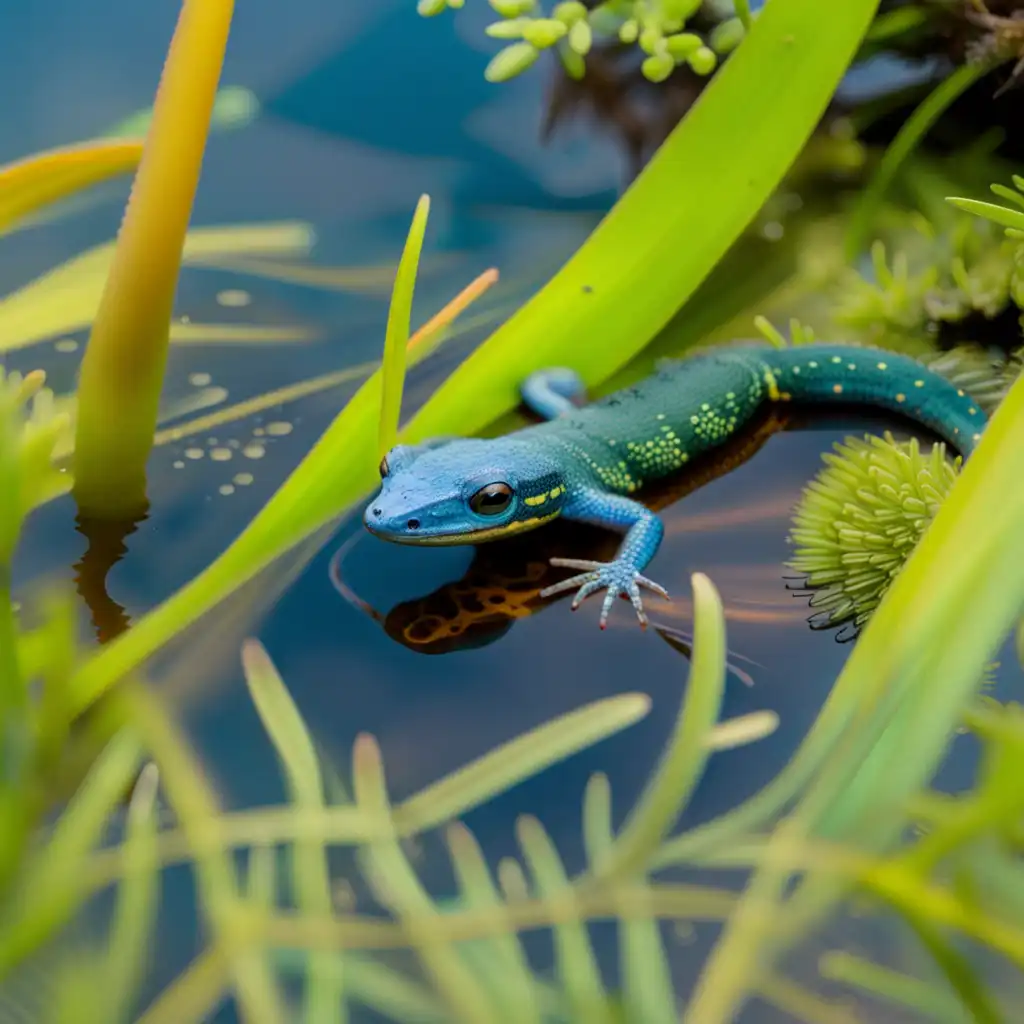
A small animal similar to a lizard that usually lives in water or damp places.
I saw a salamander swimming in the lake.
salamander
ˈsæləmændər
Cargando…
ˈsæləmændər
A small animal similar to a lizard that usually lives in water or damp places.
I saw a salamander swimming in the lake.
ˈsæləmændər
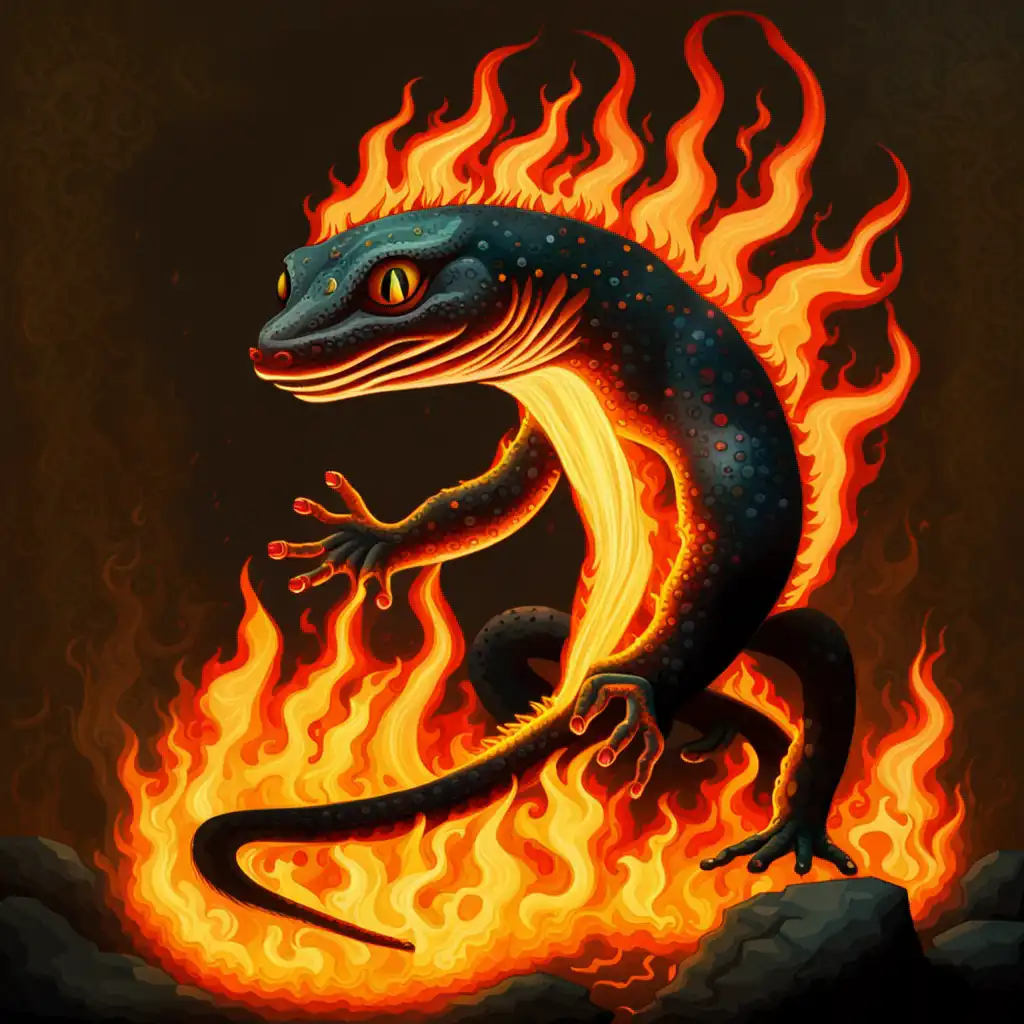
A mythological creature that is capable of living in or withstanding fire.
In ancient times, people believed that the salamander was a creature of fire.
No se pudo cargar el audio. Inténtalo de nuevo más tarde.
A salamander is a small, cold-blooded animal that typically lives near water. It looks like a lizard and has a long tail and four legs. They can come in different colors like green, brown, and yellow. You can find them in forests, ponds, and streams. Sometimes, people keep them as pets. Salamanders are important because they help keep the environment clean by eating insects and other small animals.
An amphibian is a type of animal that can live both on land and in water. It includes animals such as frogs, toads, and salamanders.
A salamander is a specific type of amphibian. It has a long body and tail, and usually lives in moist environments such as forests or near bodies of water.
So in short, all salamanders are amphibians, but not all amphibians are salamanders. Salamanders are applicable when referring to a specific type of amphibian, while amphibian is a broader term that encompasses many different types of animals.
Abrir palabra: Amphibian →A crawler is a general term used to describe any animal that moves by dragging its body along the ground or another surface.
This can include insects, reptiles, and even some mammals like sloths or armadillos. The term crawler is applicable to a wide range of animals that move in this manner.
Unlike crawlers, the term salamander is only applicable to this specific type of animal.
Abrir palabra: Crawler →Creature is a general term that refers to any living being, whether it is an animal or a human. A salamander is a particular type of animal that belongs to the amphibian family.
Therefore, while creature can refer to any type of living being, salamander only refers to a specific type of animal.
Abrir palabra: Creature →Frog and salamander are both types of amphibians, but they have some differences.
Frogs usually have smooth, moist skin, long hind legs built for jumping, and lay their eggs in clumps. They also have bulging eyes and are known for their distinctive croaking sound.
They do not jump like frogs and have a more subdued appearance.
Both frogs and salamanders live in wet environments, but salamanders are typically found in more wooded areas and have a more secretive lifestyle than frogs.
The difference between frog and salamander lies in their physical characteristics and habitat, which affects how they live and behave in their environment.
Abrir palabra: Frog →Lizards and salamanders are both types of reptiles, but they are different in several ways.
Lizards are generally larger than salamanders and have dry scales instead of moist skin. They have claws and most have four legs, which they use to run or climb.
Salamanders are usually smaller than lizards and have slimy skin. They have long tails and most species have four legs.
So, in summary, lizards are generally larger, have dry scales, claws, and are found in warmer climates, while salamanders are smaller, have slimy skin, long tails, and are found in moist environments.
Abrir palabra: Lizard →Newt and salamander are both types of amphibians, but there are some differences in their physical appearance and habitat.
Newts are smaller and have smoother skin, and they tend to live in water or moist environments. They have the ability to regenerate their limbs, and some species can be toxic to predators.
They do not have external gills but instead have lungs for breathing. Unlike newts, salamanders cannot regenerate their limbs but some species have the ability to regrow their tails.
In terms of their names, newt is generally used to refer to smaller aquatic or semi-aquatic species, while salamander is a broader term that includes both aquatic and terrestrial species.
Abrir palabra: Newt →Reptile is a term used to describe a class of animals that includes snakes, lizards, turtles, and crocodiles. All reptiles have scales, lay eggs, and are cold-blooded, which means their internal body temperature is determined by their environment.
Salamander is a term used to describe a type of amphibian that looks like a lizard. Unlike reptiles, salamanders have smooth, slimy skin and are typically found near bodies of water.
In summary, reptiles are a larger group of animals that includes snakes, lizards, turtles, and crocodiles, while salamanders are a specific type of amphibian that looks like a lizard and is found near bodies of water.
Abrir palabra: Reptile →A toad is also an amphibian but has dry, bumpy skin and is often found on land. They have shorter legs and bodies, and are generally slower than salamanders.
Toads also lay eggs but they are laid in long chains whereas salamander eggs are laid in clumps.
In summary, salamanders live in water and have smooth skin while toads live on land and have bumpy skin.
Abrir palabra: Toad →salamanders hunt for invertebrate prey throughout the night with its striking yellow and red markings this is a rare subspecies found only here
Ver en YouTube ↗I think what I would really most like to write about is palm trees and bougainvillea and hummingbirds. I would like to go into the desert and write about salamanders and the Grand Canyon, but history keeps rupturing my experience because politics are everywhere.
Axolotls reach sexual maturity with gills and a tadpole-like dorsal fin. Scientists think their forever-young condition called “neoteny,” evolved because of their stable habitat. For salamanders that develop in waters that dry up,
Ver en YouTube ↗I like snakes. I like hummingbirds. There's nothing on earth I don't like. Frogs. Salamanders. The bunnies, the giraffes, the hippopotamuses.
from biomechanics and robotics to neuroscience, saying don't underestimate to what extent the body already helps locomotion. Now how does this relate to human locomotion? Clearly human locomotion is more complex than cat and salamander locomotion,
Ver en YouTube ↗in this rare night footage a giant salamander struggles back upstream after becoming trapped in a dam spillway when the banks of rivers are covered in concrete for flood control the salamanders habitat is destroyed so
Ver en YouTube ↗electrons in this rare night footage giant salamander struggles back upstream after becoming trapped in a dam spillway when the banks of rivers are covered in concrete for flood control the
Ver en YouTube ↗it captures its prey and with another quick opening and gulp it then swallows its victims even though they can grow to over a foot long and are the largest land dwelling salamanders in the world
Ver en YouTube ↗it captures its prey and with another quick opening and gulp it then swallows its victims even though they can grow to over a foot long and are the largest land dwelling salamanders in the world
Ver en YouTube ↗Now regrowing body parts out of nowhere might seem like magic, but there are several organisms that can achieve this feat. Some lizards can regrow their tails, the humble salamander can completely regenerate their arm, and even us mere humans can regrow our liver after losing more than half of its original mass.
Ver en YouTube ↗Fantastic animals that are real, extremely alive and endangered. Boa snakes and kinkajous opossums and tarantulas, salamanders and moths. Animals that one might see once in a lifetime,
Ver en YouTube ↗salamanders and insects we really do need somebody to give them a voice too one day joel called up his friend the president of the lincoln's children zoo and he asked if he could take some portraits of some animals it was located close enough to home so joel could go there and be back in a few hours and the zoo said sure
Ver en YouTube ↗