cackle
verb cackle
ˈkækl
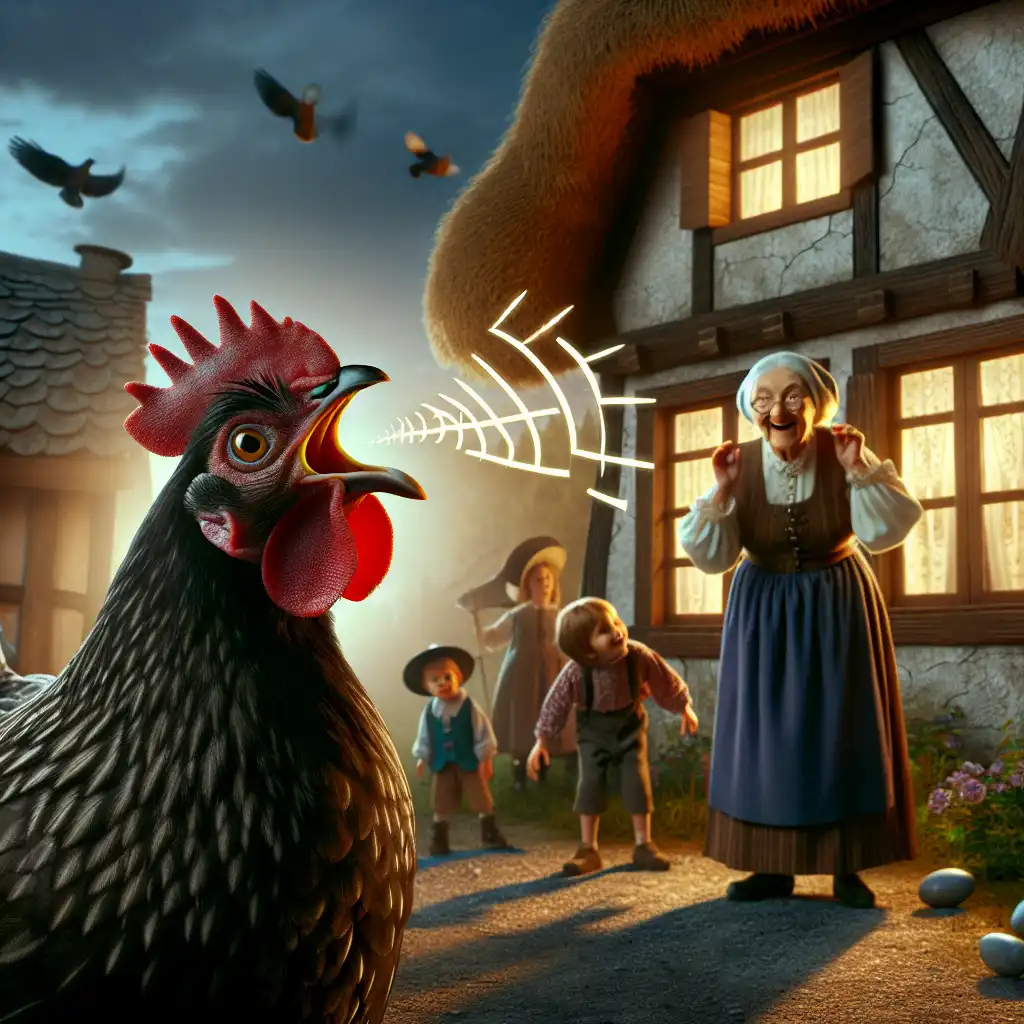
If a hen cackles, it makes a sharp sound, or to laugh a lot in a loud or high voice
The old witch cackled loudly as the children approached her house.
cackle
ˈkækl
Chargement…
ˈkækl
If a hen cackles, it makes a sharp sound, or to laugh a lot in a loud or high voice
The old witch cackled loudly as the children approached her house.
ˈkækl
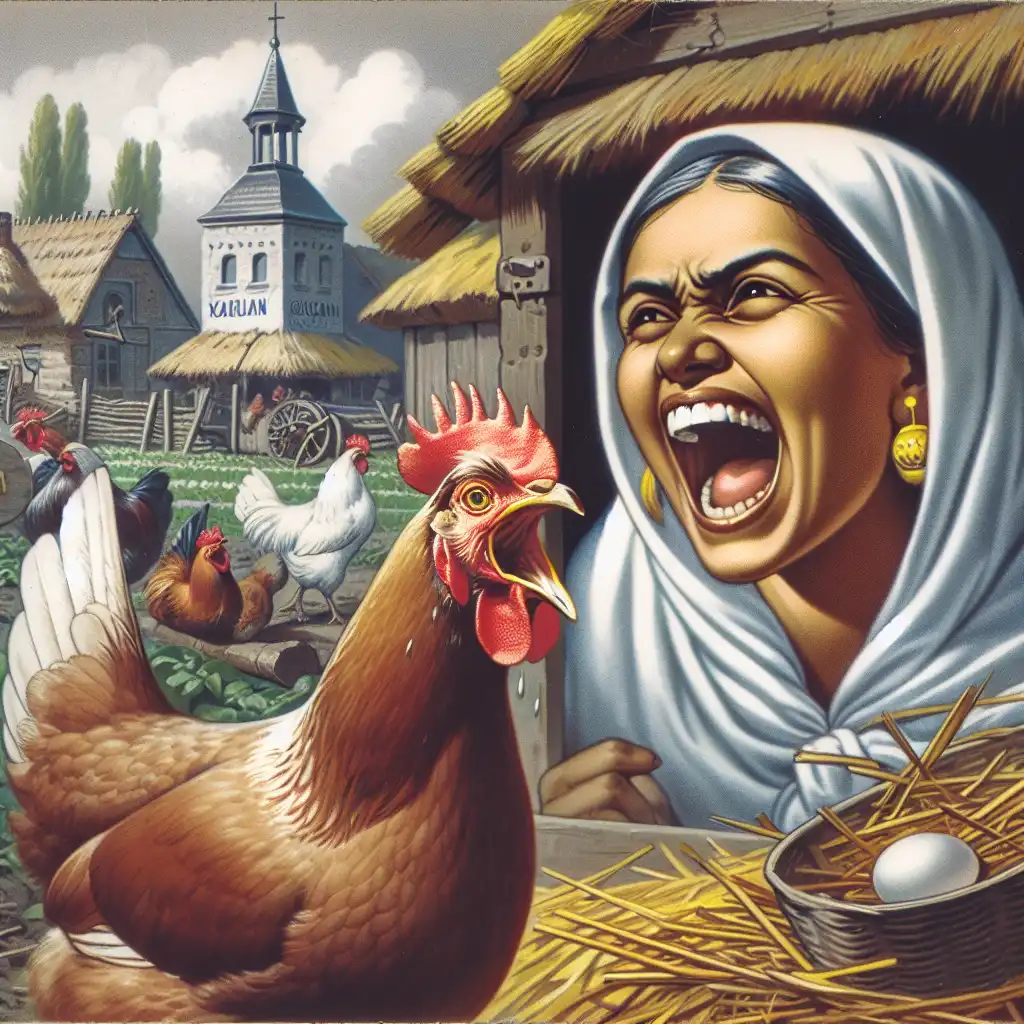
The sound a hen makes, or a loud, high laugh
Her cackling laugh could be heard throughout the building.

ˈkækl
To talk about someone in a hurtful or critical way
She was always cackling about her neighbors.
Impossible de charger l’audio. Réessayez plus tard.
The word 'cackle' means to laugh in a loud, shrill and often unpleasant way. It is usually associated with the sound of a hen or a witch. You can use this word to describe someone who is laughing in a way that is annoying or irritating or when you want to poke fun at someone's laughing style. For example, "The old lady cackled loudly at the joke." or "The witch cackled wickedly as she cast her spell."
Chuckle is a much softer and gentler laugh that is often described as a quiet or suppressed laugh.
Cackle describes a loud, unpleasant laugh that is associated with negative emotions such as mockery or evil intentions, while chuckle describes a softer, more pleasant laugh that is associated with positive emotions like humor or joy.
Ouvrir le mot: Chuckle →Both cackle and giggle refer to sounds made by laughing, but they are used in different contexts. Cackle is a loud and shrill laugh, often associated with witches or villains and can sound harsh or mocking.
It is used to convey a sense of cruelty or contempt. Giggle is a light and often high-pitched laugh, which is associated with amusement or pleasure.
Cackle has a negative connotation, while giggle has a positive one.
Ouvrir le mot: Giggle →Guffaw refers to a loud, boisterous, and unrestrained burst of laughter that is usually accompanied by shaking of the body.
In terms of applicability, cackle is more appropriate to describe a laugh that is meant to be disturbing, creepy, or menacing, while guffaw is more appropriate for describing a laugh that is meant to be funny, joyful, or uncontrollable.
Ouvrir le mot: Guffaw →Laugh refers to an expression of happiness or amusement that is typically accompanied by the sound of chuckling, giggling, or even roaring.
Cackle usually refers to a loud, harsh, and unpleasant laughter, often associated with witches, evil characters, or someone who is being malicious or cruel.
It is typically louder and more piercing than a regular laugh, and can be seen as a sign of spitefulness or malice. It is generally not used in everyday conversation, but rather in fictional or storytelling contexts.
Laugh is a positive and pleasant expression of joy, while cackle is a negative and nasty form of laughter that is associated with negative emotions and actions.
Ouvrir le mot: Laugh →Roar is a loud, deep sound that is usually associated with animals such as lions or tigers.
It can also be used figuratively to describe a loud, powerful noise such as the roar of a crowd or the roar of thunder.
Cackle describes a high-pitched, shrill laughter associated with witches or mischievous people, while roar describes a loud, deep sound associated with animals or powerful noises.
Ouvrir le mot: Roar →A snicker is a quiet and stifled laugh, often done while trying to conceal amusement.
A snicker may be used in situations where someone finds something amusing but wants to hide that fact, such as in a serious meeting or lecture.
A cackle is loud and harsh, while a snicker is quiet and stifled.
A cackle may be used by villains or in situations of malice, while a snicker may be used by someone who is amused but trying to hide it.
Ouvrir le mot: Snicker →Cackle refers to a loud, high-pitched laugh often associated with witches or old women. Snort refers to a sudden, violent burst of air from the nose, usually due to laughter or strong emotions.
Snort can also be a sound made by animals, like horses.
Cackle is more commonly used to describe a human's specific type of laugh, while snort can describe a sudden burst of noise from a person or an animal.
Ouvrir le mot: Snort →Cackle and titter both describe laughter, but they are different in their intensity and tone.
A titter is a quiet or subdued laugh that is usually short-lived.
Ouvrir le mot: Titter →Burying Beetles %\PIPE%...
Voir sur YouTube ↗Not to say people shouldn't get rich from art. I adore the alchemy wherein artists who cast a complex spell make rich people give them their money. (Just writing it makes me cackle.) But too many artists have been making money without magic.
Elon Musk talks Twitter,...
Voir sur YouTube ↗I have a really crazy cackle laugh, and I think sometimes people don't realize that they're not laughing at my jokes, they're actually just laughing because of my laugh.
The myth of Loki and the...
Voir sur YouTube ↗I wasn't a sweet kid. I was an instigator and provoked everyone with my goofy hyena cackle, loving every minute of the drama I could create.
One of my favourites on Instagram is @dublin_zoetrope. He does these musical theatre/Meryl Streep/Glenn Close memes that are truly hysterical. He'll take a regular photo of them and create an entire storyline, and it makes me cackle out loud.
A great deal of my mail comes from fans of the 'Oz' picture - fans of all ages. The scholarly, the curious, the disbelievers write and ask how? why? when? what for? did you fly? melt? scream? cackle? appear? disappear? produce? sky-write? deal with monkeys? etc., etc., etc.