hubbub
noun hubbub
ˈhʌbʌb
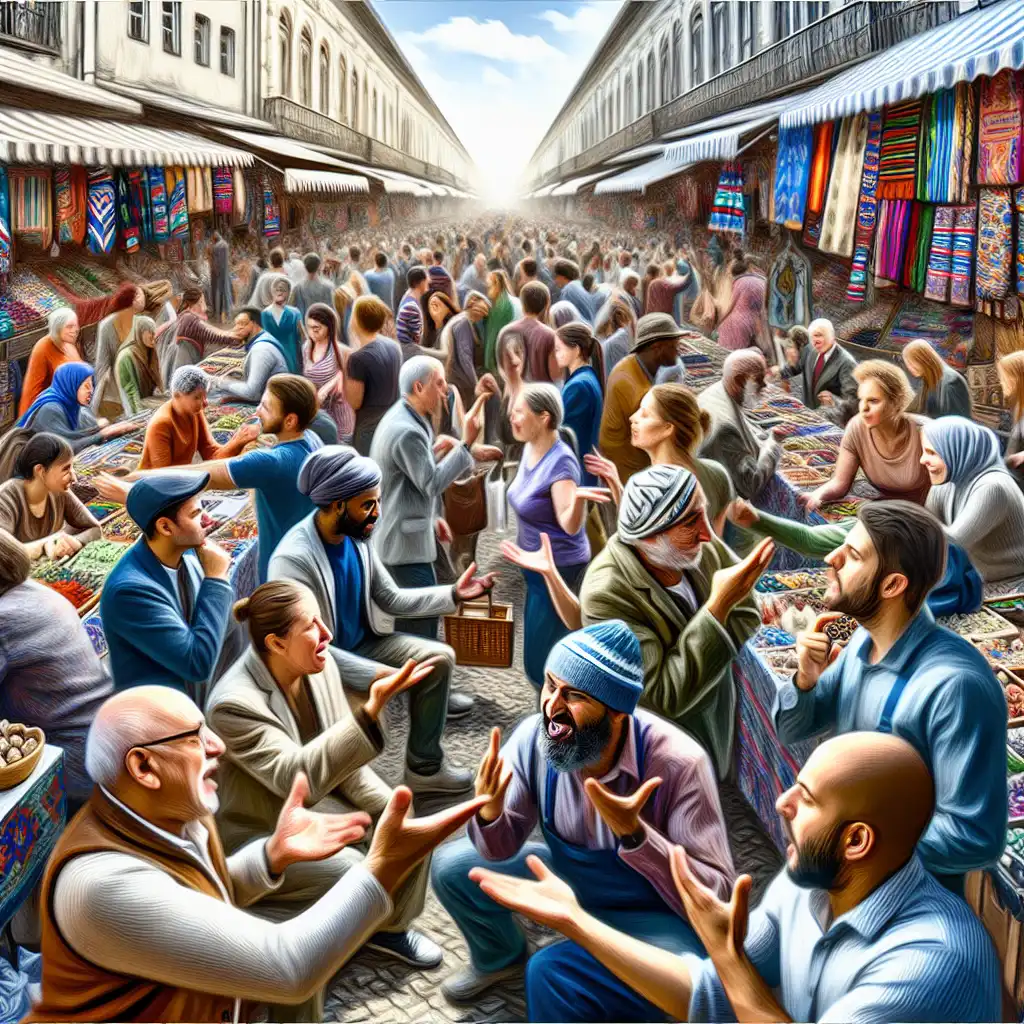
A noisy situation or crowd, often because of arguing or confusion.
There was a lot of hubbub in the market as people haggled over prices.
hubbub
ˈhʌbʌb
Cargando…
ˈhʌbʌb
A noisy situation or crowd, often because of arguing or confusion.
There was a lot of hubbub in the market as people haggled over prices.

ˈhʌbʌb
A loud noise from talking or shouting.
I could hardly hear myself think over the hubbub.

ˈhʌbʌb
A situation in which there is a lot of excitement and activity.
There was a lot of hubbub about the movie premiere.
No se pudo cargar el audio. Inténtalo de nuevo más tarde.
The word 'hubbub' is used to describe a loud noise or commotion created by a group of people talking or shouting together. It is often used in situations where there is a lot of activity or excitement, such as a busy marketplace or a crowded event. For example, "There was a lot of hubbub at the concert last night with everyone singing and cheering."
Bustle refers to a lot of activity and movement in a particular place, whereas hubbub refers to a loud and confused noise caused by a large number of people talking at once.
For example, a market could be described as having a lot of bustle if there are many people moving around, buying and selling products.
Bustle describes physical activity and movement, while hubbub describes a noisy environment with many voices.
Abrir palabra: Bustle →Both clamour and hubbub refer to a loud and confused noise made by a group of people.
However, clamour refers to a more insistent and persistent noise, often accompanied by shouting and demand for attention.
Clamour describes a more intense and deliberate noise, while hubbub describes a more casual and haphazard one.
Abrir palabra: Clamour →Both commotion and hubbub refer to a lot of noise or confusion, but they have slightly different connotations.
Commotion typically suggests a noisy disturbance or upheaval that causes people to become alarmed or agitated. For example, a car accident might cause a commotion on a busy street, or a sudden storm might create a commotion in a crowded park.
Both words can describe chaotic or noisy situations with a lot of activity or energy, but commotion suggests a more sudden, disruptive disturbance while hubbub is more likely to describe a noisy but less tumultuous atmosphere.
Abrir palabra: Commotion →Confusion refers to a state of being unclear, uncertain or disoriented.
Confusion is about being uncertain or unclear, while hubbub is about a lot of noise and activity.
Confusion can be mental or emotional, while hubbub is usually physical and audible.
Abrir palabra: Confusion →Both din and hubbub refer to loud, chaotic noise, but there is a subtle difference in their usage.
Din refers to a continuous, steady noise, like the sound of traffic, an engine, or machinery.
Din is a steady noise while hubbub is a chaotic noise with multiple sounds.
Abrir palabra: Din →Noise refers to any sound that is loud or obnoxious, whether it is coming from one source or several sources.
Hubbub specifically refers to a loud, chaotic mix of many different sounds happening at the same time. For example, if you were in a crowded city street you might hear the sounds of cars honking, people shouting, music blasting and many other types of noise all rolled into one jumbled "hubbub.".
Noise is a general term for any loud sound, while hubbub is a more specific term that describes a chaotic mix of many different sounds happening at the same time.
Abrir palabra: Noise →Both hubbub and racket refer to noisy, tumultuous sounds or activity.
Racket is a more general term for any loud, unpleasant noise or disturbance.
Hubbub is often used to describe a lively, frenzied atmosphere while racket can describe any source of excessive noise.
Abrir palabra: Racket →Turmoil means a state of great disturbance, confusion, or uncertainty.
Hubbub describes a noisy and energetic environment, while turmoil describes a more chaotic and potentially dangerous situation.
Abrir palabra: Turmoil →Both hubbub and uproar are words that describe a loud and noisy commotion, but hubbub has a more chaotic and disorganized sound to it, whereas uproar is more of a loud and angry protest or outcry.
For example, a hubbub could refer to the loud and busy noise of a crowded marketplace or a party, whereas an uproar could refer to the angry shouts and protests of a crowd at a political rally or a public hearing.
Overall, both words are great for describing loud and chaotic situations, but hubbub is more general and can apply to any loud and noisy setting, while uproar specifically implies a sense of anger or protest in the noise.
Abrir palabra: Uproar →this who made these translations were not tucked away in the ivory tower of the University in their gravy necks and their gold rimmed spectacles they were deeply involved with the world politics commerce each other kind of a hubbub of
Ver en YouTube ↗It's so easy to get whisked away in the hubbub of friends, work and busy-ness, but we need to take the time to be still and become aware of ourselves. The small things. The fact that we're still breathing. Our ability to move. The presence of love around and in us. Our strengths. Our opportunities. Our journeys.
They should be in hospital." And there's this uproar and all the doctors start pounding the table and saying "We always said you were unethical Archie. You're killing people with your clinical trials. You need to shut it down now. Shut it down at once." And there's this huge hubbub. Archie lets it die down.
Ver en YouTube ↗The business can be frustrating. For me, Omaha is a rounding foundation. I was raised in a very faith-filled household, very hardworking. It made me aware of what privilege is. And it's a place I can go back to, spend time with nieces and nephews, celebrate the things that have nothing to do with the hubbub of Hollywood.
One of the things that may get lost among all the hubbub when a company is 'going public' is that the business can now be owned, in part, by its greatest fans.
In Los Angeles, I feel connected to a hubbub of strangeness. And I enjoy that; I like strangeness.