pathogen
noun pathogen
ˈpæθədʒən
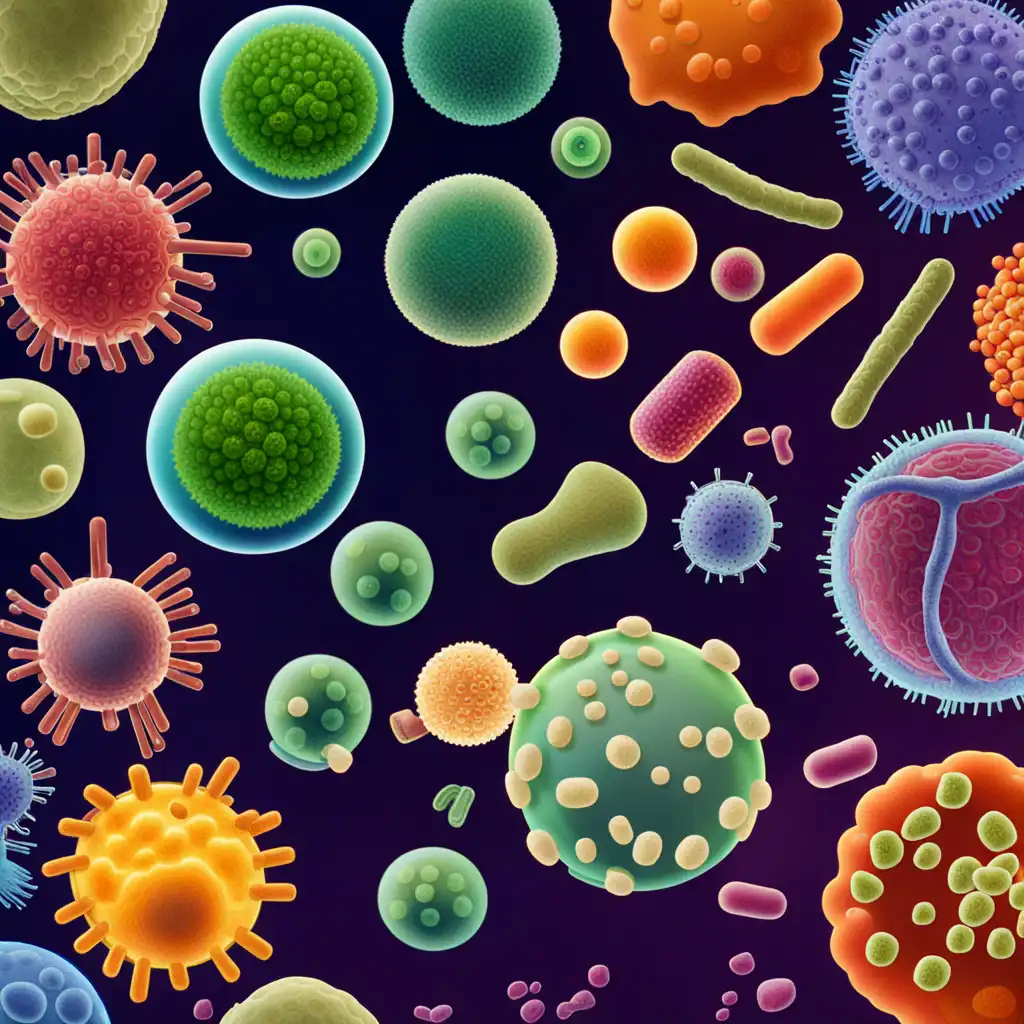
A bacterium, virus, or other microorganism that can cause disease in another living organism.
Flu is a pathogen that causes a lot of harm to people every year.
pathogen
ˈpæθədʒən
読み込み中…
ˈpæθədʒən
A bacterium, virus, or other microorganism that can cause disease in another living organism.
Flu is a pathogen that causes a lot of harm to people every year.
音声を読み込めませんでした。しばらくしてからもう一度お試しください。
A pathogen is a type of germ that can cause disease or illness in a person or animal. Pathogens can be viruses, bacteria, or other microorganisms that can make a person sick. They are found in many different places, such as on surfaces like door handles, on food, or in the air. It's important to practice good hygiene, like washing your hands regularly, to protect yourself from pathogens. When talking about health and disease, you can use the word 'pathogen' to describe the specific type of germ causing the illness.
Bacteria are small, single-celled organisms that can be found in many different environments, including soil, water, and inside the human body.
They can be either helpful, harmful, or neutral. Some bacteria are beneficial, such as those found in the gut that help with digestion.
Pathogens are organisms that cause disease. They can be bacteria, viruses, fungi, or parasites. Pathogens are harmful and can cause illness, ranging from a mild cold to a life-threatening infection.
In short, all pathogens are bacteria, but not all bacteria are pathogens. Bacteria are applicable in many fields, including medicine, agriculture, and industry.
単語を開く: Bacteria →Germ is a more general term that refers to any microorganism, both harmful and harmless. For example, bacteria and fungi are germs, but not all of them cause disease.
A germ is any microorganism while a pathogen is a harmful microorganism that causes a disease.
単語を開く: Germ →Microbe and pathogen are both related to tiny organisms, but they have different meanings. Microbe refers to any kind of living thing that is too small to be seen without a microscope - this includes bacteria, viruses, fungi, and more.
Pathogen, however, specifically refers to a microbe that can cause disease in humans, animals, or plants. So, while all pathogens are microbes, not all microbes are pathogens.
For example, many bacteria found in our gut are considered microbes but are not harmful, and therefore not pathogens. Pathogens are applicable in medical and biological contexts, where the focus is on identifying and treating harmful microorganisms that can cause disease, while microbes have a wider range of applications in science, including the study of ecology, genetics, and evolution.
単語を開く: Microbe →A parasite is an organism that lives in or on another organism (called the host) and benefits by taking nutrients from the host.
Parasites harm the host by weakening it and competing for resources. Examples of parasites in humans include lice, fleas, and tapeworms.
In summary, parasites benefit from their host while harming it, whereas pathogens cause disease and harm their host without benefiting from it.
単語を開く: Parasite →A virus is a specific type of pathogen. It is a tiny infectious agent that replicates only inside the living cells of other organisms, and can cause a wide range of diseases, like the flu or COVID-19.
So, all viruses are pathogens, but not all pathogens are viruses.
単語を開く: Virus →The amazing ways plants...
YouTube で見る ↗My team and I have discovered, over decades of study, that mushroom mycelium is a rich resource of new antimicrobial compounds, which work in concert, helping protecting the mushrooms - and us - from microbial pathogens.
Bill Gates: The next...
YouTube で見る ↗The virus that causes AIDS is the trickiest pathogen scientists have ever confronted. It mutates furiously, it has decoys to evade the immune system, it attacks the very cells that are trying to fight it, and it quickly hides itself in your genome.
A Mysterious Fungus Is...
YouTube で見る ↗Think of ISIS as a pathogen that preys on weak hosts in the Muslim world. In fact, there is something of a political law: The weaker a Muslim state, the stronger will be the presence of ISIS or like-minded groups.
Quorum sensing: Bacteria...
YouTube で見る ↗I think there should be very strict limits on the pathogens that can be sold in your meat. There should be limits on disease-causing pathogens. Tests should determine whether the meat is contaminated or not, and you shouldn't be allowed to sell contaminated meat.
Rescuing Adorable Grey...
YouTube で見る ↗We will have to make a decision, as we go into new environments outside of earth, whether we want to drag along with us all our pathogens. We can, or we can't - it's up to us - but I consider that part of genome engineering is how we interact with the huge part of our genome which is our microbiome.
Are spotty fruits and...
YouTube で見る ↗Limiting Covid's impact requires us to think differently about confronting respiratory pathogens in the winter.
The surprising reason...
YouTube で見る ↗If food is processed - like canned or frozen - you can reduce the risks of pathogens.
How a wound heals itself...
YouTube で見る ↗We have to devise ways to lower the cost of production and reduce the risks involved in agriculture such as pests, pathogens, and weeds.
When is water safe to...
YouTube で見る ↗In the field of biological weapons, there is almost no prospect of detecting a pathogen until it has been used in an attack.
The past present and...
YouTube で見る ↗Life has survived for more than three billion years because it is robust, and almost no mutations can easily outwit the defense mechanisms built up through eons of exposure to potential pathogens.