
inductive
adjective inductive
ɪnˈdʌktɪv
Based on reasoning or information that is drawn from evidence around you.
His inductive approach to problem-solving helped him arrive at the correct answer.
inductive
ɪnˈdʌktɪv
Chargement…
ɪnˈdʌktɪv
Based on reasoning or information that is drawn from evidence around you.
His inductive approach to problem-solving helped him arrive at the correct answer.
ɪnˈdʌktɪv
Used to describe a method of reasoning in which a conclusion is made based on particular facts.
In inductive logic, even if all of the premises are true, a conclusion can still be false.
ɪnˈdʌktɪv
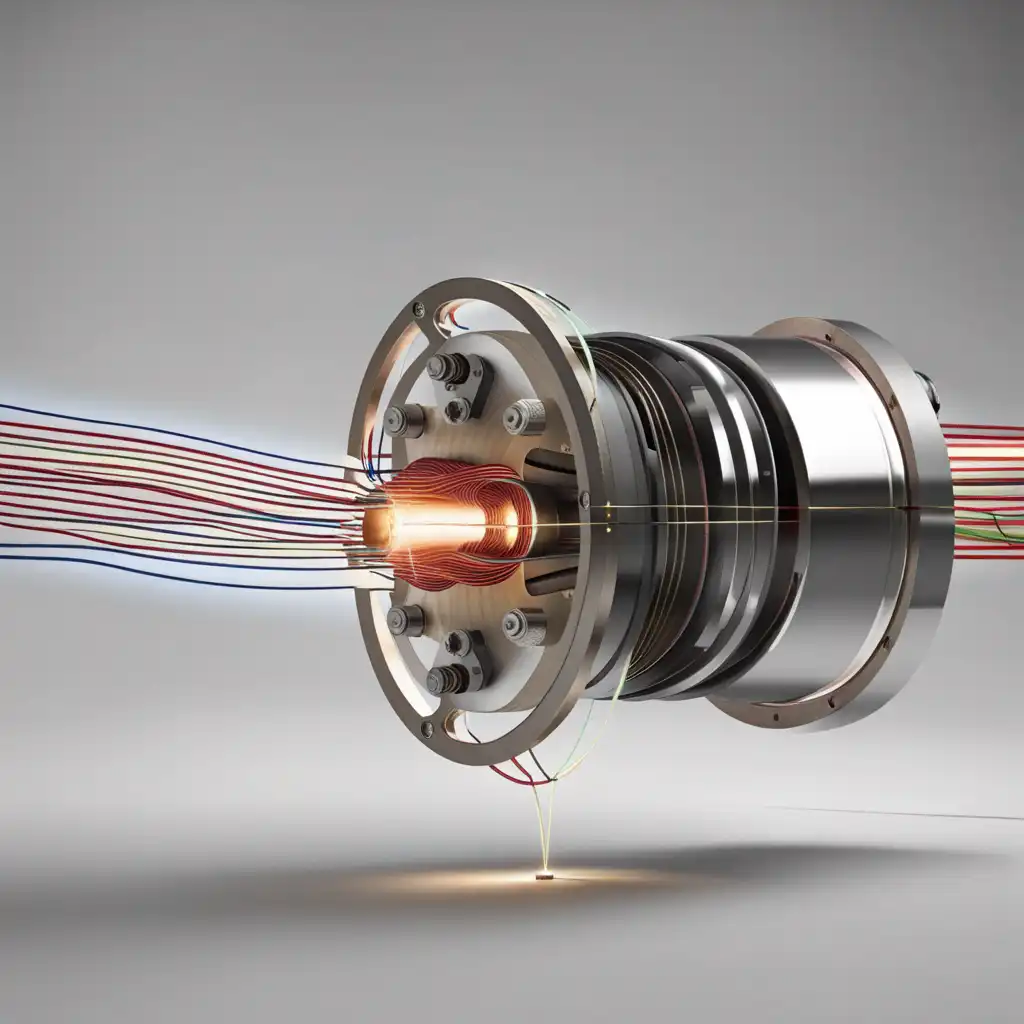
Related to the ability to induce an electric current.
An inductive load, like a motor, requires more current to operate than a resistance load.
Impossible de charger l’audio. Réessayez plus tard.
The word 'inductive' is often used in logic and reasoning to describe a type of reasoning where general conclusions are made based on specific observations or instances. For example, if someone observes that all the cats they have seen have tails, they might make the general conclusion that all cats have tails. In everyday language, 'inductive' can also be used to describe a method of teaching, where students are given specific examples and then are asked to draw general conclusions or patterns from them.
Empirical and inductive are terms used in scientific research. Empirical means that something is based on observable evidence, data, or experiences.
Empirical research is applicable when scientists collect data through experiments, observations, or measurements. They use this evidence to draw conclusions and make predictions about the natural world.
For example, a scientist may conduct an experiment to test whether a certain chemical mixture causes cancer in mice. The results of the experiment would be empirical evidence that could be used to draw conclusions about the chemical's effects on humans.
Empirical research relies on data and evidence, while inductive reasoning relies on observations and hypotheses. Both are important tools in scientific research.
Ouvrir le mot: Empirical →Experimental refers to a method of acquiring knowledge by setting up tests or investigations that can provide experimental evidence.
The experimental method is applicable in areas of science and engineering where there is a need to control the experimental environment so that only one variable is tested at a time.
Ouvrir le mot: Experimental →Exploratory means to explore or investigate something new or unknown, without having an idea in mind about what you might find.
Exploratory is about finding new ideas or concepts, while inductive is about drawing conclusions from existing observations.
Ouvrir le mot: Exploratory →Heuristic refers to a method of learning or discovering something by using trial-and-error, experimentation, or problem-solving.
Both heuristic and inductive methods are useful in different situations. For example, heuristic methods might be useful when one is trying to solve a complex problem or come up with a new idea or invention.
Ouvrir le mot: Heuristic →It involves reasoning from the particular to the general. Inductive reasoning is used to derive generalizations and theories from observations of specific phenomena.
Observation is the process of gathering information about the world around us using our senses such as sight, sound, touch, taste, or smell.
It is a process in which an individual notices and carefully examines and records facts or events. Observations are used to gather information about the world and to make inferences based on that information.
Inductive reasoning is applicable when you want to use specific observations to make a general conclusion or theory, while observation is applicable when you want to gather information about the world around us.
Ouvrir le mot: Observation →Practical refers to something that is useful or can be applied effectively in real-world situations.
To put it more simply, inductive reasoning focuses on making generalizations based on specific observations, while practicality focuses on finding solutions that work in the real world.
Ouvrir le mot: Practical →Naomi Oreskes: Why we...
Voir sur YouTube ↗I think the silences we have on some issues are inductive of the fact that we need to write about them more, but I think there are some issues you have to write in a sensitive way and in a way that respects the reality of the situation. If you can't do that, you should leave them alone.
Can you solve the...
Voir sur YouTube ↗I distrust thought. The interior life is highly overrated. I don't like the wispy and the vague... or inductive logic in any kind of writing. I'm impatient with writers who make too much sense. The better things that I've done have come to me by instinct.
TX Finalist %\PIPE% National...
Voir sur YouTube ↗The deductive method is the mode of using knowledge, and the inductive method the mode of acquiring it.
What hadn't been realized in the literature until now is that merely to describe how severely something has been tested in the past itself embodies inductive assumptions, even as a statement about the past.
You should carefully study the Art of Reasoning, as it is what most people are very deficient in, and I know few things more disagreeable than to argue, or even converse with a man who has no idea of inductive and deductive philosophy.
Inductive reason, which alone makes man master of his environment, is an achievement; and when once born it must be reinforced by inhibiting the growth of other modes of knowledge.