ऑडियो लोड नहीं हो सका। कृपया बाद में फिर कोशिश करें।
उपयोग कैसे करें
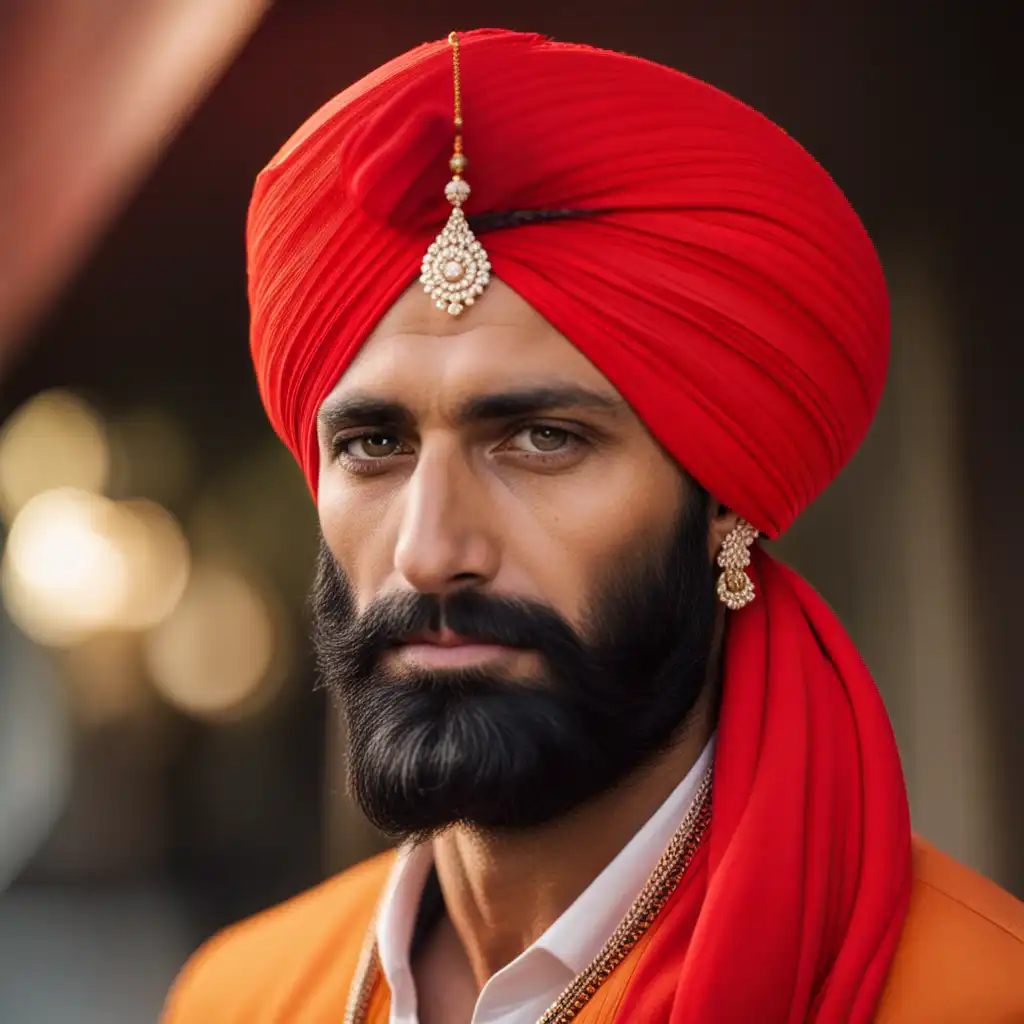
A turban is a type of headwear that is commonly worn in many cultures, especially in parts of Asia, Africa, and the Middle East. It is made by wrapping a long piece of cloth around the head, often covering the hair and ears. Turbans can be worn for religious or cultural reasons, as well as for practical purposes such as protection from the sun or cold weather. In Western cultures, turbans are sometimes worn as a fashion accessory.
A bonnet is a type of headwear that typically covers the head and ties under the chin.
A bonnet can be worn in different situations, such as when going to church or a formal event, or as a sun hat when spending time outdoors.
A bonnet is a type of headwear mainly worn by women and girls for style or protection, while a turban is a headdress mainly worn by men for religious or cultural reasons, or for practical purposes.
A headdress is any type of hat or decoration worn on the head, while a turban is a specific type of headdress that is made by wrapping cloth around the head.
A headdress can be worn for many different purposes, such as for cultural or religious traditions, as a fashion statement, or to keep warm.
Hijab usually refers to a headscarf worn by Muslim women to cover their hair and neck, while turban is a head covering worn by both men and women for cultural or religious purposes.
Hijab is applicable in Muslim countries and communities where women are expected to cover their hair in public, while turban is more commonly seen in South Asian, Middle Eastern, and Sikh cultures.
A scarf is a long piece of cloth, typically worn around the neck, to keep warm or as a fashion accessory.
It can be made of different materials such as wool, silk, or cotton and come in various designs and patterns. Scarves are commonly worn in colder climates to protect the neck and face from cold, wind, or snow.
So, scarves are worn around the neck while turbans are worn on the head. Scarves are generally a fashion accessory while turbans have cultural, religious or practical applications.
A shawl is a kind of clothing accessory that is worn often by women around their shoulders or head.
A shawl can be made out of different materials such as wool, cotton or silk.
A shawl is mostly worn by women for decorative or practical purposes. For instance, a shawl can be used as an accessory to complement an outfit or as a layer to keep warm.
A shawl is a type of clothing accessory worn mainly by women, while a turban is a head covering that is typically worn by men.
A veil is a piece of cloth or fabric that is worn to cover the face or head of women in some cultures and religions.
The usage of the turban is primarily in the Sikh and Muslim communities, whereas the veil is typically associated with Islamic culture.
The turban is worn as a symbol of religious identity and cultural practices, while the veil is worn for modesty and as a personal choice according to religious beliefs.
They were the ugliest looking men you can ever see. Very mean-looking people, black clothes black turban, and they pour into my office. And I invited them to have a seat and have tea. They said no. They are not going to drink tea.
Sikhs were considered the champions of fairness, uplifting people, protecting and defending human rights. Defending equality. So when someone sees a Sikh, the turban identifies a person who's going to stand up for rights, even if you disagree with them. The turban is supposed to be a beacon. That someone who is going to help you out.
and I was in a nomadic country out in the wilderness what we do in a turban Zenoss preservation of culture health care and education kind of put it all together so out there I said to the
I feel proud when I wear a turban. It's a different feeling. And that's why when a role of a Punjabi character is offered to me, my first question is whether I will wear a turban.
The oriental turban worn by the "Girl with the Pearl Earring" also emphasizes the worldliness of the merchant class, and the pearl itself a symbol of wealth is actually an exaggeration. Vermeer couldn't have afforded a real pearl of its size.
The English Patient' is about the coming together of a French-Canadian nurse, an English patient, a Sikh in a turban and me, Caravaggio, and each of us is seeking a resolution to our own problems.