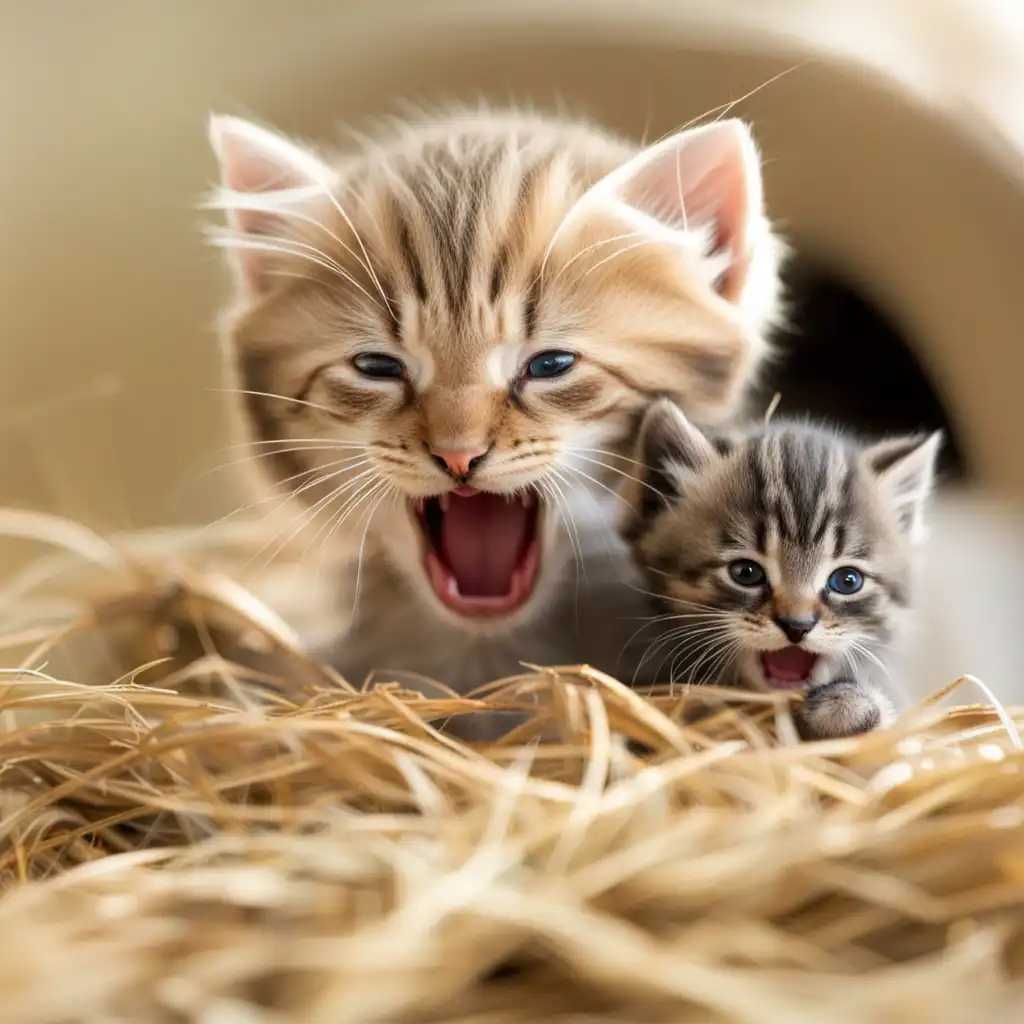
mewl
verb mewl
mjuːl
To cry softly and weakly; often like a baby or an animal.
The newborn kitten began to mewl for its mother.
mewl
mjuːl
Loading…
mjuːl
To cry softly and weakly; often like a baby or an animal.
The newborn kitten began to mewl for its mother.
Audio could not be loaded. Please try again later.
The word 'mewl' means to make a high-pitched crying or whining sound, like a kitten. It can be used to describe the sound a baby makes when it cries or the sound an animal makes when it's in pain or distress. It is not a very common word and is often used in a literary context. You may encounter it in books, especially when describing a sad or pathetic situation.
Both bleat and mewl refer to noises made by animals, but they are used to describe different sounds.
A bleat is a noise made by sheep or goats. It is a high-pitched, rhythmic sound that these animals make to communicate with each other.
Bleat is applicable to describe sounds made by sheep or goats, while mewl is applicable for sounds made by young cats or babies.
Open word: Bleat →Complain means to express dissatisfaction or annoyance about something.
So, while complain is used to express dissatisfaction with a specific situation, mewl describes a specific type of cry or whine.
Open word: Complain →Both grizzle and mewl refer to sounds made by animals or babies, but they are slightly different in terms of their meanings and usage.
Grizzle typically means to complain or whine in a persistent or annoying way.
It can also refer to the sound of someone crying softly or complaining under their breath. For example, if a child is grizzling because they don't want to go to bed, they might be making a continuous, low-level noise that expresses their unhappiness.
It is often used to describe the sounds made by babies or small animals, such as cats. Unlike grizzle, mewl usually implies a weaker or more helpless cry, rather than a persistent complaint.
In summary, while both grizzle and mewl refer to sounds made by animals or babies, grizzle is more about persistent complaining, while mewl is more about a weak or helpless cry.
Open word: Grizzle →Howl refers to a loud, prolonged, and mournful sound made by animals such as wolves, coyotes, or dogs.
It can also describe a human shouting or crying loudly. Howl is applicable when describing a sound that is harsh and deep.
Howl describes a loud and deep sound, while mewl describes a soft and high-pitched sound.
Open word: Howl →Moan is a low or deep sound made by someone who is experiencing physical or emotional discomfort or pain. For example, a person might moan when they have a headache or a stomach ache.
Mewl is generally used to describe the sound made by a baby or young animal, while moan refers to the sound made by someone who is in distress.
Open word: Moan →Both mewl and snivel refer to crying or whimpering, but they are used in slightly different contexts. Mewl typically refers to a soft, pitiful cry like that of a newborn baby or a kitten.
Snivel generally implies a more annoying, whiny cry.
Mewl describes a soft, pitiful cry while snivel describes an annoying, whiny cry.
Open word: Snivel →Mewl and whimper both refer to soft crying sounds, but they are used in slightly different contexts.
Whimper, on the other hand, suggests more of a quiet sobbing or whining sound.
It can describe someone who is trying to hold back tears or who is feeling sad and lost. For example, you might say that the child whimpered softly as she realized she had lost her favorite toy.
Mewl is most often used to describe the sounds of animals or infants, while whimper describes human emotions.
Open word: Whimper →Whine means a prolonged and high-pitched sound or complaint made by a person or animal, usually with an annoying or irritating quality.
It can describe someone who's complaining or feeling sorry for themselves. While mewl is more specific to the sound of an animal in need, whine can describe a wider range of sounds and situations, often indicating a negative attitude or behavior.
Open word: Whine →