hawser
noun hawser
ˈhɔːzər
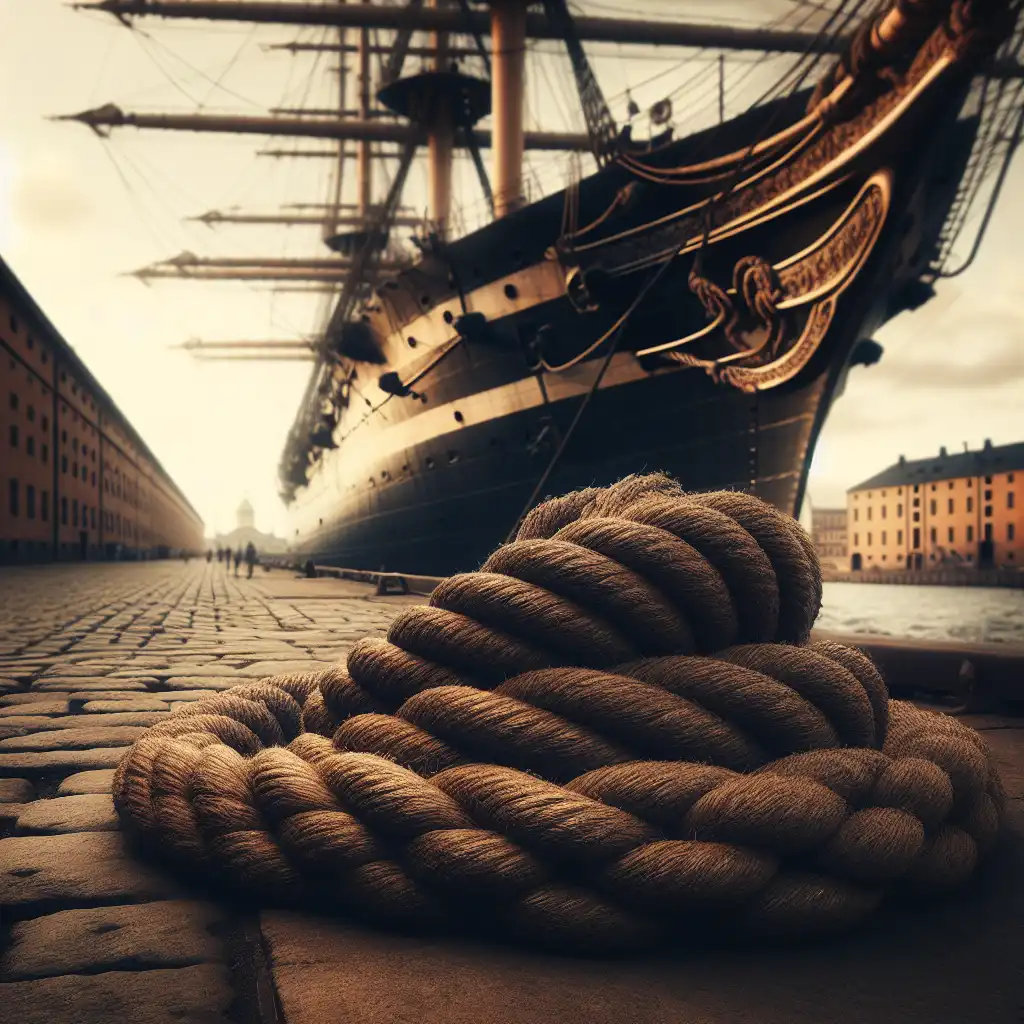
A heavy, thick rope used mainly on ships.
The hawser was used to secure the ship to the dock.
hawser
ˈhɔːzər
Chargement…
ˈhɔːzər
A heavy, thick rope used mainly on ships.
The hawser was used to secure the ship to the dock.
Impossible de charger l’audio. Réessayez plus tard.
A hawser is a thick rope that is used to tie or pull large ships or boats. It is usually made of strong materials like hemp or nylon and can be several inches thick. Hawser is a very specific word that is mostly used in the context of sailing or boating, to describe a type of rope specifically designed for maritime use. It is a technical term that most people outside of the boating industry would not use in everyday conversation.
A cable is a strong, thick rope or wire made of strands twisted together.
A hawser is a large rope or cable used for towing, mooring, or anchoring a ship.
A cable is a strong wire that is used for support or transmission, while a hawser is a large rope that is used for towing or anchoring a ship.
Ouvrir le mot: Cable →Cord is a thin flexible rope made of several twisted strands of fiber, like cotton or nylon.
It is often used for tying or binding things together, and can be found in various household items like shoelaces, electrical cords, and clothing drawstrings.
It is much stronger than cord and can withstand the weight of a heavy vessel.
Cord is applicable in everyday situations for light and flexible tying while hawser is used in marine situations for heavy towing or mooring of vessels.
Ouvrir le mot: Cord →A line refers to any rope, cord, or string used on a vessel, which could be used for various purposes such as securing cargo or tying up small boats.
A hawser is a specific type of thicker rope used for bigger jobs, while a line is a more general term that refers to any rope used on a boat.
Ouvrir le mot: Line →Hawser is a thicker and stronger type of rope that is typically used to secure a ship or boat to a pier or anchor.
It can also refer to the cables used to tow large objects like oil rigs or ships. Rope is a more general term that describes any length of cordage, and can be made from a variety of materials like nylon, hemp, or cotton.
Ropes are commonly used for a variety of purposes such as climbing, tying knots, or securing loads. In summary, hawsers are heavy-duty ropes meant for specific maritime applications, while ropes can be used for a wider range of tasks.
Ouvrir le mot: Rope →A strand is a smaller and thinner piece of rope that is typically used for more delicate tasks, such as tying knots, rigging sails, or securing cargo on a ship.
Strands are also frequently used in the construction of other types of ropes and cables.
Essentially, a hawser is a heavy-duty rope that is used for heavy-duty tasks, while a strand is a smaller and more versatile type of rope that can be used for a variety of purposes.
Ouvrir le mot: Strand →A string is a thin and flexible length of twisted fiber such as cotton, hemp or nylon.
A hawser is used for securing large boats and ships, while string is a more versatile and general-purpose material.
Ouvrir le mot: String →A thread is a thin strand of material such as cotton or nylon. It is commonly used for sewing and weaving, and is applicable in textiles and fashion design.
A hawser is a thick rope used in marine settings, while a thread is a thin strand used in textiles and sewing.
Ouvrir le mot: Thread →Wire is a strand of metal or other material, which is used for various purposes such as electrical wiring, fencing or rigging a ship.
Hawser is used in maritime contexts to secure a ship, while wire is used in different contexts such as electrical, fencing, or ship rigging.
Ouvrir le mot: Wire →